God’s Spirit brings us into the heavenly harvest

Sermon
Download Sermon
Service
[vimeo 1091640904 w=540 h=360]

To download this video, press here to go to the download page. You may need to scroll down to see the download button.

Download Service Folder Download Bulletin

Sermon for the Day of Pentecost

Acts 2:1-13  +  John 14:23-31

On the day of His resurrection, which we celebrated 50 days ago, the Lord Jesus appeared to His apostles, breathed on them, and said, “Receive the Holy Spirit!” By breathing on them, He was picturing for them what would happen on the Day of Pentecost, when He fulfilled that promise that He had repeated to them many times between Maundy Thursday and the day of His ascension, that from the right hand of God He would send the Holy Spirit down upon them, to dwell with them, to dwell with the Holy Christian Church on earth, until the end of time. Today we celebrate the fulfillment of that promise!

It’s no accident that the giving of the Holy Spirit happened in connection with the Day of Pentecost, just as it was no accident that Jesus died and rose again in connection with the Passover. Both of those festivals were major Old Testament feasts. The Passover pointed to the redemption of Israel through the blood of the Lamb. Pentecost, on the other hand, also known as the Feast of Weeks, pointed to the harvest that was made possible by the Passover Lamb.

Let me explain. The Feast of Weeks was originally a sacred harvest festival, one of the mandated feasts of the Old Testament, for which all the men of Israel were to travel to Jerusalem to present their offerings to the Lord seven weeks after Passover ended, giving thanks to Him for the harvest that He enabled the Israelites to reap in the Promised Land of Canaan. Their journey to the Promised Land began with the Passover in Egypt and the sacrifice of the Passover lamb, after which they were led by the Angel of the LORD through the wilderness to the Promised Land, which they conquered by God’s power alone, and where they enjoyed the bountiful harvest—the bountiful, blessed life—that God gave them there, for as long as they remained faithful to His covenant. The Feast of Weeks, then, was a celebration of that bountiful, blessed life in the Promised Land—a life that was purchased for them with the blood of the Lamb.

Jesus, the true Passover Lamb, was slain to redeem Israel, and all people, from slavery to sin, death, and the devil. But this Passover Lamb rose from the dead and ascended to the true Promised Land of heaven. It has already been “conquered.” And there, a blessed harvest awaits all the faithful, the bountiful, blessed, eternal inheritance that God has in store for His Holy Christian Church. The guarantee of it, and also the One by whose help the Christian Church will be built, and by whose help Christians will be preserved in the true faith unto life everlasting, is the Holy Spirit of God, who was poured out on the Church on the Day of Pentecost, 50 days after Easter, in connection with the Feast of Weeks.

The Feast of Weeks had brought Jews from all over the Roman Empire back to Jerusalem. Those who remained faithful to the God of Israel gathered in their synagogues every Sabbath Day, wherever they lived, but made that special journey to Jerusalem three times a year, even those Jews who lived in other countries and spoke the languages of those countries. Meanwhile, Jesus had told His apostles to stay in Jerusalem until they received the gift of the Holy Spirit. And so they did. They waited, not knowing exactly how or when the Spirit would come. The events of today’s Epistle reading explain how it happened. There were three signs of His coming.

The first was the sound of a mighty, rushing wind, like the sound of Jesus breathing on His disciples on Easter Sunday, but on a much grander scale. Unlike Jesus, who came as a man, whom everyone could see with their eyes and touch with their hands and hear with their ears, you can’t see the Holy Spirit or sense Him with any of your five senses. The word “Spirit,” as you may recall, means “breath” or “wind.” Jesus had once said to Nicodemus, The wind blows where it wishes, and you hear the sound of it, but cannot tell where it comes from and where it goes. So is everyone who is born of the Spirit. Like the wind which you can’t see, but you can see its effect on the things around you, so it is with the Holy Spirit. His presence can’t be seen or felt except by the effect He has on things around you. In order to make it clear that He had indeed come upon Jesus’ disciples, as promised, the Spirit made His presence known by the sound of a mighty, rushing wind.

The second sign was the appearance of tongues as of fire, resting upon each of Jesus’ disciples. Years earlier, John the Baptist had promised that the Christ would baptize His disciples “with the Holy Spirit and with fire.” This was it. Not the kind of fire that burns or devours. But the kind of fire that purifies, the kind of fire that spreads, the kind of fire that makes a person zealous for the kingdom of God and courageous to persevere in the midst of trials.

The third sign of Pentecost was the sudden ability of the disciples to say things in other tongues, not the gibberish that Pentecostals brag about, but the very languages of the Jews and Jewish converts who were born in other countries, but who were present in Jerusalem at that time. As we learn later, from Paul’s epistles, this wasn’t an ability to actually communicate in those languages, like when you learn a new language. It was, instead, the outpouring of God’s praises in someone else’s language. The speakers didn’t even understand what they were saying. And the point of this sign is obvious. The Gospel is intended for everyone, for every nation, tribe, language, and people. Long ago, at the Tower of Babel, God confused the languages of men to divide them, to separate them into nations, that they might each go their own way, because, when they had worked together, they had only defied God and increased in wickedness. So He separated them and focused only on one nation, on the nation of Israel, to have mercy on them, to reveal Himself to them, to send the Christ to them.

But that focus is done now. Now that Christ has come and given His life as a ransom for many, now, as of the Day of Pentecost, God will turn His attention to all nations and have His Gospel proclaimed to them in every language. No longer would there be a dividing wall between Jew and Gentile. Now God would call everyone, everywhere, to repentance before the Day of Judgment, during this New Testament period, during this time of grace that is swiftly coming to its close.

And so, with the fire of Spirit-worked courage, with the fire of the Spirit’s enlightenment, with speech that was given to him by the Holy Spirit, the apostle Peter stood up and began to preach to the crowds of Jerusalem that had gathered around the disciples, attracted by the strange noises they were hearing and the strange sights they were seeing. The signs were not the purpose of Pentecost. The preaching was.

Peter went on to explain to the people what the signs meant, that they were the fulfillment of God’s promise to pour out His Spirit upon His sons and daughters in the last days. But it was Jesus Himself, Peter said, who had poured out the Spirit, from the right hand of God—the same Jesus who had lived and walked among them in the land of Israel, the same Jesus who had tirelessly taught the people, doing good and performing miraculous signs, the same Jesus whom they, through their leaders, had crucified and put to death, but whom God the Father had now raised from the dead and exalted to His right hand, declaring Him to be both Lord and Christ.

Now, Peter’s words, all by themselves, had no possibility of convincing those crowds in Jerusalem of anything. His words, by themselves, had no power to reach down into the hearts of the hearers, so that they were cut to the heart, believed what Peter said, and were made sorrowful and afraid. But the Holy Spirit was present there, working through His preaching, entering into the hearts of the hearers and working there repentance and faith in the Lord Jesus. Men, brothers, what shall we do? Repent, Peter said, and be baptized every one of you in the name of Jesus Christ for the forgiveness of your sins. And about 3,000 of them did repent and believe and were baptized on that same day. Their sins were forgiven, and they entered Christ’s Holy Christian Church.

But Peter promised more than that. And you will receive the gift of the Holy Spirit. For the promise is to you and to your children, and to all who are afar off, as many as the Lord our God will call. The call to repent, the invitation to be baptized, the promise of the forgiveness of sins and of the indwelling of the Holy Spirit, goes out to all nations, to all people everywhere. It isn’t a promise that the visible signs of the Holy Spirit will accompany everyone who is called. It’s a promise that the Spirit will dwell in the heart of every believer, that He will comfort, guide, encourage, strengthen, and embolden every believer, that He will testify with our spirit that we who believe in Christ Jesus are, indeed, children of God, and that our Savior, the Lord Jesus, will surely return for us, because even now He’s placed His Spirit within us.

Like the wind, you can’t see the Spirit dwelling in and among us. But you can see the effects of the Spirit, as you can see the effects of the wind! Where the Word of God is purely taught and the Sacraments are rightly administered, there is the Holy Spirit. Where there is genuine repentance and faith in the Lord Jesus, where there is a desire to hear and submit to His word, there is the Holy Spirit. Where there is boldness to confess the Lord Jesus, where there is love for God and works of love for one’s neighbor, there is the Holy Spirit, working invisibly, but powerfully, to gather the harvest into the Christian Church and to guard the harvest there until Christ comes to claim it, and to bring us in the great heavenly harvest that awaits—that truly bountiful, blessed, eternal life.

So rejoice today in this harvest festival, in the gift of the Holy Spirit, who still dwells among us after all this time. Rejoice in the Holy Spirit, and the faith and love that He has worked in each believer here. And pray in the Spirit that the Lord will bless the work of His Spirit among us, as His word is preached, as His Sacraments are administered, and as each Spirit-filled believer walks with the Spirit throughout this life, in unity around the Word of God, with zeal to live each day for the glory of God, and with joy in knowing that God Himself dwells with us, because He has given us of His Holy Spirit, who has made His home with us, just as Jesus promised. Amen.

Source: Sermons

A harvest of life through the Holy Spirit

Sermon

Download Sermon
Service
[vimeo 948109068 w=540 h=360]
Download Service Download Bulletin Download Service Folder</

Sermon for the Festival of the Day of Pentecost

Acts 2:1-13  +  John 14:23-31

Pentecost was originally a sacred harvest festival, one of the mandated feasts of the Old Testament. Seven weeks after the firstfruits of the harvest were gathered, after the first sheaf of a farmer’s wheat crop was offered to the Lord, the Feast of Weeks was to take place, a feast for giving thanks to the Lord for the full harvest that had been brought in—a harvest that had been guaranteed 50 days earlier by the appearance of the firstfruits in the field.

You all know what happened on Easter Sunday. This is what St. Paul says about it in 1 Corinthians 15: But now Christ is risen from the dead, and has become the firstfruits of those who have fallen asleep. Christ, the firstfruits from the dead, rose from the dead on Easter Sunday. And seven weeks later, it was time to celebrate the harvest of what He had accomplished, the harvest of the rest of the Church through the work of the Holy Spirit, a harvest of life that goes on and on until the end of the age.

Jesus had told His apostles to stay in Jerusalem until they received the gift of the Holy Spirit. And so they did. They waited, not knowing exactly how or when the Spirit would come. The events of today’s Epistle reading explain how it happened. There were three signs of His coming.

The first was the sound of a mighty, rushing wind. Unlike Jesus, who came as a man, whom everyone could see with their eyes and touch with their hands and hear with their ears, the Spirit is different. “Spirit,” as you may recall, means “breath” or “wind.” Jesus had once said to Nicodemus, The wind blows where it wishes, and you hear the sound of it, but cannot tell where it comes from and where it goes. So is everyone who is born of the Spirit. Since the Spirit doesn’t interact with us as a human being does, His presence can’t be recognized except through outward signs, much like the wind itself can’t be recognized except by the sound it makes and by the things it blows around. So the Holy Spirit used the sound of a mighty, rushing wind to signal His mighty presence among the believers in Jesus.

The second sign was the appearance of tongues as of fire, resting upon each of Jesus’ disciples. Years earlier, John the Baptist had promised that the Christ would baptize His disciples “with the Holy Spirit and with fire.” This was it. Not the kind of fire that burns or devours. But the kind of fire that spreads. And that fire would spread through tongues, that is, through the speaking, the preaching of the Word of God. As God had said through the prophet Jeremiah, Is not My word like a fire?

The third sign was the sudden ability of the disciples to speak in other tongues, in other languages, in the very languages of the Jews and Jewish converts who were born in other countries, but who were living in Jerusalem at that time. As we learn later, from Paul’s epistles, this wasn’t an ability to actually communicate in those languages, like when you learn a new language. It was, instead, the outpouring of God’s praises in someone else’s language. The speakers didn’t even understand what they were saying. And the point of this sign is obvious: God, in the Old Testament, had focused His attention on the Hebrew-speaking Israelites. He had given them His Word, His covenant, and His promises. The Gentiles were ignored, largely, and allowed to go on living in their wickedness and false beliefs, outside of God’s kingdom. But that would be the case no longer. No longer was God’s attention focused on the Hebrew-speaking Jews living in Jerusalem. Now God was turning to all nations, to bring everyone everywhere into the New Testament in Jesus’ blood, the covenant of the forgiveness of sins through faith in Christ crucified and risen from the dead. This marked the beginning of the fulfillment of Jesus’ parable of the Great Supper, where, after the invited guests, representing the unbelieving Jews, had refused the master’s invitation, He sent out His messengers to gather people “from the highways and the hedges,” Jews and Gentiles, with no respect to anyone’s nationality, or skin color, or bloodline, or language.

The purpose of the signs was very simple: First, to notify the believers themselves that Jesus was, right at that moment, keeping His promise to send them the gift of the Holy Spirit. Second, to attract the crowds in Jerusalem to this gathering of the Christians in Jerusalem, to make them curious and desirous of an explanation. And, third, to confirm that God was indeed with these Christians, that the Gospel they preached was from God.

And so, aided by the Holy Spirit, the apostle Peter preached his Pentecost sermon, which I’d like to read for you in full.

But Peter, standing up with the eleven, raised his voice and said to them, “Men of Judea and all who dwell in Jerusalem…heed my words…This is what was spoken by the prophet Joel: ‘And it shall come to pass in the last days, says God, That I will pour out of My Spirit on all flesh; Your sons and your daughters shall prophesy, Your young men shall see visions, Your old men shall dream dreams. And on My menservants and on My maidservants I will pour out My Spirit in those days; And they shall prophesy. I will show wonders in heaven above And signs in the earth beneath: Blood and fire and vapor of smoke. The sun shall be turned into darkness, And the moon into blood, Before the coming of the great and awesome day of the LORD. And it shall come to pass That whoever calls on the name of the LORD Shall be saved.’

This, Peter says, is the fulfillment of that prophecy from the Book of Joel, that in these “last days,” God would pour out His Holy Spirit on His servants, indicating that these Christians, these believers in Jesus, were the servants of God. And you notice the references in Joel’s prophecy to Jesus’ own prophecies regarding the last days, that there would be wonders in heaven above and signs on the earth, the sun turned to darkness and the moon to blood, which Jesus explains as signs of His imminent return. In other words, the whole New Testament period is being prophesied by Joel, beginning with the outpouring of the Holy Spirit on the Day of Pentecost, and lasting until Jesus comes again. This whole age is the age of the Holy Spirit, the age of the harvest of life, when the gift of salvation is being offered to all.

The next verse from Joel’s prophecy, which Peter didn’t need to add at that time but which I think the world today needs to take into account, goes on: For in Mount Zion and in Jerusalem there shall be deliverance, As the LORD has said, Among the remnant whom the LORD calls. In Mount Zion, in Jerusalem there shall be deliverance, Joel prophesied. But how? What’s the connection to Zion and Jerusalem? It’s not what modern Evangelicals teach, that the city of Jerusalem is and will always remain significant in God’s plan of salvation. No, the connection is clearly to that very outpouring of the Holy Spirit on the day of Pentecost, where deliverance from sin, death, and the devil was indeed proclaimed, through faith in Jesus Christ. From there the Gospel went forth into the rest of the world. So, again, it isn’t about the city of Jerusalem. It’s all about the Gospel. It’s all about Jesus.

All Israel was invited, but not all Israel was to receive the Lord’s Spirit or participate in the kingdom of God from that point forward. Only those who believed the apostles’ preaching, who repented and believed in the Lord Jesus, and were baptized in His name for the forgiveness of sins.

I’d like to continue with more of Peter’s sermon. Listen carefully to how he preached to the people of Israel that day:

“Men of Israel, hear these words: Jesus of Nazareth, a Man attested by God to you by miracles, wonders, and signs which God did through Him in your midst, as you yourselves also know—Him, being delivered by the determined purpose and foreknowledge of God, you have taken by lawless hands, have crucified, and put to death; whom God raised up, having loosed the pains of death, because it was not possible that He should be held by it… This Jesus God has raised up, of which we are all witnesses. Therefore being exalted to the right hand of God, and having received from the Father the promise of the Holy Spirit, He poured out this which you now see and hear…Therefore let all the house of Israel know assuredly that God has made this Jesus, whom you crucified, both Lord and Christ.” Now when they heard this, they were cut to the heart, and said to Peter and the rest of the apostles, “Men, brothers, what shall we do?” Then Peter said to them, “Repent, and let every one of you be baptized in the name of Jesus Christ for the forgiveness of sins; and you will receive the gift of the Holy Spirit. For the promise is to you and to your children, and to all who are afar off, as many as the Lord our God will call.”

And that’s the summary of the whole Gospel. Whoever you are, whatever you’ve done, repent! Repent of all your rebellions against God, of all your failings, of all your breaking of His commandments, and of the prideful trust in your own works to save you, and believe instead in the Lord Jesus who was crucified as the atoning sacrifice for the world’s sins but has now been raised from the dead and reigns at the Father’s right hand. Be baptized in the name of Jesus, the Christ whom God the Father sent, and believe that that baptism in Jesus’ name is for the forgiveness of sins, that God, whom you have offended with your sins, has punished His Son for them, and is now offering to wash them all away and to claim you as His child and to bring you into His kingdom. And know that, as a baptized child of God, you will never again be alone. But, as Jesus promised in today’s Gospel, If anyone loves me, he will keep my word. And my Father will love him, and we will come to him and make a home with him. The Father, the Son, and, as Peter promises, also the Holy Spirit will make a home with you. God will give you the gift of His Holy Spirit.

That isn’t a promise that you’ll speak in tongues. It’s a promise that the Holy Spirit will dwell side by side with your spirit, to preserve you in the faith, to guide you in understanding God’s Word and in applying it to your life, to urge you constantly to live a life of obedience and love, to fill you will courage, comfort, joy, and peace. Not the world’s idea of peace, where you don’t have any problems or conflicts in your life. But Jesus’ version of peace, where you can face any problem and any conflict because you have peace with God through our Lord Jesus Christ, and you are on good terms with the One who is in charge of the universe and of the future.

So praise God today for the Day of Pentecost. Praise and thank Him for including you in His great harvest of life. And make every effort to walk each day in the peace that Jesus has given you, and in the faith and love that the Holy Spirit has worked in you and will continue to work in you. Amen.


Source: Sermons

The age of the Spirit continues

Sermon (audio) Download Sermon
Service(video)
[vimeo 270991926 w=540 h=360]
Download Service Download Bulletin

<!–
2018.Pentecost_Propers

–>

Sermon for Pentecost

Joel 2:28-32  +  Acts 2:1-13  +  John 14:23-31

Today is Pentecost, ten days after the Ascension, 50 days after Easter, the Feast of the Holy Spirit. What is the Holy Spirit like? How are we to know Him? He is clearly a Person, a Person who is just as divine as the Father and the Son. After all, Jesus commanded His disciples to baptize all nations in the name of the Father, and of the Son, and of the Holy Spirit. The Holy Spirit is a divine Person, but He’s not described in the Bible with any human figure or with any comparison to human relationships, like Father or Son. That makes it hard to picture the Holy Spirit. We simply use the dove when we want to depict Him, since that’s how He chose to appear at Jesus’ Baptism. But the word “Spirit” means breath or wind, which are both unseen things. You don’t see a person’s breath; what you see is a person breathing in and out, and, of course, the result of the breath—that a person stays alive. You don’t see the wind; what you see is how the wind carries the dust or the smoke or the clouds or the rain, or how it bends the trees or how it rustles the leaves. The wind is invisible. But you can see its signs and its effects.

So it is with the Holy Spirit. So He made His presence known on the Day of Pentecost. He Himself remained invisible. But He revealed Himself with signs and effects that proclaimed to the world that the prophecy you heard today from the prophet Joel was being fulfilled, that a new and final age of the world was now at hand, the age of the Holy Spirit, whose signs indicate both His presence and the manner of His work.

The first sign of the Holy Spirit’s coming was a sound from heaven, as of a rushing mighty wind, and it filled the whole house where the disciples were sitting. The sound of a blowing wind, a sign of Jesus fulfilling His promise to send the Helper from on high, breathing the gift of His Spirit onto His disciples, even as He breathed on His disciples on the eve of His resurrection and said, “Receive the Holy Spirit!”

The second sign: there appeared to them divided tongues, as of fire, and one sat upon each of them. The tongues “as of fire” rested, not on everyone in Jerusalem, but on each of Jesus’ disciples, a sign that this ever-present Spirit sent by Jesus was to be found specifically in His Church, among believers. Tongues of fire, because the Holy Spirit would spread throughout the world as fire spreads, but He would spread through the tongues—through the Word, through the speech, through the preaching—of Christians.

Fire represented many things in the Old Testament. The presence of God in the burning bush that Moses saw. The pillar of fire that accompanied the Israelites throughout their desert wanderings. The fire of burning lamps to give them light. And the fire of the altar of sacrifice in the Temple, where animals were offered up to God to atone for the sins of the people, making them acceptable to God.

So fire is a fitting sign of the Holy Spirit. The presence of God, who accompanies His Church throughout these desert wanderings below until we reach the Promised land. The light that enlightens our minds to see—to believe in Christ. The fire of sacrifice—now no longer making atonement for sins, because Jesus was the once-for-all sacrifice that reconciles sinners with God, but it’s the Holy Spirit who gives us new birth in Holy Baptism, who brings us to faith, who connects us to Jesus’ sacrifice by faith, and who now spurs us on to lead holy lives, to do works of love that are pleasing and acceptable to God, as Paul wrote to the Roman Christians, I beseech you, brethren… that you present your bodies a living sacrifice, holy, acceptable to God, which is your reasonable service.

This twofold work—the work of bringing us to faith and the work of spurring us on to lead holy lives and to do works of love—is called Sanctification. And if you remember Luther’s explanation of the Third Article of the Creed, that’s the very work that’s ascribed especially to the Holy Spirit. He is the Sanctifier. And both faith and love are symbolized by His holy fire.

The third sign of the Spirit’s coming: And they were all filled with the Holy Spirit and began to speak with other tongues, as the Spirit gave them utterance. If you recall, it was God who divided the tongues of men in the first place, way back at the Tower of Babel, about 150 years after the world-wide Flood. At that time, God divided mankind up into nations and scattered the nations throughout the world. At that time, God let the nations to go, each in its own godless way, each to create its own idols and false gods to worship. At that time, God chose Abraham and His descendants, the people of Israel, to be the one nation on earth where He revealed Himself, making a covenant with Israel to be their God and to forgive their sins through the ministry of the priesthood and of the Temple. All who wanted to know the true God and to become part of His holy, chosen people, had to find Him and worship Him in the nation of Israel.

But now, on the Day of Pentecost, the Word of God was suddenly being proclaimed in all the languages of all the people who were present there that day, visiting Jerusalem from all the surrounding nations. No longer would salvation be tied to a single nation or a single race. No longer would God’s focus be on the city of Jerusalem. But His Word was to go out into all the world, to every nation, tribe, language and people. The call is universal: Repent and believe the good news about Jesus, the Savior of the world! And the promise is universal: He who believes and is baptized shall be saved!

This universal Gospel was prophesied in the Old Testament, not only by Joel, but also by Isaiah and Micah: Now it shall come to pass in the latter days That the mountain of the LORD’s house Shall be established on the top of the mountains, And shall be exalted above the hills; And peoples shall flow to it. Many nations shall come and say, “Come, and let us go up to the mountain of the LORD, To the house of the God of Jacob; He will teach us His ways, And we shall walk in His paths.” For out of Zion the law shall go forth, And the word of the LORD from Jerusalem.

What the Jews missed about this prophecy—what many Christians seem confused about today, too—is that, when God poured out His Spirit in the latter days, there was to be a transition from the earthly Jerusalem to a spiritual Jerusalem. The word of the Lord did go out from earthly Jerusalem on the Day of Pentecost in every language, calling sinners from every nation into the Church of Christ, which is the spiritual Jerusalem. The sanctifying work of the Holy Spirit—His work of bringing to faith, preserving in the faith, and spurring us on to works of love—is being done wherever the Word of Christ is preached throughout the world, so that we who call on the name of the Lord in New Mexico are also citizens of Jerusalem, that is, the one holy Christian (or catholic) and apostolic Church.

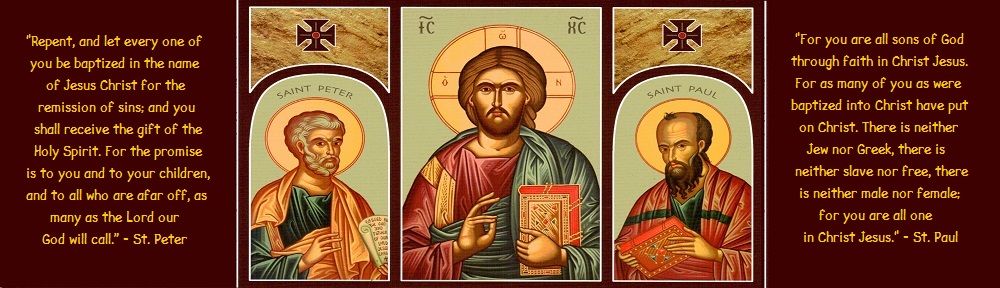
The last days are here. They’ve been here for almost 2,000 years. The Spirit is now poured out from heaven on His Church and will move like wildfire through the whole earth. The Spirit will be the power behind the preaching of the Word of Christ, spreading the fire of faith and love. The Spirit’s call and promise are universal: Repent, and let every one of you be baptized in the name of Jesus Christ for the remission of sins; and you shall receive the gift of the Holy Spirit. For the promise is to you and to your children, and to all who are afar off, as many as the Lord our God will call.

From the Day of Pentecost until Christ returns at the Last Day, this is the age of the Holy Spirit. This is the age of the building of the Church. We don’t see the Spirit, but we see the signs of His presence. The Word of Christ is still being preached in the world and in our midst. There are still people hearing it and confessing it. There are works of love being done on a daily basis by Christians here and throughout the world. There is barely a place on earth where the name of Jesus is not known.

But this age is drawing to a close. The world has heard the tongues of Christian preachers. The elect have believed, but most have not. It’s almost time for Christ to return and for the age of the Holy Spirit to be brought to completion. So let’s make the most of this age while it lasts. Preaching. Hearing. Believing. Confessing. Praying. Speaking. Leading holy lives every day. And loving. In all these things, even though you can’t see Him, you see the signs and effects of the Spirit’s work, and you know He’s there, calling, gathering, enlightening, and sanctifying the whole Christian Church on earth, and preserving it with Jesus Christ in the one true faith. Amen.


Source: Sermons