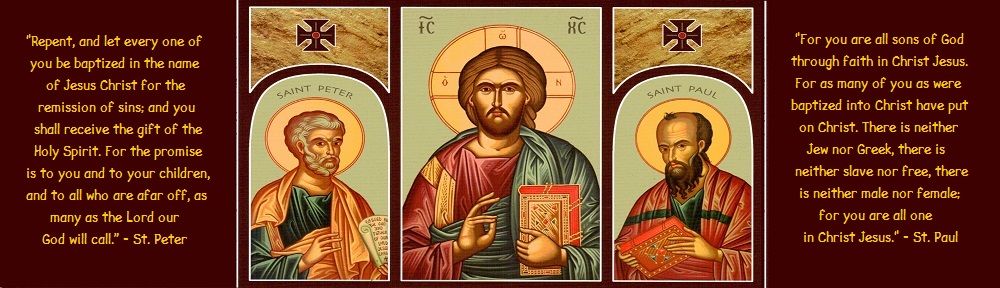
Converted from persecutor to devout believer

Sermon
Download Sermon
Service

To download this video, press here to go to the download page. You may need to scroll down to see the download button.

Download Bulletin

Sermon for the Conversion of Paul (observed)

Acts 9:1-22  +  Matthew 19:27-30

Imagine witnessing a public execution, the execution of a peaceful man against whom the only charge was encouraging people to turn to the Lord Jesus for the forgiveness of sins, telling people about the love of God in sending His Son to save those very people from their sins, and about God’s judgment against those who reject their Savior. The man’s name is Stephen, and he’s being put to death by having people throw rocks at him until they cause enough bruises and break enough bones to kill the peaceful man, who is praying for his executioners even as the stones are flying. And you’re not witnessing it from afar, with horror or with sadness. You’re standing right there in the midst of the angry stone-throwers, giving your nod of approval to their actions. And not only do you approve of their actions, but you’re already planning how you will find other people, fellow Jews, both men and women, who are just like this peaceful man, so that you can arrest them, tie their filthy hands together, and have them tried and executed in a similar way. Imagine being that angry at these Christians, that vengeful, that violently determined to snuff out their religion by snuffing out their lives. Why? Because they have dared to confess out loud the name of Jesus of Nazareth as the King of the Jews, the Son of David, the crucified and risen Messiah. And why are you so determined? Because you are absolutely convinced that the Jesus whom they confess is a charlatan and an enemy of your God and of His holy Law.

That was Saul. Saul the Pharisee. Saul, the Roman citizen, or Paul according to his Roman name, born in Tarsus, but brought up in Jerusalem at the feet of the famous rabbi Gamaliel, taught according to the strictness of Jewish law, and as zealous toward God as anyone has ever been. Zealous, but not according to knowledge. Zealous for the truth, while being ignorant of the truth. In other words, he thought he knew God rightly. He thought that the God of Abraham, Isaac, and Jacob supported his endeavors to snuff out these Christians. But, of course, he thought wrong. And so his zeal, and his religion, were worthless.

Now, God could have justly struck Saul dead for his crimes against God’s beloved Christians, which, as Jesus Himself says in our text, were actually crimes committed against Him. Why do you persecute Me?, Jesus demanded. I strongly suspect that many of those early Jewish Christians were praying imprecatory Psalms against Saul, that is, those Psalms where the believers plead with God to rain judgment down on their enemies and His. But it’s as Jesus said in the second lesson you heard tonight: Many who are first will be last, and many who are last will be first. Judas Iscariot, one of the first and most prominent of Jesus’ followers, ended up last—cast into outer darkness—for his betrayal and unbelief. While Saul, who began, not as a follower but as a persecutor of Jesus, Saul, who considered himself the least of the apostles because he had persecuted the Church of God—Saul became among the first in God’s kingdom, perhaps the most famous of the apostles and by far the most prolific writer of the New Testament Scriptures. Saul the last, Saul the least, Saul the persecutor became Paul the first, Paul the believer, Paul the bold confessor of Christ, and, as a result, also Paul the persecuted, suffering the same kind of persecution for Christ that he had once carried out against Christ.

What a story! A story, first and foremost, of grace, of God’s free favor toward a man who by no means deserved it, of grace that burned through Saul’s unbelief and stubborn resistance as he went from “kicking against the goads,” that is, resisting the Holy Spirit who had been urging him, “goading” him, through the Word of Christ preached by Stephen, for example, to the message of the cross, to seek to be justified by faith instead of by works of the Law, to no longer resist, but to give in to grace, to repent and believe that Jesus was the Christ, that even his sins had been atoned for by Jesus, that the Gospel promise was meant even for him, that God would forgive even a persecutor of Christ. The word of Christ, spoken directly by Christ in Paul’s vision, and the word of Christ, spoken by Christ’s servant Ananias, brought about the miracle we call conversion.

And someone will ask, why did God give Saul a special vision of Jesus to bring about his conversion? Should we all expect such a vision in connection with our conversion? Should anyone? Absolutely not! Unless that person is called to be a founding apostle of the Christian Church. The truth is, Saul had to see the risen Lord Jesus, not for his conversion, not to become a believer, but for the witness he would have to give to the world. Paul would go on to be an apostle in the truest sense, an eyewitness of Jesus’ resurrection, called and later taught directly by Jesus just as the Eleven had been. Paul would be one of the chosen apostles who, together with the Old Testament prophets, would form the very foundation on which the Church of Christ was to be built.

Now, Saul didn’t cooperate with God the Holy Spirit in His conversion; he didn’t use any natural power that he had to choose Jesus. But after he was converted by the preaching of Ananias, Saul the believer did work together with the Holy Spirit. He was immediately baptized. Then, he stopped persecuting the Christians and instead began to preach the crucified and risen Christ in the synagogues, knowing that most of the Jews would turn against him, knowing that many of the Christians would struggle to accept him, knowing that some of the very Gentiles to whom he was being sent would imprison him, torture him, and eventually kill him. As the Lord told Ananias, I will show him how much he must suffer for my name’s sake.

But it didn’t matter. From that moment on, Saul’s life had a new purpose, a new direction, and for the next 25 years or so, for the rest of his earthly life, he would willingly and gladly work harder than the other apostles, and suffer more. He would rely, not on himself and his strength, but on God and His strength, whose grace was sufficient for Him, so that, spurred on by God’s grace, Paul would pour out his life as a drink offering, until there was nothing left. Because, while he was still God’s enemy, Christ died for him. And then He took him and goaded him until he gave in. The Lord forgave and justified him by faith alone and took him into His kingdom and even made him into a minister of the New Testament.

Now, what would the Lord teach you through the example of His dealings with St. Paul? You (probably) can’t exactly relate to him as a murderer and violent persecutor of the Church. You definitely can’t relate to him as one who was enabled to see the Lord Jesus with his eyes and receive His teaching directly from heaven. But some of you may be able to relate to him as someone who was once zealous for God, but not according to knowledge. Ministers can relate to him as a called preacher of the Gospel, and all of us can relate to him as a wretched sinner upon whom God had mercy, and who then devoted the rest of his life to serving the Lord Jesus.

Your conversion was no less of a miracle than was the conversion of St. Paul. You were God’s enemy, too, when you were born, and part of you, the Old Man that clings to you throughout this earthly life, is still God’s enemy, not zealous for God, not trusting in God, but eager to go his own way, believe his own beliefs, and live for himself and for a good life here in this dying world. But God had mercy on you. Long before you were born, He gave His Son into death on the cross. And long before that, He made the plans for your conversion, before the foundations of the world were laid—how He would find you with the Gospel, how He would goad you to faith through His preached Word, and how He would preserve you in the faith by Word and Sacrament, through all the troubles and trials of this life, how He would change you from a self-serving creature into a person who is driven by God’s love to love both God and your neighbor, to devote your every moment to the service of God and to the building up of His kingdom. Just like He did with the Apostle Paul.

Take comfort in that! And let the mercy God has shown you with regard to your own sins continue to inspire you and spur you on to serve Him gladly, eagerly, and tirelessly, being willing, as Paul was, to become the objects of scorn and shame, and even worse forms of persecution, always rejoicing with Paul that I have been crucified with Christ; it is no longer I who live, but Christ lives in me; and the life which I now live in the flesh I live by faith in the Son of God, who loved me and gave Himself for me. Amen.

Source: Sermons

The kind of Savior who changes water into wine

Sermon
Download Sermon
Service

To download this video, press here to go to the download page. You may need to scroll down to see the download button.

Download Service Folder Download Bulletin

Sermon for Epiphany 2

Romans 12:6-16  +  John 2:1-11

Since Christmas, the Scriptures have been introducing Jesus to the world as the Savior, who is Christ the Lord. We saw Him as a baby in the stable, and with the wise men, and in the temple. We saw Him again as a 12-year-old child in the temple. And on Wednesday we saw Him as a 30-year-old man being baptized, and anointed with the Holy Spirit, and acclaimed by God the Father as His beloved Son, in whom the Father is well-pleased. The next event in Jesus’ life was His 40-day fast and temptation in the wilderness, which we’ll talk about during the Lenten season. But the next events after that are recorded in today’s Gospel, which includes the very first miracle Jesus performed. In all these stories, the world is getting to know the Savior whom God has sent, and each account teaches us something important about Him.

As our Gospel begins, Jesus has just been called the Lamb of God by John the Baptist, just a few days earlier. He has just gathered to Himself His first five disciples, still part-time apprentices for the time being, and all of them were from up north, from the region of Galilee, just like Jesus. After teaching them for just a day or two, they headed up to Galilee to a wedding, to which both Jesus and His mother Mary, and these five Galilean disciples, had all been invited. Stop and think about that for a moment. This wedding must have been planned for some time. Those invitations must have gone out months before, probably before Jesus was baptized, certainly before He called these first disciples. It wasn’t by chance that they met Jesus or started following Jesus when they did. It was God’s providence and plan that brought Jesus and these five disciples to the wedding that day, just as these disciples were starting to get to know Jesus.

What’s the first thing we learn about Jesus here? We learn that, as the God-Man sent on the most important mission in all of history, He is happy to attend a common wedding celebration. That says something about how He views marriage, as something good, as something worth celebrating. It says something about how He views human interactions, as necessary and important. It shows something about how He wants to interact with people. For the last six months or more, Israel had been getting to know God through the prophet John the Baptist, who lived an isolated, austere life alone in the wilderness, always serious, never drinking even a drop of wine, much less attending parties or joining in social activities. Jesus would not be like that.

Now, understand. Both John and Jesus were doing exactly what God wanted them each to do. But John’s was a ministry that focused almost entirely on recognizing and repenting of sin, and pointing people away from himself to Jesus, in whom they would find forgiveness and salvation, and so his own ministry was austere, solemn, and not what you would call “friendly,” while Jesus’ ministry was focused on receiving those who recognized their sins into God’s grace and into God’s house. A much friendlier kind of ministry. Both kinds of preaching are essential, and Jesus would do His share of condemning sin in the impenitent, and calling sinners to repentance, sometimes angrily berating the hypocritical religious leaders who were leading people astray from God. But it’s a matter of focus, a matter of goals. The goal of Jesus’ ministry would not be to leave people terrified because of their sins, or pointing them somewhere else for salvation. The goal of His ministry would be to bring sinners to Him, leaving them at peace, blessed, even happy, with a godly sort of happiness. We begin to see that in Jesus’ decision to attend a wedding celebration as the first public act of His ministry.

What’s the next thing we learn about Jesus as we’re “getting to know Him”? We learn that His relationship with His mother has changed from what it was. Up until very recently, Jesus had been living at home with her in Nazareth. Now He has begun His ministry as the Christ. Now He has begun to gather disciples to teach them as their Rabbi. Now He would no longer be consulting her, seeking her advice, or involving her in His decisions. Mary needed to be instructed about that change.

She seemed to think that Jesus ought to do something about the wine running out at the wedding reception, and she seemed to think it was her place to prompt Him to do something about it. When the wine ran out, Jesus’ mother said to him, “They have no wine.” It wasn’t an order. It was just a bit of information, but it came with an implied suggestion. “Maybe this is Your opportunity to reveal Yourself to the world!”

But we see that Jesus didn’t say, “Yes, mother! You’re right!” or “Thanks for letting me know!”  He used a Hebrew idiom that’s used in a few places in the Old Testament and a couple of times in the New. In every place, the phrase can be translated, “What have I to do with you?” It was a phrase used by the king of Egypt to King Josiah of Judah. It was a phrase used by the prophet Elisha to the wicked king Joram of Israel. It was a phrase used by a demon when talking to Jesus. What have I to do with you? Jesus is putting some distance between Himself and Mary, as having different aims, different goals, different purposes. And He calls her, not “mother,” but “woman,” not a harsh thing to say, but it’s a very direct indication that Jesus’ role as the Christ has nothing to do with His personal relationship with Mary. She will always be His mother, of course, but that motherly role or motherly relationship will have no special influence on Him or on His ministry. If only the generations after the apostles had paid attention to that!

My hour has not yet come, Jesus adds. “My hour” is a reference to the time when Jesus to bring His ministry to its fulfillment in giving Himself up to His enemies and allowing Himself to be put to death on a cross. That was “His hour” to reveal Himself to the world, to complete His God-given mission. Already at the outset of His ministry, Jesus has an eye on the end of it. In other words, He knows the plan. He doesn’t need or want Mary’s help.

Nevertheless, in spite of those words, Mary suspects that Jesus might yet do something about the wine situation, so she tells the servants, Whatever he says to you, do it. And He did use this as an opportunity, not to put on a big show, not to reveal Himself to the world, but to just a handful of people—His new disciples, and, of course, the servants to whom He would give instructions.

He told them to fill up the six stone jars that were standing there with water, and then to draw some out and take it to the master of the feast, the man in charge of inspecting and approving everything for the party. And it says that When the master of the feast had tasted the water that had become wine, not knowing where it was from (but the servants who had drawn the water knew), the master of the feast called the bridegroom and said to him, “Everyone sets out the good wine first, and when the people are drunk, then he sets out the inferior wine. But you have reserved the good wine until now.” And in this simple miracle of changing water into wine, we learn so much about Jesus, and about the kind of Savior, the kind of Christ He is going to be.

First, notice the low-key nature of this miracle. As we already said, it was only known to a handful of people, most importantly, to Jesus’ new disciples, and it had the intended impact on them. As John writes, This was the first of the signs Jesus did in Cana of Galilee, and he revealed his glory, and his disciples believed in him.

Second, notice the power-of-creation aspect of this miracle. Jesus didn’t perform any magic here. He used the same divine power He had used at the creation of the world to take water molecules and turn them into something else with a word, with a thought. He didn’t have to pray for God the Father to do this, or wait for a word from God, telling Him or enabling Him to do this. He did as He pleased, knowing that it would bring glory to His Father.

Third, notice the high-quality aspect of this miracle. He didn’t make something that could barely pass for wine. He made real wine, and, according to the master of the feast, the best wine.

Fourth, notice the generous nature of this miracle. Jesus didn’t have to help out the bride and groom. It wasn’t His responsibility. But He chose to do it, both out of kindness toward them and to teach His disciples these lessons. And He chose to make, not just a few bottles’ worth of wine, but the equivalent of about 300 bottles of wine.

Finally, notice the celebratory nature of this miracle. It’s not healing a debilitating disease, or casting out fiendish demons. It’s not calming a raging storm, or raising the dead, or even providing sustenance for the hungry—all of which Jesus would do during the course of His three-year ministry, where He fixed a few of the many problems that plague the human race. No, this was a miracle of transformation, for the purpose of enjoyment, for the purpose of celebration. Wine is not necessary. It’s not a need. And it’s not there to fix a problem. It’s for our enjoyment, and for rejoicing together when we celebrate something worth celebrating. (Obviously it has other uses, but that’s what it’s for, from a Biblical perspective.)

When we put together all these lessons, Jesus’ disciples got a good first picture of the kind of Savior Jesus was going to be, and it also helps us to see Him for who He is. He is a Savior who doesn’t seek to impress people, but to teach people about God’s promise to save us from our sins through Him. He is a Savior who is both true God and true Man, both our Brother and our God, and we do well to remember both things. He’s a Savior who didn’t come to help us scrape by, but that we might have the best future, the best inheritance in heaven, to have life and life in abundance. He’s a Savior who is overflowing in generosity toward all who come to Him, and who would have His people be generous to others, as He has been generous to us. And He’s a Savior who gives us something worth celebrating—true happiness in God, in His Word, in the fellowship of His Church, in His salvation, in the love God had for us, that He would send His Son to suffer and die for our sins, that He would bring us to Baptism and call us His children, that He would give us a celebratory meal of His body and blood, joined to enjoyable things like bread and wine, that He would choose to dwell among us forever and celebrate with us forever. That’s the kind of Savior Jesus reveals Himself to be in today’s Gospel, and throughout His life—a Savior who gives us reason to celebrate, a Savior worth celebrating. Amen.

Source: Sermons

A necessary step to fulfill all righteousness

Sermon
Download Sermon
Service

To download this video, press here to go to the download page. You may need to scroll down to see the download button.

Download Bulletin

Sermon for the Baptism of Our Lord

1 Corinthians 1:26-31  +  Matthew 3:13-17

On Sunday we heard about how twelve-year-old Jesus amazed everyone at the temple in the Jerusalem. It’s now about 18 years later. Jesus has spent all that time in Nazareth, growing in wisdom and stature, and in favor with God and men. We know that He learned some carpentry from His earthly father, Joseph, who was a carpenter, by trade, because Jesus Himself is once referred to as “the carpenter.” It appears that, sometime during those 18 years, Joseph died, because he is conspicuously absent from the rest of the story of Jesus’ life. The next thing we hear about Jesus happens when He’s about 30 years old, as Matthew, Mark, and Luke all record how Jesus came down from Galilee to the Jordan river, to be baptized by John, who had started preaching and baptizing several months before this. Why was Jesus baptized? For what purpose? What was the significance of it? What does it matter for us and for our salvation? We’re going to walk through these five verses from Matthew chapter 3 and then answer those questions.

As Jesus approached John to be baptized, John recognized Him immediately. How, we don’t know. We’re not told of any interaction between the two before this. Maybe John knew in the same way that Simeon and Anna recognized Jesus as a baby, by the direct inspiration of the Holy Spirit.

In any case, John knew that Jesus was not at all like other men. He tried to prevent Jesus from being baptized, saying, “I am the one who needs to be baptized by you, and you come to me?” John, as a prophet sent by God, knew a lot about Jesus. He knew that he (John), like everyone else who was coming to be baptized, was sinful and in need of repentance and the forgiveness of sins, and that Jesus had no need of those things, because He was sinless to begin with. John knew that he was just a humble messenger, while Jesus was the divine Messenger to whom John was pointing. He knew that Jesus was far greater than he, far superior to him, as he confessed openly soon after baptizing Jesus. He knew that he needed to be saved by Jesus, and that Jesus certainly didn’t need to be saved by him. And he was right about all those things.

But John didn’t know everything about God’s plan of salvation. Jesus fills him in a little bit. Allow it for now. For thus it is fitting for us to fulfill all righteousness. John knew he was supposed to be pointing people to Jesus, but he didn’t know, until now, that Jesus’ ministry had to begin with a very special baptism. John knew that Jesus was the Righteous One. But he was just now learning, from Jesus, that baptizing Jesus was part of “fulfilling all righteousness.” We’ll talk about that more in a minute.

Now, to be washed by someone is a humbling experience, even more so when it’s a washing that’s normally connected with spiritual dirt, where everyone else who comes to be baptized is being baptized specifically because he recognizes that he’s a sinner who deserves nothing from God but His wrath and punishment. And so Jesus was humbled by John, and John must have felt awkward doing it. But at Jesus’ word, John consented and baptized the Lord Jesus.

We’re told that, right after Jesus was baptized, three remarkable events occurred. He saw the heavens opened to Him, the Holy Spirit descended like a dove and came upon Jesus, and the Father spoke those incredible works that He would later repeat at Jesus’ transfiguration: This is My beloved Son, in whom I am well pleased. This is the second reference in the New Testament to the three Persons of the Holy Trinity. The first was in Gabriel’s announcement to Mary about Jesus being the Son, of God, who would be conceived by the overshadowing of the Holy Spirit. But here at Jesus’ Baptism, the three Persons are clearly seen. What does it all mean? What was it all for?

First, do you remember, when Jesus was crucified between the two thieves and the Evangelists record that it was to fulfill a prophecy about the Christ? He was numbered with the transgressors. Jesus’ death among sinners was the culmination of that prophecy. But it was really a prophecy that was fulfilled throughout Jesus’ life, and in a very special way at His Baptism. Jesus was numbered with the transgressors. He went to Baptism together with a multitude of people, all of whom were transgressors, sinners. And He allowed Himself to be counted among them, even though He had no sin, just as, one day, He would allow Himself to be crucified among sinners, as if He were a sinner. This is all part of what Paul says about Jesus in 2 Cor. 5: God made Him who knew no sin to be sin for us, that we might become the righteousness of God in Him. It was part of “fulfilling all righteousness” for Jesus, the Righteous One, to be numbered among the transgressors, so that all who believe in Him might be numbered among the righteous.

Another purpose of Jesus Baptism was that it served as what we might call His “anointing,” His inauguration and ordination into the office of the Christ. Now, Jesus was the Christ from the moment He was conceived and born. As the angel told the shepherds, “Unto you is born a Savior, who is Christ, the Lord.” He was always the Christ with regard to His identity. But it was at His Baptism that Jesus fully entered into the office of the Christ, the ministry of the Christ as Prophet, Priest, and King. And even though He was the Son of God, as the Son of Man He didn’t take that office or that ministry upon Himself. He waited for the Father to open the heavens to Him, and to send down the Holy Spirit upon Him, and to speak the words of approval upon His Son, designating this man Jesus as His chosen Servant for this one-of-a-kind mission to save the fallen human race. The Baptism of Jesus, where the Father spoke and the Spirit came upon Jesus, is the fulfillment of the prophecy of Isaiah that Jesus later applied to Himself: The Spirit of the Lord GOD is upon Me, because the LORD has anointed Me.

Finally, what does Jesus’ Baptism mean for you and me? It means that Jesus is the Savior you should trust in, the only Savior chosen and sent by God the Father, the only one who has the Father’s full approval, in everything, because Jesus never once failed or faltered. He is the Righteous One who was willing to be numbered with the transgressors in order to bring us transgressors to God. He is the Righteous One with whom we believers are now clothed through Holy Baptism, as Paul says, for as many of you as have been baptized into Christ have put on Christ. And having put on Christ through Baptism, you have now become a beloved child of God who is well-pleasing to the Father, because in this strange and wonderful Sacrament of Holy Baptism, God has made a way for you to be connected to His beloved, well-pleasing Son, who was baptized, just as you were—not in the same place, or by the same person, or at the same age, but in the same divinely instituted washing. His was a washing of solidarity with sinners, an anointing of ordination, a reception of the Holy Spirit. Yours was a washing of solidarity with Christ, an anointing of adoption, and, likewise, a reception of the Holy Spirit.

The Baptism of Jesus is the event in which God the Father held forth His beloved Son to the world as wisdom from God, including both righteousness, and holiness, and redemption. Forget the wisdom of the world. Here is My wisdom, the Father says. Forget the righteousness of the world. Here is your righteousness! Forget the holiness of the world. Here is your holiness! Forget the redemption that the world offers. Here is the redemption that God offers! Here, in this Man Jesus, the Christ, the beloved Son of God, who makes you beloved sons of God through faith in Him, and through Baptism. Rejoice in this Sacrament that connects you with Christ! Amen.

Source: Sermons

Remember, this Child is God

Sermon
Download Sermon
Service

To download this video, press here to go to the download page. You may need to scroll down to see the download button.

Download Service Folder Download Bulletin

Sermon for Epiphany 1

Romans 12:1-5  +  Luke 2:41-52

In this Epiphany season (as also, by the way, in the Christmas season), we spend a few weeks looking at some key “epiphanies,” some momentary revelations of Jesus’ hidden divinity. Can you appreciate the need for those revelations? There was nothing—not a single thing—about Jesus that looked divine. In every way, throughout His life, He appeared to be nothing other than an ordinary human being. When He was a baby, He looked and acted like a normal baby. When He was a child, He looked and acted like a normal child. And when He grew up into a man, He looked and acted like a normal man—an especially good baby, and child, and man, but still, just a man.

Some people have always had a hard time with this, especially people who only know Jesus post-resurrection from the dead and post-ascension into heaven. We barely know Him as a man. To us, Jesus is God! (At least, we know that intellectually.) There were some people already in the second century who made up stories about Jesus’ childhood, stories in which His divinity was shown off regularly. In one such story, from the fictional Gospel of Thomas, Jesus, when He was 5 years old, molded some birds out of clay on the Sabbath day, and, when Joseph rebuked Him, He clapped His hands and brought the clay birds to life. In another story, Jesus was playing with some boys on the roof, and one of them fell down and died. That boy’s parents accused Jesus of pushing the boy off the roof, so Jesus raised the boy from the dead so that he could testify that Jesus wasn’t to blame. These are silly stories that don’t fit at all with the Jesus we have come to know through the Holy Scriptures. He was not regularly showing off His divinity. People everywhere, even His parents, at times, mistook Him for nothing but human. That’s why we turn to these little epiphanies in the Bible, because through them the Holy Spirit was teaching the people back then, and us today, that that baby, that child, that man, who was so obviously human, was not only human. He was, and is, God. In fact, the one and only story from Jesus’ childhood that the Holy Spirit wanted us to know is the story before us in today’s Gospel, which took place when Jesus was twelve years old. It was nothing as spectacular as bringing clay birds to life or raising a boy back to life. But it was still a little revelation of Jesus’ hidden identity as the God who became man to save us from our sins.

Luke tells us that Mary and Joseph made the annual trip from Nazareth down to Jerusalem to celebrate the Passover, as all the men of Israel were required to do by the Law of Moses. Even that tells us something important about Jesus’ childhood, that He was raised in a home in which the parents sought, above all things, to be faithful to God. As we learn later on, Jesus and His whole family were also well-known in the synagogue of Nazareth, showing that Jesus’ custom of attending synagogue every week on the Sabbath Day didn’t just begin when He began His ministry, but was the continuation of a lifelong practice, established by Joseph and Mary, of godliness and reverence for God’s Word. Christian parents do well to imitate this example of regular worship and devotion to God’s Word and to God’s commandments. You don’t have to be the parents of the Son of God in order to be models to your children of faithfulness to God’s Word. Every Christian parent is called to this.

They spend their week or so in Jerusalem observing the Passover and the Feast of Unleavened Bread. And then, after the feast is over, the caravan from Galilee gets up early in the morning and departs at the scheduled time. And Mary and Joseph walk a full day’s journey away from Jerusalem, assuming that twelve-year-old Jesus is in the caravan somewhere, with some of their relatives. That tells us a couple of things, too. First, that Jesus obviously spent a decent amount of time with His relatives and neighbors from Nazareth. Second, and more importantly, that even at twelve years old Jesus was perfectly dependable and trustworthy. His parents cared for Him but didn’t worry about Him. They weren’t overprotective of Him. And that’s usually a good thing.

But this time Jesus did something unexpected: He stayed behind in Jerusalem, apparently without telling anyone. By the time Mary and Joseph realized He wasn’t anywhere in the caravan, the day was already over, and they spent a sleepless night worrying about their Son. The next day they spent walking back to Jerusalem, and didn’t find Him when they got there. Finally, on the third day, they found Him in the temple, safe and sound, sitting in the midst of the teachers, listening to them, asking them questions, and answering the teachers’ questions with a level of understanding that amazed everyone who heard. Jesus wasn’t preaching yet. He wasn’t pretending to be a 12-year-old rabbi, nor was He showing any disrespect for His elders, or calling on anyone to repent or believe anything. But this interaction between the teachers and 12-year-old Jesus, witnessed by Jesus’ parents and by the people in the temple who were there, is the first part of the epiphany in today’s Gospel, a clear indication that this ordinary-looking Child was no ordinary Child, but had a God-level understanding of the Holy Scriptures, of God, and of the ways of God.

Mary and Joseph were left astonished, too—astonished that Jesus hadn’t just joined their caravan as they expected, but stayed behind to engage with the teachers in the temple. When they saw him, they were amazed, and his mother said to him, “Son, why have you done this to us? Look, your father and I have been anxiously searching for you.” Mary is offended. She feels that Jesus has mistreated her and His father. So she scolds Him.

But He, respectfully and mildly, scolds her back: He said to them, “What do you mean, you were you searching for me? Did you not know that I had to be engaged in the things of my Father?” But they did not understand what he said to them. This is the second part of the epiphany in today’s Gospel. It had become so easy for Mary and Joseph to see their Son as their son. They hadn’t forgotten, intellectually, where He came from, or the things the angels had told them about Him. But they had been settled in Nazareth for nearly a decade by this point, and life had become very normal for them there. “Your father and I” have been looking for you. But she seems to have put it out of her mind that, in a one-of-a-kind way, Jesus had another Father, the Father in heaven, who had not sent His Son into the world to be just an ordinary, human boy, but had sent Him on a one-of-a-kind mission that only the Son of God could accomplish.

Jesus had been sent (1) to reveal God perfectly to mankind; (2) to live a perfectly righteous life under the Law as sinful man’s Substitute; (3) to call sinners to repentance and faith, giving the forgiveness of sins, life, and salvation to all who believe; (4) to suffer and die for our sins; (5) to rise from the dead, becoming the perpetual Mediator between God and man; and (6) to reign on God’s throne until the end of the world for the good of His brothers. These were “the things of My Father” that Jesus had to be engaged in. Not that He would do everything at the age of 12, but even at the age of 12, Jesus had work to do for His heavenly Father.

That work would continue at home. Yes, He had to spend some extra days in the temple when He was 12, fulfilling Mission #1 and providing that little epiphany of His true identity as the Son of God. But then it was back to Nazareth with His parents to continue fulfilling Mission #2. Luke tells us that He was subject to them…And Jesus grew in wisdom and stature, and in favor with God and man. Obeying His parents, gladly and willingly, was part of Jesus’ mission to live a perfectly righteous life under the Law as our Substitute. As the 4th Commandment says, You shall honor your father and your mother. And “growing in favor with God and man” is also part of that, as He devoted His childhood, and His young-manhood, to serving God and His neighbor, as every child and young man should, but as no one does as much and as gladly as they should, except for Jesus.

And so Jesus served as our Substitute under the Law, even as a child, covering the sins of all believers. And His devotion to His Father in heaven, while unique because of His one-of-a-kind relationship with the Father, still serves as a shining example for all of us. And His willing submission to His earthly parents and authorities certainly shines as an example that all Christians must follow.

But, above all, today’s Gospel gives us an important glimpse of who Jesus is, which was easy to forget for the people who lived with Him, but is also easy for us to forget, or to put out of our minds: This Child of twelve years old was God. That man hanging on the cross was God. The One now seated at the right hand of God the Father is your human Brother, but He is also your God, “who, for us men and for our salvation, came down from heaven, and was incarnate of the Holy Spirit and the virgin Mary, and became man.” And as your God, He commands you still today: Repent and believe the good news, the Gospel of your salvation, brought to you for free by the God-Man Himself! And, as your God, He commands you who believe also to live as those who recognize Jesus, not only as a great man, or a great teacher, but as the Man who is God, and, therefore, who has every right to tell you how to live, as He does through the apostle Paul in today’s Epistle: I urge you therefore, brothers, by the mercies of God, to present your bodies as a living sacrifice, holy and pleasing to God, which is your spiritual worship. Do not be conformed to this world, but be transformed by the renewing of your mind, that you may prove what is that good and pleasing and perfect will of God. Amen.

Source: Sermons

A King worth seeking

(audio only of the sermon for this evening’s service)

Click here to download the service folder.

Sermon for the Epiphany of Our Lord

Isaiah 60:1-6  +  Matthew 2:1-12

This evening we tell again the story of the wise men. And as we review the details of their journey to seek the newborn King, we’ll also look into the meaning of it.

Now after Jesus was born in Bethlehem of Judea in the days of King Herod, behold, there came wise men from the East to Jerusalem, saying, “Where is he who has been born King of the Jews? For we have seen his star in the East and have come to worship him.”

Matthew doesn’t give us all the backstory that Luke does about the trip to Bethlehem, and the angels, and the shepherds, and the manger. No, Matthew simply tells us that Jesus was born in Bethlehem in the days of King Herod. But then Matthew includes this wonderful story that Luke skips over, about the arrival of the “wise men from the East.”

They were from “the East,” probably Babylon, where all the Jews had lived for a time in the 500’s BC, and where some still lived, giving the wise men access to the Old Testament Scriptures. The phrase “wise men” is also translated Magi. They were the court officials and scholars of their day. Their scholarship included not only astronomy but also what we would call “astrology,” which basically means “reading the stars for omens and signs.” They read the stars to know important things like, when summer and winter begin, or when the year starts over. Many ancients also read the stars to try to foretell the turn of events on earth.

But in this case, the wise men read the stars, or one particular “star,” and put it together with the prophesied birth of “the King of the Jews.” There is one such prophecy in the Old Testament, in the book of Numbers: I see Him, but not now; I behold Him, but not near; a Star shall come out of Jacob; a Scepter shall rise out of Israel. And they may have put that prophecy together with another prophecy, the one Jacob spoke to his son Judah: The scepter will not depart from Judah, nor the ruler’s staff from between his feet, until the one comes to whom it belongs comes. He will receive the obedience of the peoples. The star is connected to the coming of the One to whom the scepter, that is, the kingship, truly belongs. Hence, the King of the Jews, but also the one who will “receive the obedience of the peoples,” namely, the Gentiles. So it’s with good reason that the wise men, who were Gentiles, believed that this newborn King of the Jews was a King worth seeking.

During their journey, they seem to have lost sight of the star. But that’s okay. Where do you go looking for a king? In a king’s palace, of course! So they went to King Herod’s palace in Jerusalem, assuming the child had been born in his house. But When King Herod heard these things, he was troubled, and all Jerusalem with him.

Isn’t that sad? God brings His long-promised Son into the world, and the king and the people of the holy city are troubled by the news! The Jews, like many people today, liked the idea of the Christ coming. But hearing that He had actually arrived? That troubled them. If the Christ had truly come, then they knew their lives would change forever, and their relationship with God would be put to the test. They couldn’t just talk about Him anymore. They would have to face Him! And for that, they weren’t at all prepared. It’s as John says in his Gospel, He came to His own, and His own people did not receive Him.

When Herod had gathered all the chief priests and scribes of the people together, he inquired of them where the Christ was to be born. They said to him, “In Bethlehem of Judea. For so it was written by the prophet, ‘And you Bethlehem, in the land of Judah, are not the least among the rulers of Judah. For out of you will come a Ruler who will shepherd my people Israel.’”

The priests and scribes knew the Scriptures well enough. They were able to point the wise men to Bethlehem, according to Micah’s prophecy, to the birth of the promised Ruler. Micah adds this about the origins of the Christ: His goings forth are from of old, from eternity. In other words, although the Christ would be born as a human child, His origins go back to eternity with God the Father. Who wouldn’t want to seek such a King?

Well, Herod, for one. And the priests of Jerusalem, and the people of Jerusalem who heard about the wise men’s visit but left the seeking to others.

Then Herod, after he had privately called the wise men, inquired of them carefully at what time the star had appeared. And he sent them to Bethlehem, saying, “Go and search carefully for the young Child; and when you have found him, bring me word, that I may come and worship him also.” After hearing the king, they departed. And, behold, the star which they had seen in the East went before them, until it came and stood over where the child was. When they saw the star, they rejoiced greatly.

As we heard on Sunday, Herod was lying about wanting to go worship Jesus. But for their part, the wise men were eager to find Him and overjoyed at the prospect of worshiping Him. The fact that the star which they had seen in the East “went before them” and “stood over where the child was” makes it pretty clear that this was not a star at all, but a bright object in the sky that the Lord placed there and used specifically, and apparently only, for this purpose, to lead these particular Gentiles to Jesus, in Bethlehem, to spark the chain of events that would follow, and, by the example of the wise men recorded by the apostle Matthew, to teach all nations that Jesus is a King worth seeking, and worth worshiping.

And when they had come into the house, they saw the child with his mother Mary, and they fell down and worshiped him.

That is was a “house” means it was no longer a stable; up to two years had passed since Jesus was born. But whether Jesus is still an infant or whether He’s a toddler of almost two years, nothing could have seemed stranger to Mary than to see these wealthy foreigners show up at her door, fall down on their knees, and worship her Son. Yes, she knew where He had come from, but that didn’t make any of these things less bizarre, or less astonishing.

We should say a brief word about the gifts the wise men gave. And opening their treasures, they presented to him gifts: gold, and frankincense, and myrrh. Gold is a universal treasure, and surely a fitting gift for a king. Frankincense, an expensive kind of incense, was also associated with royalty, but also with priests as an offering to God. The same was true of myrrh, except that myrrh was also used for burying the dead, as it would be used about 30 years from then, on Good Friday, with myrrh that Nicodemus would donate to bury the crucified body of Jesus of Nazareth, the King of the Jews.

Is Jesus a King worth seeking? The wise men thought so. And, notice, they didn’t just sit over there in the East in their homes and “seek Him” in their hearts when they saw His star. They didn’t just stay home and pray to God, thanking Him for sending this King into the world. And they didn’t just worship Him in their hearts, but on their knees, with costly gifts and offerings. Because they recognized that this King would rule not only over their hearts but over their entire lives. And because they recognized that God had sent this King into the world in a place—a place far, far away from where they lived, but a place to which they had the means to travel, even though it would be arduous, dangerous, and very expensive. And they recognized that the best worship they could give to this special King was not just with their hearts, but with their feet, and with their knees, and with their treasure.

So give your heart to this King, but also give Him your feet, and your knees, and your treasure. In fact, in view of God’s mercy in sending His Son for us, offer your whole body and your whole life to Him as a living sacrifice and as your reasonable act of worship. Not to purchase His favor, but because you recognize the worth of the King of the Jews, who reveals to you, through the wise men, that He came to redeem all people from their sins, to draw all men to Himself, to be a King who reigns over all things for the benefit of all who believe in Him. So seek Him where He points you now, to His written Word, to His preached Word, and to His holy Sacraments, where the King makes Himself available to you to receive your worship, and, wonder of wonders, to give you the gifts you need to have peace with God and to remain faithful unto death. Jesus is a King worth seeking, a King worth worshiping, because He is a King who once wore a crown of thorns for you: Jesus of Nazareth, the King of the Jews. Amen.

Source: Sermons

Peace on earth is not what most people think

Sermon

Download Sermon
Service
[vimeo 1044128785 w=540 h=360]

To download this video, press here to go to the download page. You may need to scroll down to see the download button.

Download Service Folder Download Bulletin

Sermon for Christmas 2

1 Peter 4:12-19  +  Matthew 2:13-23

Merry 12th day of Christmas! Although today’s Scripture readings are anything but merry. On this 2nd Sunday of Christmas, the Church’s readings force us to confront the truth of Christ head on, in the terrible story of King Herod’s murderous rage against the children of Bethlehem. And, strangely, it all has to do with the true meaning of “peace on earth.”

On the night Jesus was born, the angels sang, Glory to God in the highest places, and peace on earth, goodwill to men! Christmas song after Christmas song asks for, and sometimes promises, peace on earth. It’s what we all want. It’s what God Himself wants!

In a sense, God wants the same kind of peace that most people want. Most people want peace among men, so that there is no more fighting, no more war, no more violence, no more hatred, no more arguing, no more taking advantage of one another, no more broken marriages and broken families, no more stealing—peace, meaning the absence of those things and a state of calm, a state of safety and security for everyone. The truth is, God has always wanted those things on earth. But mankind, right from the beginning, chose a different path, leading inevitably to a different future. And that’s not God’s fault. The fact is, Jesus didn’t come to bring that kind of peace on earth. He once said, Do not think that I came to bring peace on earth. I did not come to bring peace but a sword.

Now, because of that, many throughout history have asked the question, “Wouldn’t it have been better if Jesus hadn’t come?” Honestly, if this life is all there is, if all that matters is how well your life goes for you here on earth, then, yes, it would have been better if He hadn’t come. Not that there would have been peace on earth if Jesus hadn’t come; just look at the world leading up to the flood, or leading up to Jesus’ birth. Look at the Aztecs, or the Communists, or other pagans to see how “peacefully” men live apart from the true God. But in some ways, life on earth would have been better if Jesus hadn’t been born, because life on earth is actually more difficult for many, and, in some cases, more violent because Jesus came. The children of Bethlehem whom we heard about in the Gospel probably wouldn’t have been slaughtered as infants if Jesus hadn’t been born. It’s not that He ever calls upon His Christians to be the aggressors. Quite the opposite! But His birth, His coming (and also the preaching of His Word) triggers many non-Christians, causing them to become even more violent than they already are. That’s exactly what we see in King Herod in today’s Gospel.

The Gospel begins with the departure of the wise men (whose visit we’ll consider in a few days) and with a warning from an angel of God to Joseph, to get up in the middle of the night, take Mary and baby Jesus, and flee out of the land of Israel to Egypt, because King Herod was going to try to kill their Son. So Joseph, the faithful guardian, got up and did exactly as he was told.

Meanwhile, recall that King Herod in Jerusalem had ordered the wise men to return and report back to him in Jerusalem after they found the newborn King of the Jews in Bethlehem. But they were warned by God not to go back to Herod. So when Herod realized that the wise men had bypassed Jerusalem on their way home, he was very angry, and he sent forth and executed all the children who were in Bethlehem and in all its vicinity, from two years old and under, according to the time which he had determined precisely from the wise men.

Unspeakable horror. Unspeakable evil. The slaughter of all those little children. Why did Herod want to kill Jesus in the first place? Because the wise men had called Him the “King of the Jews,” and the priests identified him as the Christ. And so Herod saw Him as a rival, someone who might deprive him of his power, someone around whom the people might rally in order to depose Herod from his throne. If only that horrible man had known how Jesus would actually live, what Jesus would one day confess openly before Pontius Pilate, “My kingdom is not of this world.” He didn’t come to set up an earthly kingdom. He didn’t come (the first time) to depose a single ruler from his throne, or to change over a single government of the world. He didn’t come to rally anyone against any king, or to inspire His followers to take over the reins of government, either. He came to bring people into a different kind of kingdom. But Herod was greedy for power and paranoid, callous and spiteful. So he had no qualms about murdering all the baby boys, two years old and younger, in that whole vicinity of Bethlehem, just to insure that Jesus would be erased from existence.

Now, it’s true, God could have stopped him. As it was, God caused Herod to die a very painful death not long after this incident. He could have struck Herod down sooner, before he carried out this murder. But that isn’t how God usually works. He doesn’t snap His fingers and rid the world of evil men and the violence they choose to engage in. Instead, He uses their evil and turns it to good for those who love Him.

How could this slaughter be good for anyone, especially for the children of Bethlehem? Well, again, that depends on your perspective. If you view this life as all there is, and having a good, long, happy life here on earth as the ultimate goal of mankind, then no good resulted for those children or for their families or for anyone else from this terrible slaughter.

But what if this life isn’t all there is? And what if having a good, long, happy life here on earth isn’t the goal of our existence? What if this life is just a brief staging ground for eternal life? And, what if the slaughter of those children helped pave the way for Jesus to accomplish what He had to accomplish for the salvation of mankind?

We have every reason to believe that those little boys who were members of the Church of Israel died as little believers in the God of Israel, even as Jesus spoke of the children who were brought to Him as believing in Him, and “of such is the kingdom of God.” And so, although their part in the “stage” of this life was brief, it wasn’t the end for them. They will be raised from the dead with all believers on the Last Day to spend eternity with God in the life that is truly life. A long, happy life here on earth is by no means a prerequisite for enjoying that better and eternal life.

But what was essential, so that any of us could enjoy that life, was preserving the life of baby Jesus, who had not yet accomplished most of the things that had yet to be accomplished in order for Him to earn our salvation and to become our King. He had to live another 30 years or so under the Law, without sin. He had to be tempted as we are and defeat temptation. He had to teach and preach about God and sin and salvation. He had to heal the sick, and cast out demons, and raise the dead. He had to suffer and die on the cross for the sins of the world, and rise again on the third day, and sit down at the right hand of God, and send out His apostles and their successors to evangelize the world and build His kingdom over the next 2,000 years.

But before He could do any of that, He had to flee to Egypt and then be called back to the land of Israel, in fulfillment of prophecy, and in fulfillment of His role as the Son of God, who took over for Israel in living under the Law. That’s what it means when Matthew applies Hosea’s prophecy to Jesus, which was first fulfilled when God brought the people of Israel out of Egypt, but which was now being fulfilled again when God called His Son out of Egypt, back to the land of Israel. Even the deaths of the children were recorded ahead of time in prophecy, as Matthew quotes the prophet Jeremiah, who foresaw Rachel weeping over her children, because Rachel, the wife of Jacob, had died in childbirth right there in same vicinity of Bethlehem some 1800 years earlier.

So, peace on earth doesn’t mean what most people think it means or want it to mean. In fact, not only did Jesus and His family have to flee from those who were trying to kill Him, not only did the children of Bethlehem have to die, but listen to what Jesus says to all who would follow Him: He who does not take his cross and follow after Me is not worthy of Me. He who finds his life will lose it, and he who loses his life for My sake will find it.

St. Peter wrote about some of those crosses in today’s Epistle: Beloved, do not be surprised by the fiery ordeal which is taking place among you to test you, as if something strange were happening to you. But rejoice to the extent that you share in Christ’s sufferings, so that you may also be overjoyed when his glory is revealed. If you are insulted for the name of Christ, blessed are you! For the Spirit of glory and of God rests upon you. On their part he is blasphemed, but on your part he is glorified. On your part He is glorified. In other words, the Lord Christ is glorified when Christians willingly bear the insults and even the violence of the world for His sake. Because we reveal, by our willingness to suffer for Jesus, that He is a King who is worthy to be followed, even to death, because we have come to know what peace on earth truly means.

What the angels actually meant by “peace on earth” was that, by the birth of Christ, sinners have now been given a path—the only possible path—to have peace with God. Christ is that path. He is the Way, the Truth, and the Life. It means peace of conscience for all who turn their sins over to Jesus, who bore our sins and now pronounces all believers free from guilt. It means peace with fellow Christians of every race and nation, because we’ve all been brought into the one body of Christ. It means living at peace with the rest of mankind, to the extent that it depends on us. It means seeking to make peace with the rest of mankind by preaching the Gospel and letting our light shine in the world, so that even those who are now our enemies may become our friends for eternity. It means peace in knowing that our God reigns, that we are in His hands, and that all things must work together for our good. And it means peace in knowing that our final and eternal victory over this sin-ravaged world is certain.

So, knowing what “peace on earth” really means, knowing what Jesus actually came to accomplish, rejoice in His peace. Seek it, and you will find it. And, you will find that all the suffering and hardships of this world are worth enduring, for the sake of having the peace of Christ, that surpasses all understanding. Amen.

Source: Sermons

The Savior was circumcised for our salvation

Sermon
Download Sermon
Service
[vimeo 1043334395 w=540 h=360]

To download this video, press here to go to the download page. You may need to scroll down to see the download button.

Download Bulletin

Sermon for the Circumcision & Naming of Our Lord

Galatians 3:23-29  +  Luke 2:21

Let’s take a moment, on this first day of 2025, to praise the Lord for preserving us through the past year, for 366 days of daily bread for each and every one of us (and, in many cases, far, far more than daily bread), for sustaining His ministry of Word and Sacraments among us, for mercifully forgiving us our sins and putting up with our fears and doubts, for the good works He has worked in and among us, for protecting us in our great weakness against the devil, the world, and our flesh, for ruling and leading us in His ways, for raising us up again when we stumbled, and for comforting us under the cross and in temptation. And let’s call upon Him, each one from his own heart, to graciously preserve us throughout the coming year, that we may finish this year with a stronger faith, a better knowledge of His Word, and a firmer commitment to living each day according to His commandments than we have as we begin the new year today.

There are two events that we celebrate on this 8th day of Christmas, both of which are recorded in our one-verse Gospel: the naming of Jesus, and His circumcision, both of which took place on the 8th day of His birth.

It’s easy to see the significance in the naming of Jesus. As the baby’s legal father, Joseph gave his Son the name that the angel had told him to give to Mary’s Son, just as the angel had told Mary what to call her Son: You shall call His name JESUS, for He will save His people from their sins. The Hebrew name Yeshua means, “He saves.” People often fall into all kinds of trouble from which they need saving, and people often mistakenly look to Jesus to save them from earthly troubles or from earthly injustice. But the angel was specific: He will save His people from their sins. Now, to save people from sins means, first, to reconcile them to God, to secure for them the forgiveness of their sins, to rescue them out of Satan’s kingdom and to bring them into the kingdom of God. How would Jesus do that? First, by living and dying in the place of sinners, to earn the gift of forgiveness for all. Then, by sending His Holy Spirit and bringing sinners to faith in Him as our Savior. And finally, on the Last Day, He will save His people from all the consequences of their sins, perfecting His work of salvation forever. Believing in Jesus, and being baptized in Jesus’ name, is what makes a person “His people.” And so, true to His name, Jesus will save His people from their sins. Jesus, and Jesus alone. For there is no other name under heaven given among men by which we must be saved.

The other event of the 8th day was Jesus’ circumcision. You’ll recall that this practice among the Jews went back to the time of Abraham, some 2,000 years before Jesus was born. In Genesis 17, we find God’s institution of this Sacrament for Abraham and His offspring. God said to Abraham, I will establish My covenant between Me and you and your seed after you in their generations, for an everlasting covenant, to be God to you and your seed after you…This is My covenant which you shall keep, between Me and you and your descendants after you: Every male child among you shall be circumcised; and you shall be circumcised in the flesh of your foreskins, and it shall be a sign of the covenant between Me and you. He who is eight days old among you shall be circumcised, every male child in your generations.

So. Circumcision was the sign of the covenant God made with Abraham to be his God, to treat Abraham’s offspring as His very own sons and daughters, to care for them, protect them, and to give them the land of Canaan. It later became part of the Law of Moses, so that any male who wanted to be counted among the people of Israel and to participate in the worship of Israel had to be circumcised. A male Israelite who refused to be circumcised, or the Israelite parents who refused to circumcise their son, would be guilty of sinning against God.

So Mary and Joseph fulfilled the Law for their Son. They did what God required of them, shedding just a little bit of their newborn’s blood in order to bring Him under the Law of Moses, that He might inherit all the promises God had made to Abraham and His offspring. But if this child was truly “Jesus,” the promised Savior, then His circumcision meant much more than that. He wasn’t just any offspring of Abraham, like all the other circumcised men of Israel. He was THE offspring of Abraham, the true Heir of the Covenant, born to bring His people into a new and better Covenant, the New Testament in His blood.

That’s what Paul says about Jesus in Galatians 3, in the verses right before the text you already heard this evening: Now the promises were made to Abraham and to his offspring. It does not say, “And to offsprings,” referring to many, but referring to one, “And to your offspring,” who is Christ…Why then the law? It was added because of transgressions, until the offspring should come to whom the promise had been made…The Scripture imprisoned everything under sin, so that the promise by faith in Jesus Christ might be given to those who believe.

As you heard in the First Lesson, that means that the Law of Moses is finished. The Jews were under the Law of Moses as little children are under a guardian while they’re little. Once children become adults, they’re no longer under a guardian. In the same way, Paul says, now that Christ has come, those who believe in Him have “grown up” and are no longer under the guardianship of the Old Testament law. That covenant or Testament has been replaced by the New Testament in the blood of Christ.

The meal of the New Testament is the Lord’s Supper. But the sign of the New Testament, our entry into the New Testament, is Holy Baptism. As Paul said in tonight’s reading, For you are all sons of God through faith in Christ Jesus. For as many of you as were baptized into Christ have put on Christ. There is neither Jew nor Greek, there is neither slave nor free, there is neither male nor female, for you are all one in Christ Jesus. And if you belong to Christ, then you are Abraham’s seed and heirs according to the promise.

This connection between Old Testament circumcision and New Testament Baptism is also mentioned by Paul in his epistle to the Colossians, where he writes to the uncircumcised Gentile Christians: In Christ you, too, were circumcised, with a circumcision made without hands, by putting off the body of the flesh, by the circumcision of Christ, having been buried with him in baptism, in which you were also raised with him through faith in the powerful working of God, who raised him from the dead. And you, who were dead in your trespasses and the uncircumcision of your flesh, God made alive together with him, having forgiven us all our trespasses, by canceling the record of debt that stood against us with its legal demands. This he set aside, nailing it to the cross.

But all of this, including the forgiveness of our sins, including our status as sons and daughters of God, was only possible because Jesus, the Son of Mary, the Son of God, was circumcised as part of God’s plan of redemption. So Merry Christmas to all the baptized children of God! Because the circumcision of our Lord, on the 8th day of Christmas, is what gives validity to your circumcision made without hands, when you were baptized into the name of the One who received His own saving name on this very same day, the Savior named Jesus, at whose name all in heaven and earth must bow. Amen.

Source: Sermons

Celebrating Christmas with an eye toward the future

Sermon
Download Sermon
[vimeo 1042791875]

https://player.vimeo.com/api/player.js
<!–

Service
[vimeo https://vimeo.com/1042791875 w=540&h=360] –>

To download this video, press here to go to the download page. You may need to scroll down to see the download button.

Download Service Folder Download Bulletin

Sermon for Christmas 1

Galatians 4:1-7  +  Luke 2:33-40

Although most of the world has moved on, it’s still Christmas today, the fifth day of Christmas, to be exact. It’s good to celebrate Christmas. It’s good to think of Jesus as a tiny baby, lying in a manger, surrounded by Mary and Joseph and the shepherds of Bethlehem. It’s good to sing Silent Night, and to think of baby Jesus sleeping in heavenly peace on the day He was born. The Lord God approves of such a celebration. He must, because He inspired the story of it to be recorded in Holy Scripture, which He wants us to read and hear and ponder. But He doesn’t want us to get “stuck” on Christmas, as many do. Even among those who actually celebrate Jesus’ birth at Christmas, many refuse to move on from it. Many are happy to think of Jesus as a baby lying in a manger, and that’s it. They don’t want to think too hard about the ramifications of Jesus’ birth, why He was born, what He would say and do, how His birth must have an effect on their lives. But God wants us to turn our thoughts from the Child’s birth to the Child’s future, as the Scriptures immediately do and as the calendar of the Church also does. In today’s Gospel, the Lord directs our attention to Simeon and Anna—two elderly, outstanding Old Testament saints who help us celebrate Christmas, without getting stuck on the manger, to celebrate Christmas while keeping an expectant eye on the future.

Our text begins, And Joseph and his mother were amazed at the things which were spoken about him. Let’s make sure we know the context. Jesus was born in Bethlehem. When He was 8 days old, He was circumcised, and now a month has passed since then. Jesus is 40 days old, still a little baby. Mary and Joseph have brought Him to the temple in Jerusalem for His presentation, and for Mary’s ceremonial purification after childbirth. An old, respected man in Jerusalem named Simeon has been directed by God the Holy Spirit to the temple on this same day and has been enabled by the Holy Spirit to recognize baby Jesus as the promised Christ. He has just taken the baby in his arms and has spoken the words we know as the Nunc Dimittis, praising God for allowing him to see the long-awaited Savior with his own eyes. We’ll talk more about all that in February when we celebrate the Festival of our Lord’s Presentation. For now, understand that it’s Simeon’s words in the Nunc Dimittis that have left Mary and Joseph in utter amazement.

But Simeon isn’t done talking to them yet. Simeon blessed them and said to his mother Mary, “Behold, this child is appointed for the fall and rising of many in Israel,

Not a single one of us knows, when our children are born, what they’re appointed for. We may have hopes and dreams and aspirations for them, maybe some expectation of which opportunities they may or may not have. But God alone knows the plans He has for our future, and for that of our children. That was not true about Jesus. God had already revealed much about the coming Christ in the Old Testament Scriptures, not only the passages that are specifically Messianic but also all the prophecies about what God would do for Israel, and also for the Gentiles. All His plans, all His promises, and also all His judgments revolved around the coming of His Son into the world, and the impact that the Christ would have on the world. Simeon knows those Scriptures especially well. How does he sum up for Mary and Joseph the future that lay ahead?

This child is appointed for the fall…of many in Israel. Not the political fall. Not the physical fall. But the spiritual fall of many in Israel. Think of the high and mighty Pharisees and priests in Israel who fell from favor in the eyes of the people as Jesus revealed them for the hypocrites and frauds they were. Think of Judas, who fell from grace all the way down to betrayal and suicide. Think of all the people in Israel who fell away from the faith of Abraham, and from the inheritance promised to Abraham, by rejecting Jesus, the true Son of Abraham. Think of that whole people group known as the Jews, who were once God’s chosen people, but who have fallen from grace and have made themselves enemies of the Gospel of Christ.

But think, too, of all people who live in sin and impenitence, and in willful ignorance of the doctrine of Christ, refusing to repent and believe in the Lord Jesus, refusing to listen to His Word. They’ve all fallen, and they will fall even harder when Christ comes again in judgment.

But, Simeon also says, This child is appointed for the rising of many in Israel. Think of the thieving tax collectors and sinners who encountered Jesus and were brought to repentance and faith, and who went on to live a new life of obedience to God. Think of Mary Magdalene, and of all who had already fallen, because of their sin, or who fell when they heard Jesus, but then, like the Apostle Paul, eventually found God’s forgiveness and salvation in Christ. Think of all those among the Jews and Gentiles who have been rescued from eternal condemnation and brought into God’s family by hearing and believing the Gospel of Jesus Christ. All of that lay hidden in the future of the child that Simeon held.

He also says, This child is appointed…for a sign that will be spoken against, that the thoughts of many hearts may be revealed. Already as an infant, Jesus’ future was clear. If He was the Christ, then the Old Testament foretold His future clearly: The stone which the builders rejected has become the chief cornerstone. This was the LORD’s doing; it is marvelous in our eyes. Or in the words of the prophet Isaiah, He is despised and rejected by men, a Man of sorrows and acquainted with grief. And we hid, as it were, our faces from Him; He was despised, and we did not esteem Him. The Christ was appointed for rejection, for being spoken against. Think of the Pharisees, constantly speaking against Him for “dishonoring the Sabbath Day,” or for working with Beelzebub, or for criticizing their godless traditions. Think of the crowds on Good Friday, demanding that Jesus be crucified, or the soldiers at the foot of the cross, mocking Him as He died.

Still today, Jesus is spoken against, more vehemently than at any time. Just last week I read the words of a woman who was musing about how much better the world might have been if Jesus had been aborted, or if Jesus had been killed as a little baby. The people who cry about “white supremacy” usually find a way to blame Jesus (or at least His Christians) for every bad thing that has ever happened in Western civilization. But there are other ways of speaking against Him. Every expression of belief in the theory of evolution is a denial of Jesus. Every prayer uttered to a saint is a “speaking against” Jesus as the one Mediator between God and man. Every suggestion that you don’t have to believe in Jesus in order to go to heaven, or that you don’t have to listen to Jesus in order to be a child of God—that’s speaking against Jesus, too.

Finally, Simeon, even as he celebrates Christmas, points Mary to the future of her Son, (yes, a sword will pierce your own soul, too). Speaking by the Holy Spirit, Simeon points her ahead to the terrible pain she would suffer one day, the pain of sitting at the foot of her Son’s cross, watching Him suffer and die.

In all these things, God used Simeon to point not only Mary and Joseph but you and me to the whole life of Christ, so that we can celebrate Christmas intelligently, so that we’re pondering who the baby was who once lay in a manger, and why He came, and how it will affect our lives.

Now, Simeon gets more of our time, because his words about Jesus are actually recorded for us. But we don’t want to neglect Anna, who was also a faithful child of God whom the Lord used to keep our eyes on the future of the baby named Jesus.

And there was a prophetess, Anna, the daughter of Phanuel, of the tribe of Asher. She was well-advanced in years and had lived with a husband seven years from her virginity, and was a widow of about eighty-four years, who never left the temple, but served God with fastings and prayers night and day.

The fact that Luke is able to give us so many details about Anna speaks to how highly regarded she was in Jerusalem at the time of Jesus’ birth. And with good reason! She had spent over five decades of her life, ever since her husband died, basically living in the temple in Jerusalem, fasting, praying, meditating on the temple ministry and its significance, and surely also interacting with the priests and with the Jews who came regularly to the temple. She had devoted her whole life to God’s service, and God had a special reward for her for her faithfulness.

She came at that very moment and gave thanks to the Lord and spoke about him to all those in Jerusalem who were looking for redemption. It was no accident that Anna showed up at just that moment, or that she was able to recognize Jesus for who He was. Whether she learned it from Simeon or by direct revelation from God, she knew. And she celebrated Christmas! She celebrated the birth and the arrival of Jesus. She gave thanks to God, and she also made sure to tell others in Jerusalem about Him.

And what did she tell them, exactly? Not about how cute the baby was, or about the wondrous circumstances of His birth. No, Luke tells us what her message was. She spoke about Him to “all those who were looking for redemption.” Redemption is one of those big words in the Bible. It means “purchase.” It also means a radical rescue from a dire situation. Redemption is what God did when He brought Israel out of slavery in Egypt. It’s what He promised to do through the coming Christ, saying through the prophet Isaiah, The Redeemer will come to Zion, and to those who turn from transgression in Jacob,” says the LORD. It’s what St. Paul was talking about in today’s Epistle: When we were children, were enslaved under the principles of the world. But when the fullness of time had come, God sent forth his Son, born of a woman, born under law, to redeem those who were under law, that we might receive the adoption of sons. This is the word that Anna so faithfully spread to all in Jerusalem who would listen, to all who worshiped the God of Israel, not for tradition’s sake, not to fulfill some obligation, but because they trusted in God to send the Redeemer, to rescue them from their sins and to make them acceptable to God. “Christ, the Redeemer, has come!”

Yes, Christ, the Redeemer, has come! Don’t stop celebrating His birth, especially while we remain in the Christmas season. But, as you celebrate, keep an eye on the future of that baby, why He came, what He would accomplish, how it affects your life to believe in Him. That child is your Redeemer. That child is your Lord, and your King. He didn’t come to make your life easy. He came to give you life, and life to the fullest, because without Him you are dead. But with Him as your Redeemer, you have the forgiveness of sins, life, and salvation, and a future of your own as a beloved child of God. Amen.

Source: Sermons

The Christian celebration of Christmas

Sermon
Download Sermon
Service
[vimeo 1042168825 w=540 h=360]

To download this video, press here to go to the download page. You may need to scroll down to see the download button.

Download Service Bulletin

Sermon for Christmas Day

Hebrews 1:1-12  +  John 1:1-14

Dear Christians, saints of God and siblings of Jesus, who became our Brother in order that, through Him, we might become children of God: Last night, we heard the story of Jesus’ birth, and we heard the angel declare to us exactly who that baby was whom the shepherds would find lying in a manger. Unto you is born this day a Savior, who is Christ the Lord. A Savior, who is Christ, the Lord. Christmas Day digs deeper into those key truths about the Child who was born to Mary and placed in a manger. It identifies for us who the Jesus of the Bible really is; it defines the celebration of Christmas, and it separates the Christian celebration of Christmas from the secular traditions that have corrupted Christmas and turned it into a Christ-less nothingness.

So consider with me for a few moments, on this Christmas Day what the writer to the Hebrews, and also St. John, reveal to us about the Christ, so that ours may truly be a Christian celebration of Christmas.

Long ago, at many times and in various ways, God spoke to the fathers through the prophets. But in these last days, he has spoken to us through his Son…

Dreams. Visions. Brief, mysterious encounters with God. These are some of the ways God gave His word to the prophets in the Old Testament, bits and pieces of knowledge, snippets of revelation. In some cases, we don’t even know how exactly God gave His word to the prophets, who then preached that word to our Old Testament fathers and revealed to them what God wanted them to know about Himself and about His demands and His promises. But from the moment Jesus came into the world, God had a new and better way of communicating with mankind. Because God didn’t have to send His word to Jesus or reveal Himself to Jesus. In the beginning was the Word, and the Word was with God, and the Word was God. No one has seen God at any time. The only begotten Son, who is in the bosom of the Father, He has declared Him.

Unlike the prophets of old, Jesus, the Word-made-flesh, didn’t receive the word of God. He was the Word of God. He is the Word of God. Jesus didn’t speak from God some of the time, but all of the time, in every word, in every deed, and gave us the perfect revelation of God’s Being and of God’s will, and especially of God’s grace.

His Son, whom he has appointed heir of all things, through whom also he made the universe.

Those two phrases don’t seem to go together. If God the Father made the worlds—made the whole created universe—through His Son, then isn’t the Son already the co-owner of all things, together with the Father and the Spirit? He is! So why does He have to be “appointed heir of all things”? This is the mystery of the incarnation. According to His divinity, Christ already possesses all things from eternity. But Christ, the co-Creator and co-Owner of the universe, was born in time and took on human flesh in order to become the Redeemer of humanity. And so, according to His humanity, born in time as one of us, Christ has to receive everything from His Father, just as we do. As a man, Christ owned nothing until the Father declared Him the Heir—the human Heir of all things.

And of course, if the Son of God is the Heir of all things, then what is left for anyone else to inherit? If the Son of God receives all things, then what is left for anyone else to receive from God? Nothing! And yet Scripture speaks many times of the “inheritance of the saints.” How does that work?

Understand what it means to be made a believer in Christ Jesus. It means that God brings you into the body of His Son, as Scripture often uses the analogy of Christ being the Head of the body, and the individual members of His Church being His mystical body. As a sinner is converted by the Holy Spirit and united with Christ through Holy Baptism, he is now counted by God as being a part of the Son of God, so that everything that the Son of God inherits, the converted sinner who believes in Christ now inherits, even a place in God’s house, even the inheritance of all things—together with Jesus, and never apart from Jesus.

Back to Hebrews. It says that Christ is the radiance of the Father’s glory and the express image of his being, even sustaining all things by his powerful word.

Can you separate the brightness of a light from the light itself? Can you separate the image or the appearance of a thing from the thing itself? And yet that’s how the Bible describes the relationship between God the Father and God the Son—distinct Persons, and yet one God, so that when you see Jesus, you see exactly what God the Father is like, and when you hear Jesus, you hear exactly what God the Father speaks. That’s a little bit mysterious and hard to grasp. The Apostle Philip once struggled with it, too. He once said to Jesus, Lord, show us the Father. Jesus said to him, “Have I been with you so long, and yet you have not known Me, Philip? He who has seen Me has seen the Father;

Do you see, then, why it’s utterly impossible to say that those who don’t believe in Jesus still believe in the same God in whom we Christians believe? If Jesus is the express image of the Father and the brightness of the glory of the Father, then to reject Jesus is to reject the Father, and to worship anyone but Jesus is to worship a false god.

On the other hand, to receive Jesus is to receive His Father as well. And to know Jesus, the express image of God, lying humbly in a manger, showing mercy to sinners, dying on a cross for our sins, is to know God the Father as well. And so, by faith in Christ, we are made children of God.

And so, after making a cleansing of our sins, he sat down at the right hand of the Majesty on high…

The writer to the Hebrews connects Christmas, Good Friday, Easter, and the Ascension for us. The same Jesus, the same Christ the Lord, who was born at Christmas, purged our sins by His death on the cross. He rose again from the dead, and ascended into heaven, and sat down at the right hand of the majestic Father—all of this according to His humanity. First His humiliation, then His exaltation. It’s our Brother who now reigns over all things.

…having become as far superior to the angels as the name he has inherited is more excellent than theirs.

There was a bit of angel worship going on in the first century, as we also learn in Colossians 2. But the writer to the Hebrews shows us how foolish that is, because in the Person of Christ, we have the eternal Creator, who took on human flesh for us, who died on the cross for us, who now reigns over all things for our good. And we are invited to trust in Him and to worship Him and to call upon Him as the God-Man, our Brother, who is the one Mediator between God and man. He is far superior to the angels according to His divinity. He has become far superior to the angels also according to His humanity. Why on earth would anyone pray to an angel or a saint, or worship an angel or think of the angels as anywhere near as important as Christ?

No, the angels themselves don’t want anything to do with being worshiped. They themselves bow down and worship Christ, even as they came down from heaven and worshiped Him when God brought Him into the world on Christmas, because they know who He is: the Son of God, who is also called God and Lord and Yahweh/Jehovah, as the rest of the verses from the Epistle demonstrate, the Son of God who, out of pure grace and mercy, took on human flesh to save His fallen human creatures. That makes Him worthy of all praise and honor and worship, from the angels, but even more, from us human beings whom He came to save.

And so we have come today to praise Him, to honor Him, to worship Him who took on man’s flesh to save man from sin and to bring us to God. And the highest and best way to worship Him is to hear His Word, to hear what He says about Himself, to believe it, to believe in Him as our Savior, and to receive, in His holy Sacrament, the very body and blood that once lay in a manger, later to be sacrificed for us on the cross, that we might be forgiven all our sins, that we might believe in Him and be given the right to become children of God. Let us praise the Lord God for His grace revealed in Christ Jesus, true God, begotten of the Father from eternity, and also true Man, born of the virgin Mary. This is the truth that defines a Christian celebration of Christmas. This is the truth to which we must cling, and by which we must be saved. Amen.

Source: Sermons

The angel still tells the meaning of Christmas

Sermon
Download Sermon
Service

To download this video, press here to go to the download page. You may need to scroll down to see the download button.

Download Bulletin

Sermon for Christmas Eve

Luke 2:1-14

Back in 1965, a man named Charles Schulz wrote a Christmas special for TV called, “A Charlie Brown Christmas,” and he decided to include in it a reading from the Bible, Luke 2:8-14, which you heard a moment ago, read by Linus from a public school stage, after which Linus said, “That’s what Christmas is all about, Charlie Brown.” When asked if he was sure he wanted to include a Bible reading in his cartoon, Schulz said, “If we don’t do it, who will?” He had no idea how right he was! Because, fast forward 60 years, and, where would you turn, if you didn’t know the true meaning of Christmas? Where would you look? How could you find it? Certainly not on a public school stage, or classroom. A drive through the neighborhoods and streets of our city would make you think Christmas is about pretty lights, and ornamented trees, and reindeer, blow-up dinosaurs and Mickey Mouses, snowflakes and Santa Claus. Christmas movies tell of family gatherings, romance, cookies, presents, holiday cheer, and maybe also Santa Claus—most of which is harmless fun, but none of which gets at the true meaning of Christmas. Who even knows what it is anymore?

You do. We do. It isn’t complicated, but it is largely unknown in this world, whose adults have intentionally forgotten it and whose children, in many cases, have never learned it in the first place. But, for those who are paying attention, it’s all captured in the verses that Linus read in that old Christmas special, where an angel from heaven explained it perfectly well to a group of shepherds. Let’s review it together this evening and proclaim to the world again from this humble church building what the meaning of Christmas truly is, as revealed by God’s holy angel. And in proclaiming it, and in contemplating it, let us rejoice!

We start with just a little background that’s also relatively unknown to people today. The true history of the world starts only about 6,000 years ago, when God—the true God, the only God—created a beautiful, perfect world, including a perfect man named Adam and a perfect woman named Eve. He gave them everything, except for the fruit of a single tree, from which they, tempted by the Prince of demons called Satan, still decided to eat, knowing, and not caring, that it would ruin their relationship with their Creator and would place them and their descendants under God’s curse of death and condemnation. But God, in His mercy, promised to send a human child who would be more than a human child—a Child so powerful, so special, that He would be able to save fallen mankind from sin, death, and the power of the devil.

Some 4,000 years went by, and the more you study world history, the more you see just how violent and idolatrous and unjust mankind has always been, from the great civilizations down to the scattered tribes of men. Men lived in darkness and always in the shadow of death. But during those 4,000 years, God was getting all the world actors into just the right places, including the people of Israel, including a young woman of Israel, a virgin named Mary, and her fiancé Joseph. God sent an angel to Mary to announce to her a miraculous pregnancy and a virgin birth. She was to give birth to the Son of God, the Savior first promised 4,000 years earlier, and Joseph was to care for her, and for her Son. 9 months later, God turned the tides of history to cause Caesar Augustus of Rome to issue a decree that a census should be taken of the entire Roman world, which forced Mary and Joseph down to Bethlehem, where, 700 years earlier, in that prophecy you heard this evening from the prophet Micah, God had foretold that the Savior would be born. Well, Mary’s baby was born right there in Bethlehem, and wrapped in strips of cloth and placed in a manger, where animals feed, because all the inns in Bethlehem were full that night.

And then there’s the part that really gets to the meaning of it all, the part that Linus read from the school stage in the cartoon, the part about the shepherds, and the angel, and the brilliance of the glory of the Lord piercing the darkness of the night, and then a whole sky full of angelic soldiers in the angelic army.

The angel appeared to the shepherds and said, Do not be afraid. For, behold, I bring you good news of great joy which will be for all the people. For to you is born this day, in the city of David, a Savior, who is Christ, the Lord. The Christmas message, is above all, good news! Joyful news! Because God had finally fulfilled a promise He had been repeating to mankind for 4,000 years—the birth of a human Child who was not just a Child of man, but also the Son of God. And the Son of God was not born into the world to destroy sinful men, or to shame us into obedience, or to model for us the way to earn our own way back into God’s good graces. No, the Son of God was born as a man to save sinful man, because we, by ourselves, are beyond saving. We, by ourselves, are godless, idolatrous people who love neither God nor man as we ought. But, instead of destroying us, instead of abandoning us, God became one of us, joining us in our hardships, choosing a manger for His very first bed. But that’s only one part of the good news. The awful, wonderful rest of the story is that God became one of us as a little baby, laid sweetly and tenderly in a manger, so that, one day, He might give His life for us on the cross, as the true price of mankind’s reconciliation with God.

The angels knew this. They knew the extent to which their God had lowered Himself, and why. They knew the height and the depth of God’s love for fallen mankind, which brought Him to earth as a tiny baby, not to condemn the world, but that the world through Him might be saved. And so they sang, Glory be to God on high, and on earth, peace to men! Goodwill! God gave His Son as a peace offering to man, so that we might turn from our sins and find God’s goodwill toward us—God’s love and forgiveness—lying in a manger, that we might believe in Him, and be saved by Him.

That, as you know, dear Christian friends, is what Christmas is all about. That’s the meaning of Christmas, and it puts all the other fake meanings to shame. Who cares about Santa Claus or reindeer or anything else, when you have the truth of God’s love staring up at you from the manger at Christmas time? So rejoice in your God, your faithful God, your Savior-God, who came for you, and who wants nothing more for you at Christmas time than that you should know, and believe in, and rejoice in His only-begotten Son, and find rest for your soul in the true meaning of Christmas. Amen.

Source: Sermons