Saved by faith. Then the battle begins.

right-click to save, or push Play

Sermon for Trinity 14

Jeremiah 17:13-14  +  Galatians 5:16-24  +  Luke 17:11-19

There is a battle raging on in this country right now between good and evil. You know what I’m talking about. You fight in this battle every day, if you’re a Christian. In fact, you only fight in this battle if you’re a Christian. But this battle isn’t waged with other people. It’s waged within you. It’s a battle fought between the flesh and the spirit, the Old Man and the New Man, the selfish sinful nature that is hostile to God and the spiritual nature that loves God.

St. Paul teaches us about this battle in today’s Epistle, and we see it played out in our Gospel of the Ten Lepers. We see the saving effects of faith in Christ. We see the tragic results when that salvation is taken for granted and faith is allowed to die. But we also see the victory of faith over the flesh, and we’re encouraged to stay in the battle to which God has called us.

It was during His final journey to Jerusalem, on His way to the cross, that Jesus encountered a group of ten lepers, there along the border between Galilee and Samaria. Leprosy was a disease of the flesh that left a person with flesh that was spotted, disfigured, twisted, rotten, and sometimes even crumbling to pieces. It was a horrible disease that isolated a person from the rest of society and from the temple of God. These lepers had heard the good word about Jesus, and that word, powerful as it was, kindled faith in their hearts and convinced them that Jesus was kind and good and merciful, and that His mercy had power behind it, power to heal even their dreadful disease. Faith is what drove them to go out to meet Jesus and to stand there calling out to Him, “Jesus, Master, have mercy!”

That’s what faith does. It drives a person to run to Jesus, to seek help from Him and to expect help from Him, not because you deserve it, but because you know Jesus is willing and able to help those who don’t deserve anything but wrath and punishment.

Jesus honored their faith, which means that He honored His own Holy Spirit who had created that faith through the word in the first place. Go, show yourselves to the priests! That’s what lepers were supposed to, according to the Law of Moses, after their leprosy had healed, so that the priests could evaluate them and certify that they were indeed healthy again and ready to reenter society. Jesus asked for nothing in return. He didn’t ask for them to prove their worth. He just showered them with mercy and healed the disease of their flesh.

The Holy Spirit uses this account to teach us once again how Christ heals all sinners who come to Him seeking mercy, who come to Him in faith, for the healing of the disease of our flesh.

Our fleshly disease is called Original Sin or hereditary sin. It infects everyone from the moment of conception and it has various symptoms, some of which Paul listed in our Epistle: the works of the flesh are evident, which are: adultery, fornication, uncleanness, lewdness, idolatry, sorcery, hatred, contentions, jealousies, outbursts of wrath, selfish ambitions, dissensions, heresies, envy, murders, drunkenness, revelries, and the like. And then Paul tells us what the judgment of God is: I tell you beforehand, just as I also told you in time past, that those who practice such things will not inherit the kingdom of God.

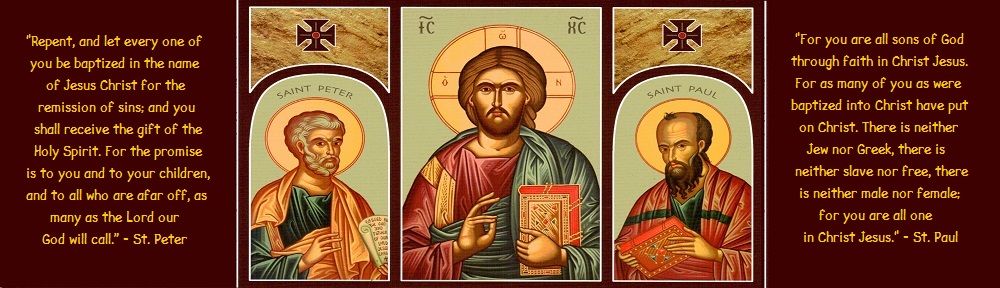
So the holy Law of God bans us from the society of God’s people, because we are by nature sinful and unclean. But then Jesus comes to us through the word of His apostles and says, Repent, and let every one of you be baptized in the name of Jesus Christ for the remission of sins. Whoever believes and is baptized will be saved. So faith heals and Baptism cleanses. It doesn’t take away our flesh so that it’s gone. It absolves us of the guilt of our sins. And, as Paul also writes to the Galatians, it crucifies our flesh, it hangs it up there on the cross together with Jesus, where God the Father punished our sins, leaving us spotless and blameless in His sight.

Faith alone does that. As Jesus said to the one leper who returned to give thanks, Your faith has made you well. But that brings us to the tragedy we encounter in our Gospel. All ten lepers were healed by faith. But nine out of ten quickly fell away. What happened?

Luther assumes that, since Jesus told them to go show themselves to the priests, they all went to the priests immediately. But when they arrived, the priests turned them against Jesus—as we often find the priests doing in the Gospels, urging the ten healed men to give glory to God, but not to give glory to God where Jesus was, in the person of Jesus, urging them to go fulfill their legal obligations and to trust, not in Jesus, but in their obedience from this time forward, so that they may remain clean.

Whether it was the priests who persuaded the nine to trust no longer in Jesus, or whether it was just their own sinful flesh that fought against their faith and won, turning them away from Jesus to focus inward again, to focus on themselves, as the sinful flesh always likes to do, we don’t know. The result was the same. A falling away from faith, back into unbelief. The Spirit of God who created their faith in the first place was urging them all back to Jesus, to go back to where Jesus was, to give glory to God in the person of Christ, to give thanks to God through Jesus Christ for the healing they had received. But nine of them were led by their flesh, not by the Spirit of God. Nine of them left Jesus behind in their rearview mirror, as it were, and carried on with their lives without Him.

Understand this, dear Christians: your flesh would like to do the same thing. You have been healed before God. You have been baptized and brought to faith and cleansed of your guilty record in God’s courtroom. Most of you have taken your catechism classes; you have been confirmed as Lutherans, that is, as Christians. Now that you’re healed, your flesh thinks, you can back off from the Word of God and from the Means of Grace. Now that you’re healed, your flesh thinks, you should focus on yourself, and your family, and your friends, and your job, and your hobbies, and your leisure activities, and…what were you healed from, again? Who was responsible for that? Oh, that’s in the past. Surely God just wants you to be “happy” now, right?

Beware of your flesh. It’s still hostile toward God. And “the heart is deceitful above all things.” It wants to lead you away from Jesus any which way it can, whether by temptation or by false doctrine or by plain old apathy or by spiritual atrophy—by lack of the spiritual nutrition that comes from the Word of God. The flesh was successful in nine out of the ten lepers, because, although their physical flesh was healed, they all still carried around with them their corrupt spiritual flesh, and they let it get the better of them in the battle.

It didn’t have to be that way, and it doesn’t have to be that way for you, either. Look at the one who came back in our Gospel account. Look at the one who was still a believer in Jesus, who came back to give glory to God in the person of Christ and to give thanks at Jesus’ feet, even though all nine of his friends had left him to go back to Jesus all by himself. He was a Samaritan, Jesus points out. Of all the ten who were healed, he was the least likely to remain a believer. And yet his faith was preserved. It was victorious over his flesh. And Jesus acknowledged him before men.

The battle rages in every Christian between the spirit and the flesh, between faith and unbelief, and you’re most susceptible when you forget that this battle exists. If you remember the battle, then you’ll remember Jesus, who gives you the victory over every battle, because He is victorious over sin, death and the devil. That’s why you’ve come to the Divine Service today, isn’t? To remember Jesus? To seek mercy from Him and to give thanks to Him? Remember what we call the Sacrament of the Altar? The Eucharist! The Thanksgiving! It’s where poor sinners who have been cleansed of the guilt of sin in Holy Baptism now come back to Jesus regularly to give thanks to Him. How? Not by offering Him our works, but by simply acknowledging Him as our Savior, and by receiving again His mercy and His forgiveness in the place where He has promised to be found by us, where He has promised to be present with His own body and blood.

Christ Jesus, who has cleansed you from sin and made you whole before God, now calls you to battle—a battle that begins and ends with thankfulness, a battle that, if you’re fighting it, you cannot lose, because the battle depends solely on the strength and power of the Holy Spirit, who will always strengthen and fortify you through His Means of Grace. The battle rages on as long as you live on this earth, because as long as you live on this earth, your crucified flesh is still clinging to you. But if you are led by the Spirit of God here on this earth, you are not under the law. You live by the Spirit. Let us, then, as Paul says, walk by the Spirit and pursue all the fruits that He produces: love, joy, peace, longsuffering, kindness, goodness, faithfulness, gentleness, self-control. Even if you see other Christians abandoning these things, as the one leper saw his nine friends abandon Jesus, don’t you abandon them. Remember Jesus, who loved you and gave Himself for you. And keep fighting the good fight of faith. Amen.


Source: Sermons

Either righteous by faith or not righteous at all

right-click to save, or push Play

Sermon for Trinity 13

Leviticus 18:1-5  +  Galatians 3:15-22  +  Luke 10:23-37

What shall you do to inherit eternal life? That’s what it’s all about, the answer to that question. You think it matters how much money you have? How nice of a house? If you have a loving family? If you’re healthy, if you feel good? If the right person is in office? That could all be taken away, gone in an instant. Death could come or Christ could come. Then what? Then eternity. Judgment. Endless life and joy and peace, or endless sorrow and pain and despair. So the question set before us today in the Gospel is a vital one: What shall you do to inherit eternal life?

Some would say, “Oh, that’s easy. Be a Good Samaritan! Be kind and merciful to strangers. Be a good neighbor to everyone who needs your help.” In other words, love! In fact, I just yesterday saw this post on Facebook: “Buddha wasn’t a Buddhist. Jesus wasn’t a Christian. Mohammed wasn’t a Muslim. They were teachers who taught love. Love was their religion.”

That statement is false on so many levels. But understand, that is how many people answer the question, what shall I do to inherit eternal life? Love! Love your neighbor! Do that, and you will live! Jesus even says so. When the lawyer asked his question, Jesus replied, What is written in the law? What is your reading of it?” So he answered and said, “ ‘You shall love the Lord your God with all your heart, with all your soul, with all your strength, and with all your mind,’ and ‘your neighbor as yourself.’ ” And He said to him, “You have answered rightly; do this and you will live.

The problem is, that’s where most people stop. They hear the parable of the Good Samaritan, and they imagine that this parable summarizes the whole teaching of Jesus, that this is how to inherit eternal life—by loving your neighbor. (Not to mention by loving the Lord God with your whole self!)

They’re wrong. Fatally wrong. What Jesus teaches in the parable of the Good Samaritan is not how a person can actually be saved, but how good and loving God demands that a person be in order to be saved by the law. What He intends to communicate with this parable is not the steps you must now take to earn eternal life, but on the contrary, He wants you to see how impossible it is for you, who are born sinners, to keep the requirements of His holy law so as to be saved by it. He wants you to face yourself in the mirror of His law and see just how lost you are, if you want to do something to inherit eternal life.

See what true love for your neighbor doesn’t look like. The man who was beaten and robbed and left for dead on the side of the road was ignored by the priest and the Levite—by the very people who were teaching people that they had to keep the law in order to be saved. How ironic! The very people who were preaching “works of love” refused to show any to the wounded man. They regularly brought sacrifices to God in His temple, but they knew nothing of mercy toward their neighbor.

But what does true love look like? Here comes a Samaritan. Remember, the Samaritans and the Jews were natural enemies who lived side by side with one another in the territory of Israel. But the Samaritan sees his natural enemy, the Jew, lying in the ditch half-dead, and he has compassion on him. Not the fake compassion that feels bad for his neighbor but does nothing. His compassion shows itself as he tends to the beaten man’s wounds, puts him up on his own animal, walks him to an inn, takes care of him some more, and then pays the innkeeper to keep tending to him until the Samaritan returns from his journey.

Go and do likewise, Jesus says. That’s his answer to the lawyer’s question. What must I do to inherit eternal life? Do the things the Samaritan did. But when Jesus says, “do this,” the word He uses doesn’t just mean do it once. It means, do it continually. It’s what Moses wrote in the Law, in the reading from Leviticus you heard this morning: You shall therefore keep My statutes and My judgments, which if a man does, he shall live by them.

To keep the law of love is no easy task. It requires that your entire life be lived for the sake of your neighbor. Every day. Every moment. All the time.

That’s where Jesus ends the lesson in Luke chapter 10. But it’s not where Jesus ends the lesson. His entire Gospel and the Epistles He sent His apostles to write make it perfectly clear that His answer to the lawyer that day is not the whole story, not the full answer. As Paul wrote to the Galatians in today’s Epistle, For if there had been a law given which could have given life, truly righteousness would have been by the law. But the Scripture has confined all under sin, that the promise by faith in Jesus Christ might be given to those who believe.

You see, the Bible actually provides two very different answers to the question, what must I do to inherit eternal life? The Law answer says, “You shall love God and your neighbor continually and perfectly, without fail.” But the main message of the Bible is that we are born law-breakers, without true fear of God, without true love for God, and without trust in the true God. That means that no one can keep the Law so as to be saved by it. The Law can’t save people who are already sinful.

But another sinful man in the Bible—a Gentile jailor in the city of Philippi—once asked the question, “What must I do to be saved?” To him the Apostle Paul gave the other Bible answer, the one that actually works for sinners: “Believe in the Lord Jesus Christ, and you will be saved.”

Jesus is the truly Good Samaritan—our blood-relative with regard to His humanity, but a foreigner with regard to His divinity. He saw us robbed of all goodness and beaten half-dead by the devil. And He had compassion on us and came to our rescue. He had His Gospel preached to us and tended to our spiritual wounds with His Word and Baptism. He brought us into the inn of the Church and has placed us in the charge of His ministers who continue to tend to our wounds until He returns, applying the Word of God as bandages and the Means of Grace as healing ointment.

Now, why didn’t Jesus just give that answer to the lawyer who approached Him in today’s Gospel? Why didn’t He point to Himself directly? Why did Jesus give him the law answer instead of the Gospel answer? Because of what it says about that lawyer: He wanted to justify himself. You can’t have Christ for a Savior if you want to you justify yourself. You can’t have the Gospel promises as long as you cling to your own works, or as long as you deny your own sinfulness. The lawyer in the Gospel asked the question, “What must I do…,” thinking he could actually do something. The jailor in Philippi asked the question, “What must I do…,” in complete and utter despair of his own works. Hence the different answers.

What’s more, the lawyer in today’s Gospel didn’t even understand what he was asking. How did his question go, again? What must I do to inherit eternal life? Do you “do” something to “inherit” something? Isn’t an inheritance something that is bequeathed to certain people when a person dies? You don’t work for an inheritance. You simply receive it because you had a relationship with someone who died.

That’s where the whole Bible comes together, and the Apostle Paul ties it up nicely for us in today’s Epistle. Long ago, even before the Law was given through Moses, God made a Testament with Abraham, a Testament of inheritance. The inheritance was promised to Abraham’s “Seed,” whom Paul identifies as Christ Jesus Himself. The inheritance of eternal life was bequeathed to Jesus, the Son of Abraham. And before He died on the cross, Jesus bequeathed that inheritance to all who believe in Him, to all who are baptized into Him, to all who partake of the New Testament in His blood, sealed to us in the Holy Supper. Only by faith in Christ is a person righteous before God. Either you’re righteous by faith, or you’re not righteous at all, no matter how many strangers you help on the side of the road.

But does God still call upon His righteous-by-faith people to love our neighbor? Absolutely! The righteousness of faith is always accompanied by love. If it isn’t, then it isn’t genuine faith in the first place. God teaches you in the Gospel to serve your neighbor in love, to be on the lookout for the people in your life who need your help, who need your service, and to have mercy on them. It usually won’t be as dramatic as seeing a stranger lying wounded on the side of the road. Instead, it will be moms and dads serving their children, and children serving their parents. It will be neighbors helping their neighbors, workers serving their employers faithfully and employers looking out for their workers diligently. It will be students offering comfort and encouragement to their fellow students when they’re hurting. It will be church members supporting and helping one another, and those with wealth sharing it with those in need.

And yet none of that can be done in order to inherit eternal life. Eternal life is an inheritance received only by faith. But it’s the heirs of eternal life who are also truly zealous to do works of love for their neighbor, because it’s the heirs of eternal life who know from experience what mercy and love are all about, because they themselves have received it from God. May God, by His Spirit, continue to increase your faith and kindle in you the fire of His love. Amen.

Source: Sermons

Hearing with the ears and confessing with the tongue

right-click to save, or push Play

Sermon for Trinity 12

Isaiah 29:18-19  +  2 Corinthians 3:4-11  +  Mark 7:31-37

There’s nothing difficult to understand in Mark’s account of Jesus healing the deaf man who could neither hear nor speak. The reputation of Jesus had gone out in Israel. This man preaches about the kingdom of God. This man teaches the Scriptures like no one else, with authority. This man Jesus can heal diseases. This man Jesus is kind and merciful. He accepts no bribe. He shows no favoritism. He helps all who come to Him for help. And He demands no payment, nothing in return.

Look! He’s just come back from outside of Israel, from Tyre and Sidon to the north. And the report has gone out that He even helped some of the Gentiles up there. This Jesus is more than just a good man. He is the Christ!

That report, that word about Jesus, had gone out and had created faith in many who heard it. As Paul writes to the Romans, faith comes by hearing! But what about those who haven’t heard? What about those who can’t hear? As Paul also writes, How shall they believe in Him of whom they have not heard?

The deaf man hadn’t heard anything, ever. But his friends had ears. They heard the report about Jesus. And they believed. They also had tongues—tongues to confess faith in Jesus and love to lead others to seek help from Him. But even their tongues were useless when it came to the deaf man. So they confessed Jesus with their feet and with their hands as they led their deaf friend to the one Man on earth who could help. And they used their tongues to beg Jesus to help their friend. And, true to His reputation, He did.

The one thing that stands out in this text and makes it different from other healing miracles is the process that Jesus used to heal the deaf man. As we know from other healing accounts, Jesus didn’t need to use a process to heal people. He could heal people with a word, as He did with the ten lepers. He could heal people who weren’t anywhere near Him, as He did with the centurion’s servant. So the steps that Jesus took to heal this deaf man are significant; they must have been done for a reason.

And that reason isn’t hard to figure out. The deaf man’s friends demonstrated their faith in Jesus, based on the word they had heard about Him. But their faith couldn’t help their deaf friend; they couldn’t believe for him. He needed his own faith if he was to be saved, and not just saved from deafness, but saved from eternal death and condemnation. Your faith can’t save your neighbor. Each one needs his own faith, and only Jesus, by His Spirit, can give it. So the signs Jesus used in the process of healing the deaf man were designed to preach the word about Jesus in the only way a deaf man could “hear” it, and to give that word time to take root in the man’s heart.

First Jesus took him aside from the multitude. That showed him that this Jesus had time for him, that He was concerned for Him and ready to help, even though they were complete strangers. That’s the way it has to be. There has to be individual contact with Jesus. That’s why Holy Baptism is always performed one on one, not by tossing a bucket of water on a crowd. That’s Jesus taking a child—or an adult, of course—away from the crowd for a moment to perform the healing of the forgiveness of sins.

Then Jesus put His fingers in the deaf man’s ears. Only doctors do things like that. It demonstrates a very personal concern. And it shows that only the fingers of Jesus can open deaf ears. There’s a spiritual meaning to that, too. In the Bible, the “finger of God” refers specifically to the Holy Spirit. And it’s another way of illustrating for us that the only way to open spiritually deaf ears—ears that can’t hear the Gospel so as to believe it—is for Jesus to send His Holy Spirit into our ears through His Word. Again, faith comes by hearing.

Jesus then spat and touched the man’s tongue, because not only did his ears not work, but his tongue was tied, too. Again, a very personal way to heal. It reminds us just how close Jesus has come to us poor sinners. The Son of God gave Himself human saliva and flesh and blood for the very purpose of pouring out His blood and having His flesh destroyed on the cross as payment for our sins. This act of spitting and touching the man’s tongue is a picture of the Word of God going out from the mouth of Jesus, through His called and ordained servants. It goes into the ears, of course, but then it takes root in the heart and makes its way onto the tongue, so that, again, as Paul writes to the Romans, with the heart one believes unto righteousness, and with the mouth confession is made unto salvation…Whoever calls on the name of the Lord will be saved.

Then Jesus looked up to heaven and sighed. This healing miracle is not a medical procedure. Jesus is not using some sort of Western medicine or Eastern medicine. Healing comes only from above, from the God of love who sent His Son to rescue poor sinners from the consequences of their own sins, including the inborn sin, the original sin and spiritual disease with which we are born. A sigh from God as He looks down at all the mess we’ve made of this earth, of ourselves, at all the disease and death we’ve brought on ourselves by our sins, as He looks at all the broken families, and the physical and psychological illnesses that plague our race. A sigh—“You did this to yourselves.”

But then, what? What does God do? Turn His back and walk away? Finish us off with wrath and condemnation? No. He sends His Son who speaks a word of salvation: Ephphatha! Be opened! And the deaf man can hear and speak clearly. It’s what Jesus does for all of us spiritually. He sends His Spirit into our ears, into our hearts, promising salvation, promising the forgiveness of sins. He works faith there, in those who don’t stubbornly resist Him. Then He speaks the word of forgiveness, the loosing of sins, the absolution. And then our tongues are loosed to sing His praises and to give thanks to God for His mercy and help, through Jesus Christ our Lord.

You all, I think, have working ears and working tongues, at least enough to hear a sermon and speak the confession of sins and the Creed. More importantly, God has opened your spiritual ears to believe the word you have heard about the kindness and mercy of Christ and to confess Christ, not with empty words of the tongue, but from the heart. You weren’t born with open ears. God did that, for you, through His Gospel. In fact, God has to continually hold your ears open through His Gospel, because your ears are like self-closing doors that automatically swing shut if not continually propped open.

You see a little example of that at the end of our Gospel. Jesus told the people not to tell anyone what they had seen that day. He had His reasons. His instructions were clear, and the people heard them with their ears, but then their sinful flesh took over and stopped up their spiritual ears so that they stopped listening. Instead of doing what Jesus said, they went out and did the opposite. Now, you may say that they had good intentions in spreading the word about what Jesus did. But intentions are not really good if they ignore the word of Jesus. No, the people that day saw a great miracle, but then hardened their hearts to Jesus’ word and gave way to their flesh, so that they ended up misusing both their ears and their tongues.

Take a warning from that. Jesus has not opened your ears so that you can turn around and shut them again. He has not given you a tongue to confess Him before men so that you can turn around and speak in ways that He has not authorized.

Use your God-given ears and tongues for the purpose for which God gave them to you: to hear His Word and believe it, to hear His Word and put it into practice, and to speak and to sing the praises of Him who called you out of darkness into His marvelous light. Amen.

Source: Sermons

Justified only by faith in the God of mercy

Sermon for Trinity 11

2 Samuel 22:21-29  +  1 Corinthians 15:1-10  +  Luke 18:9-14

I hope that, by now, the parable of the Pharisee and the tax collector is firmly rooted in your hearts. We hear it year after year in the Gospel for this Sunday and it summarizes the Christian faith so simply that any child can understand it. In fact, children understand it far better than great theologians and pastors and synodical officials, as another Lutheran pastor is in the midst of finding out (we prayed for him by name last Sunday). Some people are justified before God; some are not. Who are the ones who are justified—considered and declared by God to be righteous and innocent in His sight? And who are not? That’s the subject of Jesus’ parable of the Pharisee and the tax collector.

He tells this parable in the first place because some of the Jews who were following Him still didn’t get it. Luke tells us that Jesus spoke this parable to some who trusted in themselves that they were righteous, and despised others. I hope you can see, right at the outset, how devastating that is and why Jesus had to attack it with this pride-shattering parable. To trust in yourself, to have faith in yourself, that you are good enough, that you have done enough to earn God’s favor and forgiveness—that’s a fatal mistake, a mistake that will forever keep you from being justified before God, for everyone who exalts himself will be humbled.

Jesus gives us an example of a man who exalted himself, before God and before men: the Pharisee in the parable. Now, in the world’s eyes, he may have had every reason to exalt himself—to lift himself up in his own eyes. As the Pharisee stands in the temple and prays, he sounds like a model citizen. He is no murderer, no thief, no adulterer. He’s also very religious; he fasts twice a week—a sign of devotion to God; he gives ten percent of his income to God, as God told the people of Israel to do. His works looked good enough for him to be justified before God.

But his heart was bad; Jesus reveals that to us. The Pharisee lifted himself up before God, as if he had earned God’s favor because of the good life he had led. He lifted himself up above other men, and certainly above the tax collector standing across the room. Indeed, he lifted himself up above all the saints—above Adam, above Abraham, Isaac and Jacob, above Moses, above David and all the prophets. Because all of them acknowledged their sin before God. All of them humbled themselves before God and looked to God, not for praise, but for forgiveness. All of them relied only on God’s mercy for their justification. As the Scripture says, for example, about Abraham: He believed God, and it was counted to him for righteousness. Or as David wrote in Psalm 32: Blessed is he whose transgression is forgiven, Whose sin is covered. Blessed is the man to whom the LORD does not impute iniquity, And in whose spirit there is no deceit. But there was deceit in the Pharisee’s spirit. He was deceiving himself, that he was righteous because of the good things he did. The truth is, even the good things he did weren’t good in God’s sight, because they didn’t flow from faith in God’s mercy. By exalting himself, the Pharisee was actually rejecting God’s Word that accused him of being a sinner. By exalting himself, the Pharisee was actually despising, hating the true God, who is a God of mercy and compassion toward sinners, not a God who pats sinners on the back and praises them for being such good people. As Jesus says, the Pharisee went down to his house not justified.

Then Jesus gives us an example of a man who humbled himself before God and before men: the tax collector who stood in the distance, beat his chest and simply prayed, God, be merciful to me a sinner! This was no mere show of humility. It was genuine. The tax collectors had a reputation of being swindlers, taking advantage of their neighbor and loving money more than God. Most of them probably never set foot in the temple, for fear that lightning would strike them because they were such bad people. Now, this tax collector may have done just as many bad things as his fellow tax collectors, but he was different; he did go up to the temple. Why? Because he recognized his sins and sought forgiveness. He trusted in the God of mercy, which means he must have heard the Gospel, because no one trusts in the God of mercy by nature. No one comes to repent of his sins and trust in God’s mercy toward sinners on his own, but only by hearing the Word. So he must have heard the word that God is merciful and that God will forgive all who confess their sins to him. That’s not surprising, because the Word of God was certainly preached in Israel, even in the very sacrifices that were offered in the temple itself, each one crying out, “God will provide a sacrifice to make atonement for sins. God will forgive the one who trusts in the blood of the sacrifice!” So he dared to go up to the temple. He dared to pray. He humbled himself before God, and God exalted him. God lifted him up. The tax collector went down to his house justified.

Dear Christians, you and I know that God has now, once and for all, provided the sacrifice that makes atonement for sins. He has given His Son, who shed His holy, precious blood on the cross so that all who have sinned may wash their filthy robes and make them white in the blood of Christ. In other words, so that sinners may approach the God of mercy in faith and receive forgiveness for all their sins. We approach the God of mercy, the Throne of Grace, first in Holy Baptism, and then continually in the pastor’s absolution and in the Sacrament of the body and blood of Christ. Here is where God has promised to be merciful, and that promise inspires and creates faith. Paul reminded the Corinthians of that Gospel in today’s Epistle: I declare to you the gospel which I preached to you, which also you received and in which you stand, by which also you are saved, if you hold fast that word which I preached to you—unless you believed in vain. For I delivered to you first of all that which I also received: that Christ died for our sins according to the Scriptures, and that He was buried, and that He rose again the third day according to the Scriptures.

Like the Corinthians, you have received that Gospel, too. You were baptized into it. You confess it here every week. You know that you have been justified by faith in Christ Jesus, and that faith is the only means by which sinners are justified, because your works aren’t good enough. You aren’t good enough. But God doesn’t justify those who are good enough. He justifies those who humble themselves and rely only on His mercy for the sake of Christ.

Now, is that a license to go out and keep on sinning? Of course not! You’ve died to sin. How could you live in it any longer? No, those who trust in the God of mercy are pleasing to God by faith. They are good trees that bear good fruit. They are branches in the vine that is Christ. And as Christ says, He who abides in Me, and I in him, bears much fruit; for without Me you can do nothing.

So being justified by faith doesn’t mean you don’t do good works or that God doesn’t expect you to do good works. It means that you don’t rely on those works to be justified. It means that you always and only approach God on the basis of His mercy in Christ and never because you think you have been righteous enough to earn His favor. That’s why David could pray as you heard him pray in the First Lesson today: The LORD rewarded me according to my righteousness; According to the cleanness of my hands He has recompensed me. For I have kept the ways of the LORD, And have not wickedly departed from my God…I was also blameless before Him, And I kept myself from my iniquity. Therefore the LORD has recompensed me according to my righteousness, According to my cleanness in His eyes. At first, that sounds kind of like the Pharisee’s prayer in Jesus’ parable, where he speaks of his own righteousness before God. But there’s a night and day difference between the two, and it lies in the heart. As the Scriptures reveal about David, he didn’t rely on his own record of righteousness as if it earned God’s favor, like the Pharisee, as if he didn’t first need God’s forgiveness to be righteous before God. No, David confesses over and over his need for God’s mercy. But as a believer in God, David did act righteously when he went up against his enemies, including King Saul who wickedly kept trying to kill David. And so God lifted David up above his enemies and gave him the victory. David was righteous by faith, and for that reason he sought to live a righteous life before the God in whom he trusted.

There’s a warning in today’s Gospel that we all need to hear, because even though we’ve been born again by water and the Spirit in the new life of faith in the God of mercy, our natural tendency is to revert to our natural state of trusting in ourselves and our righteousness. The devil would soon have you convinced that you are saved because you are so much better than others, to have you pray like the Pharisee: “God, I thank you that I do not support abortion, or practice homosexuality, or defend illegal immigration. I give generous offerings to church and I loudly proclaim that ‘all lives matter.’ I thank you, God, that I am not like other men—immoral, indecent, liberal.” Watch out for that natural tendency. You stand by faith and only by faith, not by being so much better than the next guy.

But there is great comfort in the Gospel for you who, like the tax collector, recognize that you have no reason to stand before God except that God has revealed Himself as merciful and forgiving for the sake of Christ. You are the ones who confess your sins, who plead, “God be merciful to me a sinner!” You are the ones who receive the body and blood of Christ for the forgiveness of sins. And so you can be confident that you are the ones who will go home, again today, justified. In the name of Jesus. Amen.

Source: Sermons

Old Jerusalem fell so that New Jerusalem might arise

right-click to save, or push Play

Sermon for Trinity 10

Jeremiah 7:1-7  +  1 Corinthians 12:1-11  +  Luke 19:41-48

Today is a joy-filled day, as is every Sunday when we are blessed to gather together with Jesus as He comes to us in Word and Sacrament with His teaching, with His love, and with His forgiveness. It’s an especially joy-filled day as we celebrate this morning with the Holguin family the baptism of their little girl.

It was, in many respects, a joy-filled Palm Sunday when Jesus rode into Jerusalem on a donkey and heard the praises of the multitudes, “Hosanna! Blessed is He who comes in the name of the Lord! Hosanna in the highest!”

But not everyone was singing praise to Jesus on that day. St. Luke tells us that the Pharisees scolded Jesus for accepting the praises of the people. Sadly, the unbelief of the Pharisees was characteristic of the unbelief of Jerusalem as a whole, which is why there wasn’t much joy in the Gospel you heard this morning. Instead, there was weeping on the part of Jesus, a prophecy of destruction, and an angry overturning of tables in the temple.

Jerusalem was the city of God, the place where God chose to dwell among men. He attached Himself to this city, and specifically to the temple, to the altar of sacrifice, to the holy place and the most holy place.  This was God’s self-chosen “home” on earth. Not a home because He needed a place to live, but because mankind needed a place to dwell with God. That temple was to be, as Jesus says, quoting from the Old Testament, “a house of prayer for all nations.”

Jerusalem was the home of God’s people Israel, the capital city of the Church on earth, the very symbol of the Old Testament Church of God. It was where the people of God dwelled, His covenant people, the ones to whom He had revealed Himself, the ones with whom He had made a covenant of salvation through the sacramental sacrifices, through circumcision, through His holy law.

Jesus had been to Jerusalem many times. He had spent much of His three-year ministry in and around the city. He had taught in the Temple day after day. But as He entered on Palm Sunday, He couldn’t help but weep for His city. If you had known, even you, especially in this your day, the things that make for your peace! But now they are hidden from your eyes.

What did Jesus mean by, “in this your day”? He meant that for a thousand years, since the founding of Jerusalem as the capital city of Judah, all of Jerusalem’s history had been leading up to the arrival of God’s own Son in the flesh at Jerusalem’s gates, her Messiah, her King riding in with salvation.

And what were those things that made for Jerusalem’s peace? The righteousness of Christ and the precious blood of Christ that would soon be shed on the cross; the New Testament in His blood that He would give to His disciples; the holy Baptism by which He would forgive sins and save His people from sin, death, and the devil.

But Jesus foresaw what would happen—not only His crucifixion at the hands of the Jews. They could have been forgiven for that, and thousands of them were forgiven for that on the Day of Pentecost when they were baptized. No, Jesus foresaw that, even after His resurrection from the dead, even after His apostles would preach repentance and the forgiveness of sins on the Day of Pentecost, the vast majority of Jerusalem would continue in unbelief and would even go on to persecute His Christians, killing some and driving the rest out of Jerusalem, until all the Christians had to flee the city.

So Jesus wept, not for Himself or for His Christians who would be persecuted. He wept for those who would do the persecuting, because they were the ones who would be destroyed for their own unbelief. They were the ones who would answer before God for all their sins, for their idolatry and for their violence. They were the ones who would suffer God’s wrath, even though, all along, Jesus held out His arms toward them, pleading with them to trust in Him, to take shelter behind Him and His cross, as a hen gathers her chicks under her wings. But they were not willing.

And so the destruction of Jerusalem would certainly take place, some forty years from that day. Utterly wiped out by the terrible decree of God, working through the Roman armies to destroy those who chose to remain in their sins, who wanted nothing to do with Jesus, who did not believe in Jesus the Christ and Him crucified and risen from the dead. Notice that God didn’t call upon His Christians to wipe out unbelieving Jerusalem, nor were they at all responsible for its destruction. Instead, God ordered history in such a way that the pagan Romans carried out His will and His judgment against Jerusalem, so that those who rejected Christ and persecuted His Christians would be judged by God without mercy. And yet, even still, even though it was God’s will to destroy unbelieving Jerusalem, Jesus’ tears for the city reveal that God didn’t originally want to destroy Jerusalem, but that Jerusalem should repent and be saved.

But not all the Jews would reject Christ. Some would be converted. Some would repent and believe in Jesus, some sooner, like those on the Day of Pentecost, some later, like the Apostle Paul, who started out as the persecutor named Saul. How would they be converted? Only by the power of the Holy Spirit working through the Word of God as it was preached, and working through Baptism as it was administered.

And so Jesus went into the city to preach and teach the Word of God with every day He had left before His crucifixion. He went to the place that was designed for such teaching, to the house of God, to the Temple. And what did He find? He found the Temple to be a marketplace, full of buyers and sellers, full of merchandise, full of noise, and devoid of the worship of God for which it was intended. So He overturned the tables and chairs of the money changers and drove them out. He rebuked those who were buying and selling and wouldn’t let them carry their wares through the house of God, where the people were to hear, see, learn, and pray. If any would be saved from their sins and brought to faith, it would only happen through the preaching of the Word of God, so Jesus cleared away all the manmade obstacles to His teaching, and then spent the rest of the week teaching those who would listen.

My fellow Christians, the Jews of Jerusalem were destroyed for their unbelief. The Apostle Paul compares the Jews to natural branches of a cultivated olive tree that were chopped off, and now salvation has come to us Gentiles; we have been grafted into that tree like wild olive branches, grafted in by hearing the Gospel, by being brought to repentance and faith and Holy Baptism, fed and nourished in the olive tree by the body and blood of Christ and by the preaching of His holy Word.

But there is a warning for us here, as Paul writes to the Romans: You will say then, “Branches were broken off that I might be grafted in.” Well said. Because of unbelief they were broken off, and you stand by faith. Do not be haughty, but fear. For if God did not spare the natural branches, He may not spare you either. Therefore consider the goodness and severity of God: on those who fell, severity; but toward you, goodness, if you continue in His goodness. Otherwise you also will be cut off. And they also, if they do not continue in unbelief, will be grafted in, for God is able to graft them in again. For if you were cut out of the olive tree which is wild by nature, and were grafted contrary to nature into a cultivated olive tree, how much more will these, who are natural branches, be grafted into their own olive tree?

God’s wrath against Jerusalem should not make us proud, but very humble. God’s rejection of His covenant people of Israel should inspire us to praise the grace of God all the more, who has called us to faith purely by grace, by free divine favor and mercy for the sake of Christ. And it should also inspire us to pray for the conversion of all people, Jews and Gentiles alike. Old Jerusalem fell so that a New Jerusalem might arise, the City of God, the Church of Christ, made up of people from every nation, tribe, people, and tongue, who enter God’s City, not by works, by only by faith in Christ Jesus.

Praise God for His gracious gift of Holy Baptism by which all of you have entered His New Jerusalem, grafted into the tree of life which is Christ Jesus our Lord, just like little Kamila was this morning. Be assured that Jesus desires your salvation every bit as much as He desired the salvation of Old Jerusalem. They didn’t fall because they sinned too much. They fell because they refused to repent of their sins and believe in Christ. You stand by faith. Now go forth and live each day in contrition and repentance, letting your old Adam, with his evil desires, be drowned and die each day, so that a New Man may daily arise to live before God in righteousness and purity forever. Amen.

Source: Sermons

Be wise with your Father’s wealth

Sermon for Trinity 9

1 Chronicles 29:10-13  +  1 Corinthians 10:6-13  +  Luke 16:1-9

Before we talk about today’s Gospel from Luke 16 and Jesus’ parable of the unjust steward, it’s important that we keep it in context with Luke 15. Luke 15 is the “lost” chapter where Jesus tells the parable of the lost sheep, and the lost coin, and the lost (or prodigal) son. Jesus, the Son of God, came to earth to seek lost sinners. He gave everything, even His own precious blood, so that sinners could be reconciled with God in His blood. He pictures Himself as this shepherd who cares deeply for each lost sheep and rejoices greatly when sinners repent, and again as a woman who drops everything and frantically searches until she finds her lost coin. He pictures His Father as a man whose son took off and squandered his father’s wealth, but whose only desire was for that unjust son to return to his house, where the father was waiting to run out to him, to embrace him, to forgive him, and to hold a banquet in his honor. That’s the picture Jesus paints of His Father, and of Himself. And it’s His Holy Spirit who works in sinners’ hearts through Jesus’ words so that you repent of your sinfulness and trust in this good God who gave everything so that you could be adopted into His family, so that you come home to your Father through faith and Holy baptism, feed on the body and blood of Christ in Holy Communion, and take comfort in your Father’s faithful love, here in time, and there in eternity.

This is what life is all about: lost sinners hearing the Gospel, being brought into Christ’s holy Church, and persevering in the Church until Christ comes again. Life isn’t about our brief stay here on this earth. It’s not about accumulating things and enjoying the things that money can buy—even though you may very well accumulate things and enjoy them, and there’s nothing wrong with that. But above all, you have to remember that you, as children of God, as sons of light, are strangers and pilgrims here. Your citizenship is in heaven, so you are to live with an eye toward heaven, and with a zeal to serve your neighbor for his good.

But even the children of light are sorely tempted still by earthly things. The devil, the world, and your sinful flesh do not want you to hallow God’s name or to live as children of light or to sacrifice anything in order to serve your neighbor. You and I live in real danger of these enemies, and one of their most successful methods is to attack Christians in the wallet.

Israel is a perfect example children of light who fall into temptation. You heard the apostle Paul’s earnest warning in today’s Epistle, how the Israelites were severely punished by God and struck down for their many idolatries and forms of disobedience. Like you, they had seen God’s salvation. They had been rescued from slavery in Egypt, baptized into Moses, fed by God in the wilderness. And yet they still bowed down to an idol. They still complained that God hadn’t given them enough. Throughout their history they broke the Sabbath day out of greed, so that they could get more money by working on the Sabbath, and they became famous for not providing for the widow and the fatherless and for taking advantage of the poor. That’s the history of the Old Testament. And Paul says it was written as a warning for us, written for our admonition, upon whom the ends of the ages have come. Therefore let him who thinks he stands take heed lest he fall.

The area that Christ addresses today where you could fall is the area of stewardship, specifically the management of the earthly goods and money that God has entrusted you with during this earthly life.

God is the owner of everything in heaven and on earth, which means He also owns your house, your bank accounts, your mutual funds, your clothes, your food. Even your own body is not your own; it belongs to God—twice, because He created it, and then He even bought it again at the price of Jesus’ blood. So both as your Creator and as your Redeemer, God has every right to expect that you, His reconciled children, will take care to manage what He has placed in your hands, not only to provide for your needs, but also to serve your neighbor.

So Jesus tells this parable of a rich landowner, a lender, who had many servants, including a steward, a financial manager who was accused of squandering the rich man’s wealth. He was called in by his master to give an account. But he had just a little time before that meeting. So he cooked the books a little bit, not to give himself more money, but to reduce the debts of some of the debtors. Why? So that they would appreciate his kindness and maybe repay it after he lost his job. It was shrewd. It was smart. He needed friends, so with the little time he had left in his office, he used the money at his disposal to buy some good favor for himself, not from his master, but from other people. Even so, he was actually commended by the rich man for acting shrewdly.

What’s the point? Jesus makes it clear: For the sons of this world are more shrewd in their generation than the sons of light.

The sons of this world, the unbelieving, the wicked, the lost, often show themselves to be smart when it comes to using wealth. They know how to wine and dine their customers in order to gain their favor. They know how to give discounts that will ensure customer loyalty. They even know how to give to charities in order to get attention and look good, so that people like them.

But the sons of light, says Jesus, are not always so shrewd when it comes to how they treat their own fellow believers in Christ. Sometimes greed gets in the way, so that you don’t want to give generously to your fellow Christian in need. But it’s not always greed. Sometimes it’s just plain laziness. Never getting around to that budget, not quite sure where all the money goes each month, never stopping to think, how can I use my wealth—I mean, God’s wealth—to help my neighbor? Helping your neighbor with your (God’s) wealth may be a nice idea in theory, but sometimes it never goes beyond that. It doesn’t become a priority. Christians can easily fall into this kind of sinful laziness, because, “hey, you know, we’re saved by God’s grace, not by doing good works, so I don’t have to think too long and hard about doing those good works or going out of my way to serve my neighbor. I have God. I don’t really need friends.”

But that’s not what Jesus says, is it? And I say to you, make friends for yourselves by unrighteous mammon, that when you fail, they may receive you into an everlasting home.

Let’s understand this well. God is the one who decides who gets to enter that everlasting home. And He has told us the requirements: either enter by your own perfect record of good works (which is impossible), or enter without any of your works, by faith alone in Christ and His record of good works. No one is justified by his works. Faith alone justifies, and being justified means you get to live forever with God, in the presence of Christ, in the everlasting home that He is preparing for you.

But true faith in Christ says, “I am God’s steward. And God, my Father, loves my neighbor as much as He loves me. And He has charged me with managing His wealth for the good of my neighbor. So I must be a faithful steward. I have only a little time left on this earth. How will I use my wealth to help my neighbor?”

Then the Tempter comes along and tries to lull you to sleep, to apathy, to indifference toward your neighbor. “Here, enjoy your wealth. You’ve earned it. Eat, drink, and be merry. You’ll get around to making that budget. You’ll get around to helping your neighbor…sometime.” And the temptation is to hold onto the idea of faith, even as you fall away from it in your heart and become self-centered and callous toward your neighbor. Let him who thinks he stands take heed lest he fall.

But when you act shrewdly, lovingly, when you give to your neighbor, your works of love demonstrate your faith, and those who receive your generosity are the witnesses of your faith. You can’t go wrong helping your fellow Christian. On the contrary, you can be the reason why your fellow Christian praises God. You can be the hand of God who shows mercy and kindness to your neighbor.

I’m aware of the generosity our congregation as a whole has shown, to me as your pastor, and to your fellow members in their time of need. That’s good! Now, make sure that what’s true of the whole is true of each individual Christian as well, as each one has received a certain amount of God’s wealth to manage. Don’t grow weary in doing good. Don’t let today’s zeal become tomorrow’s indifference. There’s a reason why Jesus had St. Luke record the parable in today’s Gospel, and why the Church chose to have it read every year in the pericope. Sin and temptation are always creeping around, and the love of money is the root of all kinds of evil. But God is faithful, who will not allow you to be tempted beyond what you are able, but with the temptation will also make the way of escape, that you may be able to bear it. You are His dear children, after all, who once were lost, but now have been brought back to your Father’s house, through Jesus Christ our Lord. Amen.

Source: Sermons

False prophets hide the glory of Christ and terrorize consciences

Sermon for Trinity 8

Jeremiah 15:19-21  +  Romans 8:12-17  +  Matthew 7:15-23

Toward the beginning of Christ’s Sermon on the Mount, He warned His Christians not to judge. But as we learned several weeks ago, that wasn’t a blanket statement prohibiting every form of judgment. Today, toward the end of the same Sermon on the Mount, Christ specifically calls upon His Christians to make a judgment. Not a judgment condemning people to hell or raising them up to heaven. But a judgment about whether a prophet—a pastor, preacher, or teacher—is a true prophet speaking God’s words, or a false prophet speaking falsehood in God’s name. It’s a very simple warning, actually, but it’s very distasteful to many people—especially to the false prophets themselves, but also to those who like to listen to them. And even you who love the doctrine of Christ may find it hard to put into practice because of your sinful flesh.

There are several reasons why Jesus’ words in today’s Gospel are hard to hear in our time and place in history. (1) If you’re not sure you have the truth, you can’t be sure that someone else is speaking something false, can you? And (2) combined with that is our modern world’s insistence that there is no such thing as absolute truth, just different perspectives that are all valid, just different interpretations that might all be right in the end, so, how arrogant do you have to be to label someone as a false prophet? (3) Some Christians are genuinely cautious about falling into sinful pride or speaking the truth without love, but then they buy into the world’s definition of love, which means accepting everyone and never saying anything negative about anyone. (4) You may have friends and family who adhere to some false doctrine, and you don’t want to even think about those areas that could cause conflicts with them. (5) You may have fallen into the trap of listening to false prophets in the past, so you may have a favorite false prophet out there somewhere whom you respect or to whom you like to listen, and you don’t want anything negative said about someone whom you admire or appreciate. (6) There are so many people in the world who are openly opposed to Christ, so many non-Christian enemies of the Church. Why waste time squabbling with other Christians? And related to that is, (7) some people fall into the Fundamentalist error that there are only a handful of “fundamental” doctrines that “really matter,” and that we should just agree to disagree on the rest.

But here’s the thing, the answer to all of those objections: We have a command from Jesus to “watch out for, to beware of false prophets.” There’s no getting around it. Every bit as much as God commands you to honor your father and mother and not to murder, so He also commands you to watch out, to beware. That doesn’t mean that every day, every week, all the time we spend our time pointing out falsehood. We do not. We point it out as it arises, as we are confronted with it. There’s no need to go out into the far reaches of the world, though, in order to find it. There are false prophets in every city of America, in the majority of “Christian” pulpits in every city, whose books line every bookstore in America, and who broadcast their false doctrine on websites and TV channels and radio stations that have the capacity to enter every single home and every single web-enabled device of every single Christian in our country. And if, somehow, you are not encountering these false teachers in your day-to-day life, your neighbor or your fellow member may be encountering them, and you will all encounter them at some point. So we obey Jesus to beware.

What’s more, look at what happens to false prophets in the end! Listen to Jesus’ warning. Not everyone who says to Me, ‘Lord, Lord,’ shall enter the kingdom of heaven, but he who does the will of My Father in heaven. Many will say to Me in that day, ‘Lord, Lord, have we not prophesied in Your name, cast out demons in Your name, and done many wonders in Your name?’ And then I will declare to them, ‘I never knew you; depart from Me, you who practice lawlessness! It doesn’t get more serious than that. As you see printed on the last line of your service folder on the back, that line from one of our confessional statements talking about false prophets: So they hide Christ’s glory and rob consciences of firm consolation. So as a warning to those false prophets, we stand on the true doctrine and we make our stance known both in our written confessions and in the confession of our actions—what we believe and also what we condemn.

Now, if false prophets run the risk of being shut out of Christ’s eternal kingdom, what will their hearers do who followed them and believed their falsehoods? Remember, false prophets hide Christ’s glory and rob consciences of firm consolation. So we watch out for false prophets, not out of pride, but out of love for all men, that they may not be deceived by lies, but may come to know the truth of Christ and be preserved in the truth of Christ.

Beware of false prophets. Notice that we’re talking about “Christian” false prophets, those who say to Jesus, “Lord! Lord!”, who preach and teach and even claim to do miracles “in the name of Christ.” We’re not bothering here with the so-called prophet Muhammed, or the Dalai Lama, or Jewish Rabbis, or atheist spokesmen. We’re not told to watch out for them, because Jesus is talking to Christians, and Christians all know better than to listen to the teaching of someone who openly denies Christ. Right?

And we’re talking, not about the average person on the street, but about false teachers, those who claim to speak for God, those who pretend to teach people what Christ teaches and who do it wrongly, who teach things that aren’t true about Jesus and about His word.

Jesus warns us that it won’t be easy, on the surface, to identify a false prophet. Why? Because they dress themselves up like sheep. Innocent. Harmless. Friendly. Engaging. Don’t be deceived, Jesus warns us. Don’t be fooled by appearances or charisma or sincerity. False prophets say lots of good things, lots of true things. It’s part of the masquerade they’re trying to pull off. But inwardly they are ravenous wolves. They want to tear you away from Christ and His word, and they will do you harm, if you listen to them.

By their fruits you will know them. Notice, though, how Jesus talks about a person’s fruit. Not as if there’s some good and some bad, so watch out for the bad and hold onto the good. It’s all or nothing. He’s either a grapevine or a thornbush, a fig tree or a thistle. A good tree produces good fruit. Period. A bad tree produces bad fruit. Period. You see, Christ views His doctrine, His Gospel, as a unit, as a single piece of fruit. If a prophet’s teaching, as a whole, is good, then you know the prophet is good. If the teaching, as a whole, contains falsehood, then you know he’s a false prophet.

That’s why the pope or the Baptist preacher or the nominally Lutheran pastor can teach many things that are true and say many things that are right, and yet still be a false prophet of whom you are to beware, because the falsehood that is part of his confession of faith makes his entire teaching corrupt. So in the end you aren’t judging the man (or the woman). You’re judging his fruit, his teaching, his doctrine, as Jesus tells you to do.

But how do you judge the fruit? How do you evaluate a person’s teaching? You test it like crazy. You test it against God’s inspired and inerrant Word, which means you have to study God’s Word, too. And since we here have concluded together that the Lutheran Confessions properly and accurately represent the doctrine of Christ drawn from His Word, you would do well to study and learn them, too, so that you can always test Christian teachers by them, not only the ones you encounter outside of these walls, but also the one who is preaching to you now.

Now, there are as many false doctrines out there as there are different communions that call themselves Christian. We do not have time in a sermon to consider even a fraction of them. But I want you to consider three of the most basic false teachings that surround us today so that you can constantly be on guard against them.

First, there are the direct attacks on God’s Word itself. It is preached from thousands of pulpits in our country that the Bible is not reliable, that it isn’t historically accurate, and that its meaning must change to fit with scientific discoveries and with societal “progress.” It’s this core false doctrine that gives us the teaching of evolution in the Church, women pastors, gay marriage, support for abortion, open Communion, and any number of other abominations, because once you remove God’s Word from its place of authority, then man can do whatever is right in his own sinful eyes. To mess with God’s Word is to hide the glory of Christ and rob consciences of firm consolation. Beware!

Then there are the false doctrines that attack some aspect of the Gospel itself, that all are sinners, and that sinners are justified by grace alone, through faith alone, for the sake of Christ alone. Some deny that all people, by nature, are dead in sins and trespasses. Others add human works to grace, so that we have to earn God’s favor by doing good works. Others teach a justification that is not by faith. And still others turn faith into a human work that you have to choose for yourself or produce in yourself. To mess with the Gospel is to hide the glory of Christ and rob consciences of firm consolation. Beware!

Third—and last for today—, there are the very common attacks on how God deals with us and how God’s grace comes to us and is applied to us: through the means of grace. They are false teachers who say the bread of Holy Communion is not the body of Christ that we eat, and that the wine is not the blood of Christ that we all drink. They are false teachers who deny that God’s Holy Spirit gives forgiveness of sins, life and salvation through the rebirth of Holy Baptism. And they are false teachers who teach that God deals with us and forgives our sins in some other way than through the external means of Word and Sacrament. To mess with the means of grace is to hide the glory of Christ and rob consciences of firm consolation. Beware!

These bad fruits are all around us, and consuming them is as deadly as consuming thorns and thistles. That’s why Jesus warns us to beware. But Christ has not left us alone. He has given us His dependable Word, and with it, His all-powerful Spirit to lead us and help us. The Spirit Himself bears witness with our spirit that we are children of God, and if children, then heirs—heirs of God and joint heirs with Christ, if indeed we suffer with Him, that we may also be glorified together. Amen.

Source: Sermons

Jesus will not disappoint you

right-click to save, or push Play

Sermon for Trinity 7

Jeremiah 31:25-27  +  Romans 6:19-23  +  Mark 8:1-9

Everything’s going to be all right. It doesn’t always seem that way, does it? But it will. Everything’s going to be all right, if you stay with Jesus. He won’t disappoint you.

We learn that simple lesson in today’s Gospel (and also in the Epistle!). Four thousand people left their homes and their businesses to go hear Jesus, and not just for “one whole hour.” They spent three days with Him just listening, learning. They hadn’t expected to stay quite that long, or they would have brought more food along with them. But there they were, out in the wilderness. Jesus hadn’t sent them away or anything, so they just stayed.

That makes sense, doesn’t it? What could be more important than sitting at the feet of God-in-the-flesh?

But now what? Did they stay with Jesus, only to starve to death because they did? Did they stay with Him, only to be abandoned by Him and left to fend for themselves out in the wilderness? Of course not. Everything would be all right. They were with Jesus.

And with Jesus there is compassion. I have compassion on the multitude, because they have now continued with Me three days and have nothing to eat. When Jesus calls you to repent and be baptized in His name for the forgiveness of sins, He doesn’t then wash His hands of you and move on to someone else. He isn’t done with you once you enter His Church, while He goes off to do “more important things.” He has compassion on His people. Always. He doesn’t need to be told what your needs are. He doesn’t wait until you pester Him long enough with your complaints. He loves to show mercy. That’s why the crowds followed Him out to the wilderness in the first place, because they had learned that Jesus was good and merciful and kind to all who come to Him. So they followed Him. They stayed with Him. And their faithful following was not overlooked.

Jesus’ disciples didn’t know how to help all those people, how to provide for them there in the wilderness. They certainly couldn’t solve the food problem. Seven loaves of bread and a few fish wouldn’t feed four thousand people. But Jesus took these little pieces of God’s good creation and miraculously multiplied them until everyone had received his daily bread, from the hand of Jesus, by the hand of His apostles. Compassion. Providence. Sustenance. Everything turned out all right for those multitudes who had left their homes to follow Jesus and then faithfully stayed with Him.

What might it look like today to follow Jesus and to stay with Him? First, it means recognizing that you have sinned against God and deserve His wrath and punishment. But the Gospel calls you to repent and believe in the merciful Lord Christ who died on the cross for your sins and rose again from the dead. By faith in Christ, you’re forgiven and justified. By faith and Holy Baptism, you have entered Christ’s kingdom.

Now, as baptized believers in Christ, faithfulness looks like setting aside time to hear His Word and receive His Sacraments every Sunday, and maybe in between. Because the people of Christ yearn to be where Christ offers Himself in Word and Sacrament. For some, that might mean driving long distances to gather with those who confess the faith rightly. For others, it may mean it’s too far to drive very often, so you do the best you can, watching or listening to the service, reading and studying the Scriptures on your own. In those cases, faithfulness and staying with Jesus means you don’t just settle by joining a church that’s the “closest thing available” to ours. In every case, our church and churches like ours will never be huge or rich or glorious in an earthly way, and we won’t have all the things that bigger, false-teaching churches have. It’s a bit like taking a trip out into the wilderness, actually. And that can be quite a sacrifice.

Following Christ and staying with Him means giving a generous percentage of your income as an offering, so that the ministry of the Word can continue in our midst and around the world.

Following Christ and staying with Him means standing against the world and its godlessness and vain human reason. It would be easier to go along to get along, when so many voices all around you are telling you how foolish you are to stay with Jesus, and to believe everything He says in Holy Scripture. But Christians are called to live differently, to shine as lights in a dark world, lights that reflect both God’s truth and God’s love, without ever compromising either.

Following Christ and staying with Him means a constant battle with your flesh, a battle you never really get to be done with here on this earth. Because you were once slaves to sin, and at that time, as St. Paul says to the Romans, you were free from righteousness. You went right along with the cravings and the desires of this depraved world. But no longer. Now you are slaves to righteousness. Now you have come to Christ. So stay with Christ and live each day walking in His footsteps, saying “no” to sin and “yes” to righteousness, sacrificing one earthly comfort after another, refusing one sinful pleasure after another, all to follow Christ and to stay with Him.

How will that go for you? How will it end up? Everything is going to be all right. Jesus will not disappoint you. Here you are, out in the wilderness, having left behind many of the comfortable things of this world. You’ve come to follow Jesus, to hear Him, and to stay with Him. Everything will be all right. Because the same Jesus who had compassion on the multitudes in our Gospel has compassion on you, at all times. He knows your needs. He knows what you’ve lost, what you’ve given up, what you continue to struggle with. And as He did in our Gospel, He’ll supply your need, according to His good will and purpose for you.

He supplies you with a constant source of forgiveness and strength in His preaching and in His Sacrament. He supplies you with the constant gift of His Holy Spirit. And as you live as slaves, not of sin, but of God, Paul says that you have your fruit to holiness.

What does that mean? Well, Paul points out that, when you were slaves of sin, you were free in regard to righteousness. What fruit did you have then in the things of which you are now ashamed? What was the result when you followed your sinful cravings and indulged your sinful flesh? As Christians looking back on the sins you’ve committed in the past, you see plenty of bad results, don’t you? When you were disobedient, when you mistreated your own body or the body of someone else, when you didn’t honor marriage or when you coveted something you didn’t have, looking back, you can see how that life resulted in ugliness, how it produced rotten fruit.

But when you serve God as willing slaves, who have been redeemed from slavery to sin and purchased for God, you may not have all the pleasures and the comforts that the unbelievers have. But there is good fruit, there is a good result in leading a godly life. For as much as the world mocks it, holiness is a good thing.

And the end of it, Paul says, is everlasting life. That’s what waiting at the end of your time in the wilderness. That’s what God has in store for you who have followed Jesus and stayed with Him. No matter how gloomy things might appear in this world, everything will be all right. Jesus will not disappoint you. As David says in the 23rd Psalm, You prepare a table before me in the presence of my enemies; You anoint my head with oil; My cup runs over. Surely goodness and mercy shall follow me All the days of my life; And I will dwell in the house of the LORD Forever. Amen.

Source: Sermons

Don’t turn to Jesus for self-help

Sermon for midweek of Trinity 6

Ephesians 2:4-10  +  Matthew 19:16-30

The Gospel you heard a moment ago ties in perfectly with the Gospel from this past Sunday. We talked about the Ten Commandments and how obedience to the commandments can be used like a key to enter the kingdom of heaven—a key that will never work for sinners, because only perfect obedience turns the lock.

The rich young man who came to Jesus thought he had been obedient to the commandments. But he also had the sneaking suspicion that it wasn’t enough, that there was some aspect of “goodness” he was still missing.

He was right. There was. He was missing the most basic part of goodness that there is: he was missing love for God, devotion to God, trust in God.

He called Jesus, “Good Teacher.” Not because he recognized Jesus as the Son of God; he didn’t. But “good” because he thought it was entirely possible for a human being to be “good,” that is, truly good, like God Himself, and thus worthy of gaining eternal life. And he thought that Jesus was just such a good man. And that Jesus, as a good man, could let him in on the secret to being good.

What good thing shall I do that I may have eternal life? Oh, what a tragic mistake—to turn to Jesus for self-help, to attempt to approach God apart from His grace, on the basis of one’s own merits.

Jesus puts a question to the rich man: Why do you call Me good? No one is good but One, that is, God. The rich man seems to have forgotten all those Old Testament passages that lump all people together under sin, all those passages that teach Original Sin, making it impossible for anyone descended from sinful Adam and Eve in the natural way to be good. As the Psalmist said, “There is none who does good, no, not one.” So, if the rich man believed Jesus to be anyone but God, he should not have called Him “good.” And if the rich man believed the Old Testament, then he shouldn’t have imagined that there was any good thing he could do to become good himself. No one gains eternal life by being good, because all are sinners, and sinners, by definition, are not good.

Maybe we should be careful, even in our speech, about calling people “good,” at least, not without further explanation. “He’s a good man. She’s a good woman. They’re good kids.” Maybe we should be ready to use such phrases, when we hear them, as opportunities to do what Jesus did with the rich young man.

Jesus explains for the young man what “good thing” he should do. He tells him to “keep the commandments.” That is the good thing you should do. Keep them. But remember what James says: For whoever shall keep the whole law, and yet stumble in one point, he is guilty of all.

Which commandments shall I keep?, asked the young man. So Jesus lists a few of the Ten Commandments: 4, 5, 6, 7, 8, and then the summary of the Law: You shall love your neighbor as yourself. Notice, Jesus chose to list only commandments from the Second Table of the Law, the commandments that tell you how you must deal with your neighbor. There’s a reason for that: those are the easy ones. Don’t even worry for the moment about loving God, whom you don’t see. Here, just love your neighbor. That’s all. See if you can do that. Unselfishly, sacrificially, from the heart. Love your neighbor—including your neighbor who’s a jerk, including your neighbor who hates you, including your neighbor whom you barely know. Live to serve your neighbor.

“I do live for my neighbor!”, replied the young man. “I have, since my youth.” I’ve kept those commandments!

Jesus doesn’t even argue with him or dig deeper into the man’s history. He doesn’t have to. He points out one glaring flaw: If you want to be perfect, go, sell what you have and give to the poor, and you will have treasure in heaven; and come, follow Me. Here’s how you can become good, Jesus tells the man. Give up your riches for the sake of the poor, for your neighbor, whom you claim to love as yourself. Give up your earthly comfort. Give up your livelihood, your home, your safety. Give up your life. In its place, take up the cross. And follow Me.

What is Jesus saying here? That by doing that good but difficult work of giving all you have to the poor, you will atone for all your sins, become a truly good person, and thus earn eternal life from God? No. What Jesus does here is to expose the rich man’s true sin: his idolatry. What matters most to you in your life? Is it your house? Your family? Your reputation? Your comfort? Your health? Your riches? The person you love? What won’t you give up, if the Son of God says, “Leave it behind and come follow me”? That thing is your idol. That thing is truly your god. And so you prove that you haven’t kept even the First Commandment, much less the others.

The more you have, the more you want, the more your heart becomes attached to it, and the harder it is to leave it all behind, to give it up, to give it away, if God calls on you to give it away. That’s usually how it is, isn’t it? That’s why Jesus said that it’s easier for a camel to go through the eye of a needle than for a rich man to enter the kingdom of God.

That, of course, sounds like an impossible thing. And for man, it is. But for God, nothing is impossible. Let’s remember Abraham for a moment, shall we? He was a rich man. God never called on him to sell all his possessions and give it to the poor. Instead, God called on him to give up something even dearer to him: his beloved son, Isaac. And not just to give him up, but to kill him with his own hand. And Abraham was prepared to do it. Not because he was so good. But because God had worked that faith in Abraham’s heart, which then produced in Abraham a love for God that was greater than his love for his own son.

Or consider Job. Another rich man. God never called on him to sell all his possessions. Instead, God allowed Satan to destroy all his possessions, and even to kill all his children. The rich man in our Gospel would have cursed God for that. But what did Job say? Naked I came from my mother’s womb, And naked shall I return there. The LORD gave, and the LORD has taken away; Blessed be the name of the LORD. Again, Job’s faith in God was counted for righteousness in God’s sight, and it produced in Job a contentment with God that seems impossible. But with God nothing is impossible.

Or consider Jesus’ disciples. They weren’t rich, as far as we know, but they had a life. They had possessions. Some of them had fishing boats and a fishing business. When Jesus called them to “Come, follow Me,” what did they do? As we heard just a couple of Sundays ago, they left all and followed Him, even leaving their fishing boats and fishing nets and the large catch of fish they had taken. That’s Spirit-worked faith. Faith in Jesus as their Savior. Faith by which they were counted righteous before God, counted “good.” Not because they did the good work of leaving all behind. But because they valued Jesus and His salvation above all else.

Faith led Jesus’ disciples to give up everything, when Jesus called on them to do it, to leave behind an existence where getting ahead in this world is the first priority. So, “What about us, Jesus?” We have left all and followed You. Therefore what shall we have?” The answer? Assuredly I say to you, that in the regeneration, when the Son of Man sits on the throne of His glory, you who have followed Me will also sit on twelve thrones, judging the twelve tribes of Israel. And everyone who has left houses or brothers or sisters or father or mother or wife or children or lands, for My name’s sake, shall receive a hundredfold, and inherit eternal life. You aren’t welcomed into eternal life because you’re good. You’re welcomed in because Jesus is good, and you have been brought to trust in Him. Trusting in Jesus does require being prepared to leave behind everything on earth. But then there is the promise and the sure hope of far greater rewards in heaven. Not many people are willing to give up what they have on earth in the hope of future glory. Most people are like the rich young man; they walk away sad because they are unwilling to part with their earthly comfort. They walk away sad, because they don’t value Christ or think He is a Savior worth giving up earthly comfort for.

But we know better, don’t we? Because God, who is rich in mercy, because of His great love with which He loved us, even when we were dead in trespasses, made us alive together with Christ (by grace you have been saved)…that in the ages to come He might show the exceeding riches of His grace in His kindness toward us in Christ Jesus.

So stop pretending that you can ever do some good thing to gain eternal life. Don’t turn to Jesus for instructions on how to help yourself. Turn to Him to save you, and to give you eternal life as a gift. And then, trusting in Him, take up your cross and follow Him. Because nothing on earth compares to what He will give to those who love Him. Amen.

Source: Sermons

The Commandments of God for the people of God

right-click to save, or push Play

Sermon for Trinity 6

Exodus 20:1-17  +  Romans 6:3-11  +  Matthew 5:50-26

After God had performed His ten plagues against the Egyptians, after He had spared the Israelites from the destruction of the firstborn by providing the blood of the Passover Lamb to keep them safe, after the Lord God had led the nation of Israel safely through the parted waters of the Red Sea, He addressed the children of Israel from the fire and smoke of Mount Sinai and said to them: I am the LORD your God, who brought you out of the land of Egypt, out of the house of bondage. Then He spoke the words of the Ten Commandments.

The Ten Commandments were the terms of entry into God’s kingdom. There they stood, posted over the gates. This is the deal, God said. You must agree to observe all these commandments with all your heart and to walk in them all your days. Then you can come in. Then I will be your God and you will be My holy people. And you will be a kingdom of priests before Me. And all the people said, “Amen! All that the LORD has said we will do, and be obedient.”  To seal this covenant between God and Israel, God told Moses to take the blood of an animal and to sprinkle it on the people. So he did. And he said, “This is the blood of the covenant which the LORD has made with you according to all these words.”

Ah, but it wasn’t as easy as the people imagined it would be. It’s easy to say you’ll go right ahead and keep the Ten Commandments. But to actually do it? To put them into practice every day? To love the Lord your God with all your heart, soul, mind and strength, as the first table of the Law especially requires? To love your neighbor as yourself, as the second table of the Law especially requires? No, that’s not so easy. In fact, it’s impossible.

Still, the scribes and Pharisees tried. They tried to be righteous enough to enter the kingdom of heaven. But in order to make it feasible for themselves, they had to dumb down the Ten Commandments. Ah, they said. It says you shall not murder. We’ll interpret that to mean that as long as we don’t kill another human being with our own hands, we’re keeping the Fifth Commandment. Likewise, it says you shall not commit adultery. We’ll interpret that to mean that, as long as a husband doesn’t have another woman on the side while he’s married, we’re keeping the Sixth Commandment. As long as we don’t walk too far on Saturday’s, we’re keeping the Third Commandment. As long as we give big offerings to the Temple, we’re keeping the Seventh Commandment, and so on.

But then Jesus comes along and warns His disciples: I say to you, that unless your righteousness exceeds the righteousness of the scribes and Pharisees, you will by no means enter the kingdom of heaven. Righteousness is absolutely required by God in order for a person to enter His kingdom. And it has to be a better righteousness than what the scribes and Pharisees were providing. You don’t only break God’s Fifth Commandment by killing someone. You break it by getting angry with your brother or by hating your brother. You break it by saying really hateful words to your brother, and also by carelessly unkind words that harm your brother’s reputation. Likewise, in the section that follows our Gospel and in other parts of Scripture, Jesus explains that you don’t only break the Sixth Commandment by being unfaithful to your spouse, but by all sexual encounters outside of marriage, by unscriptural divorce, by all crude sexual jokes and filthy language, and by all lustful thoughts. In fact, keeping the commandments is more than just avoiding all the bad things you’re not supposed to do. It’s also doing all the good things, helping your neighbor in his bodily needs, defending him, honoring marriage, honoring God and loving your neighbor from the heart. If you understand that, then you understand that you will by no means enter the kingdom of heaven by keeping the Ten Commandments. The Ten Commandments show you your sin and convict all people as lawbreakers.

There is a righteousness, a keeping of the Ten Commandments, by which a person enters the kingdom of heaven. But it isn’t a righteousness that comes from within us or that is performed by us. It is the righteousness performed by Christ Jesus Himself. He was the promised seed of Abraham and the true Heir of the first Testament that was sealed by Moses with the blood of animals. His righteousness is the key that satisfies the requirements of the Law and unlocks the gates of the kingdom of heaven. His blood, shed on the cross, is the price that has been paid, once for all, for the sinner’s disobedience to God’s commandments.

And so we speak of the righteousness of faith as that righteousness by which sinners enter the kingdom of God. Instead of doing righteous things to satisfy the commandments, God calls on all people to recognize and to repent of their sins committed against the Ten Commandments and to believe in Christ, who promises free admittance into God’s kingdom to all who believe. This faith God counts for righteousness in His sight, because it clings to Jesus. That’s the only way into God’s kingdom, and it’s a sure and certain way: giving up on your own obedience to the Ten Commandments as the key that will get you in the door, and clinging instead to Christ’s obedience for you, using that as the key to open the gates.

This is the New Testament in the blood of Christ, the promise of the forgiveness of sins by faith. It’s sealed with blood, just like the first Testament was—blood that was shed on the cross and now given to believers to drink in the Holy Sacrament of the Altar, together with the body of Christ, sacrificed for our sins.

For those who have been brought into this New Testament, for those who have been united with the death of Christ through Holy Baptism and have thus entered the kingdom of God, for those who have been made partakers of the blood of Christ in the Sacraments, we are no longer under the law like slaves under a slave driver. But the Ten Commandments do still hang above the door on the inside of God’s kingdom and still serve an important purpose in a New Testament light. Three purposes, actually.

First, the Ten Commandments act like a curb for our sinful flesh. Our New Man wants to keep the commandments, but our flesh whispers, “Don’t worry about it! Nothing will happen if you sin. There is no punishment to fear.” But then the commandments come in with their threat, “I, the Lord your God, am a jealous God, punishing the children who hate me to the third and fourth generation.” The Law warns us and threatens us not to fall into temptation, impenitence, mortal sin and unbelief. And so our flesh thinks twice about going out and getting drunk, or committing adultery, or stealing, or skipping church, because there is the threat of punishment. And our New Man rejoices in that, because the godly part of us doesn’t want to commit those sins in the first place. We’re glad to have our flesh restrained by the curb of the Law.

Second, the Ten Commandments continue to act like a mirror, showing us our sins as Christians, so that we continue to live each day in repentance, so that we never become proud or begin to rely on ourselves, but always keep fleeing to Christ in faith and never for a moment imagine that we can stand on our own before God’s holy Law without the covering of Jesus’ blood.

Thirdly, the Ten Commandments serve as a guide for Christians, to teach us what the good and gracious will of God is, how He would have us give thanks to Him, how we are to love Him and love our neighbor, how we are to behave as children of God and as saints in His house. No longer does God say to us, I am the LORD your God, who brought you out of the land of Egypt, out of the house of bondage. Now He says to His baptized children. “I am the LORD your God, who gave My Son into death for your sins and brought you out of the kingdom of darkness, out of the slavery to sin. Now keep My commandments.”

So, does murder have a place among saints? Of course not! What about anger? Getting ticked off at other people? Getting back at those who have hurt you? Not at all. What about putting other people down, whether it’s in person or online or behind their backs? What about yelling at people? What about the silent treatment intended to shame them into misery? Of course not! What if you have sinned against someone? Jesus says, before you do anything else, even before you bring your offering to God’s altar, go and apologize to the one you’ve wronged and seek his forgiveness, and be ready and willing to forgive the one who has sinned against you.

The Ten Commandments still demand your obedience as Christians; they remain the Ten Commandments, not the Ten Suggestions. No longer in an Old Testament light, but in a New Testament light. So learn them! Study them! And daily think about how you will put them into practice. And when you find that you cannot do what they require, then pray earnestly to God for Him to change you, for Him to create a clean heart within you. Do you think God has no power to change you? Remember the power of the resurrection. Remember that He has already raised you from the dead and brought you to life with Christ Jesus. He has already freed you from slavery to sin and created a new person within you and has given you new birth and adoption into His family through Holy Baptism and faith. His Word and the Sacrament of the Altar are an endless source, not only of the forgiveness of sins, but of power to be renewed by the Holy Spirit of God so that, as Paul writes to the Thessalonians, He may establish your hearts blameless in holiness before our God and Father at the coming of our Lord Jesus Christ with all His saints. Amen.

Source: Sermons