The pattern of forgiveness must not fail


Right Click to Save

Sermon for the Twenty-Second Sunday after Trinity

Philippians 1:3-11  +  Matthew 18:23-35

Today’s Gospel is not difficult—at least, not difficult to understand. It’s very simple. It’s about forgiveness. The world has many things to teach about forgiveness. It’s like that quote that’s floating around out there: “To forgive is to set a prisoner free and discover that the prisoner was you.”

That sounds nice, doesn’t it? It was actually written by a rather famous Christian author. But it’s completely wrong! It’s a bunch of psychobabble. People tell you you’re supposed to forgive people for the good it will do…you! How self-serving is that? They tell you that you’re just supposed to go around forgiving everyone who has harmed you, so that you can feel better about yourself. Christian friends, that is not the pattern of forgiveness set for in the Holy Scriptures.

Matthew 18 has a lot to say about forgiveness. Jesus begins by pointing out how terrible it is to sin against another person, especially “one of these little ones.” Better to have a millstone tied around your neck and be drowned in the depths of the sea than to cause one of them to sin. Better to chop off your hand or foot or pluck out your eye than to allow yourself to be led into sin.

But, then Jesus describes how eager God is to have sinners back in His kingdom. He goes searching for the lost sheep and rejoices to bring it home. He wants to forgive sinners and doesn’t want any of them to perish.

But wanting to forgive and forgiving are not the same thing. God wants to forgive everyone. He is merciful toward everyone. But He has set a pattern for how He goes about forgiving. He preaches His Law. He shows the sinner his fault. He preaches His Gospel, pointing the sinner to Christ Jesus, who suffered for all sins on the cross, calling sinners to believe in Christ for forgiveness. Where there is repentance and faith in Christ, God forgives sins for the sake of Christ. But where there is no repentance or faith, God does not forgive sins, for as much as He wants to, for as much as His merciful heart desires that all men should come to repentance and be forgiven.

That is the pattern of forgiveness set by God Himself. And Jesus goes on in Matthew 18 to show His disciples how we, too, are to imitate this pattern with one another—with our brothers, our fellow Christians, when they sin against us. Show your brother his fault. If he repents, forgive him. If he won’t repent, keep trying to get him to repent by confronting him with one or two others. If he still won’t repent, keep trying to get him to repent by taking the matter to the Church. And if he won’t listen to the Church, then “let him be to you like a heathen and a tax collector.”

Fine. The pattern is set. But then, in the words right before our Gospel, Peter suggests that there may be a loophole in the pattern. Lord, how often shall my brother sin against me, and I forgive him? Up to seven times? In other words, what if this whole pattern plays out seven times. Seven times my brother sins against me, hurts me, causes me pain. Seven times I confront my brother with his sin. Seven times he repents. And seven times I forgive him. Isn’t that already going above and beyond? Haven’t I done more than enough in forgiving him seven times? After that, should I (may I please?) tell him he’s reached his quota of forgiveness and then be done with him?

Jesus’ answer? I do not say to you, up to seven times, but up to seventy times seven. In other words, you shall never refuse to forgive your brother, if he repents! Far be it from you to withhold forgiveness from the penitent! And then He tells the parable that drives this pattern home.

The king wants to settle accounts with his servants. He brings in the one who owes him 10,000 talents—an astronomical figure, let’s call it the equivalent of $150 million. The king demands payment, and severe punishment if payment can’t be made. That’s the Law, telling the sinner he has sinned against God and must suffer eternal death, because he can never repay his debt.

The servant begs for patience on the king’s part and promises to pay it all back. That’s repentance and faith. The sinner acknowledges the enormous debt he owes. He knows he deserves to be thrown in prison forever, because he can’t pay his debt. But Jesus has died, the Righteous for the unrighteous, to bring us to God. He offers His righteousness and His own blood as the payment for our sins, and says to us, “Here, use this! Use this to settle accounts with My Father, the King! He will accept this payment, because it’s the reason why I was sent in the first place, to give My life as the payment for sins, so that all you debtors might have something to pay back your debts with. Not with your own money, not with your own works, but with My works and with My blood.”

The King has compassion and forgives the entire debt. The sinner no longer has to suffer anything in punishment for his sins. The sinner no longer has to come up with his own with his own atonement, because the Father accepts the atonement made by Christ and applies it to the sinner’s account. You no longer owe anything. You’re free to go, free to live as children of God. There it is: the pattern of forgiveness.

But the pattern breaks down when the forgiven servant leaves the presence of the king. It starts out the same; the servant finds a fellow servant—his brother in Christ—who owes him a hundred denarii—let’s say $5,000, which is nothing compared to the $150 million that the first servant owed the king. But the servant doesn’t just demand repayment. He laid hands on his fellow servant and took him by the throat. Already you see a great difference between the behavior of this servant and the behavior of the king. The servant is not just angry. He’s enraged. He’s not desiring the repentance of his fellow servant, but wants to see him burn.

Now, the fellow servant begs for patience and time to repay, just as the first servant begged the king. The man’s brother is sorry for having sinned against him. He admits his fault. He asks for a chance to make it up to him.

But the first servant refuses and throws his fellow servant in prison. No mercy. No compassion. No desire to forgive. And no forgiveness given.

What happens to that unmerciful, unforgiving servant? The king is informed of the servant’s behavior and is appalled by it. ‘You wicked servant! I forgave you all that debt because you begged me. Should you not also have had compassion on your fellow servant, just as I had pity on you?’ And his master was angry, and delivered him to the torturers until he should pay all that was due to him. “So My heavenly Father also will do to you if each of you, from his heart, does not forgive his brother his trespasses.”

You can’t reject the pattern of forgiveness toward your fellow Christian and at the same time keep enjoying the pattern of forgiveness for yourself. Your brother’s sins against you may be serious. They may hurt. (Or sometimes, they may not be very serious at all and yet you’re still inclined to take offense and stay angry and to refuse forgiveness!) In any case, Jesus puts it in perspective for you. Your sins against God cannot be counted, cannot be measured. They are far more serious than anything any man could do to you. Take the most heinous crime a human being can commit against another human being, and then realize, your crimes, your trespasses against God, in His judgment, are many thousands of times worse than that, to use Jesus’ analogy. Your only hope of salvation is in the mercy of God and in the pattern of forgiveness He Himself has established and embraced.

That pattern never fails, because God never changes. It must not fail for you, either. So if your brother has sinned against you and you realize that you have had no desire for your brother to repent, no desire to forgive him for the wrong he’s done to you, if you realize that you have been withholding forgiveness from your brother who is penitent, then turn from your impenitence, from your hardness of heart, before it’s too late, and take refuge in the blood of Christ, which was shed just as must for your sins as for your brother’s sins. Take Jesus’ warning seriously. Take the pattern of forgiveness seriously. Because already in Holy Baptism your debts were cleared. And here in the Gospel, here in the Sacrament, full and free forgiveness of all your debts is offered to you again today. Go forward with it in peace, and take care to put it into practice with one another. Amen.

Source: Sermons

The formation of the faith that serves as a shield


Right Click to Save

Sermon for the Twenty-First Sunday after Trinity

Ephesians 6:10-17  +  John 4:46-54

As St. Paul warned us in the Epistle, we have so many enemies in this world, so many people who would see us fall and cause us to perish eternally. Not people, actually. Not flesh and blood. But principalities, powers, the rulers of the darkness of this age, spiritual hosts of wickedness in the heavenly places—they are our chief enemies, the devil and his powerful spirit army, who work night and day to drag us into hell.

But God has provided us with armor, so that we can go into daily battle with those enemies and conquer them again and again. The “full armor of God,” Paul calls it, the whole set of armor, made up of all the individual pieces a soldier needs to succeed.

One of those powerful pieces of armor is the shield. The shield was a vital piece of armor for the Roman soldier, because it only took one good archer on the enemy’s side to take down any number of soldiers with their arrows, shot from a long distance away. Likewise, the devil shoots his arrows of temptation, doubt, and false doctrine. And the shield that defends a Christian from the devil’s fiery darts is faith.

But not just any faith will do. Having faith in the wrong thing is like having a shield made of paper. No, the faith that the apostle Paul calls a shield and a vital piece of the full armor that God provides, the faith that protects you from the devil’s flaming arrows is a very specific thing that requires a very specific formation.

We see Jesus forming that kind of faith in the Gospel. And through the Gospel, He’ll form the same kind of faith in you.

There was a royal official, a nobleman, who had a sick son. Very sick, with a high fever caused by an illness that was about to kill him. What a terrifying thing it is to have a sick child, and to see him getting worse and worse, without any signs of recovery! It made his father desperate. It made him recognize how helpless he was, how hopeless, how needy. And that turned out to be a good thing, a great blessing from God, because it caused him to look up, away from himself and his own works and his own noble position, to seek help from somewhere else, to listen for any word of the existence of a Healer, of a Helper.

And then he heard just such a word. Jesus of Nazareth was back in Galilee. The word was, He had turned water into wine here in Cana not too long ago, and then He had been preaching and healing all these sick people down in Judea. The word was that Jesus could heal the sick, and this nobleman heard the word and believed it. He had a kind of faith already.

So he left Capernaum and went over to Cana, where Jesus was, and implored Him to come down and heal his son.

But Jesus chose not to go. Not because He didn’t want to help the nobleman, but because the man and his whole house needed a lot more than a healing miracle. They needed faith—the kind of faith that would last, that would shield them from enemies that were so much deadlier than sickness.

He said to the man, “Unless you people see signs and wonders, you will by no means believe.” It’s a rebuke toward all the people who weren’t listening to what Jesus was saying or to what the Old Testament Scriptures were saying about Him. They were all holding back judgment about Him, not ready to believe in Him as the Christ until they saw enough miracles, until they saw enough divine glory in Him to put their trust in Him.

But faith that relies on sight is not faith—certainly not the kind of faith that can shield a person from the devil and save a person from death. Besides, what was it that the man and his family and the rest of Israel needed to believe? Not just that Jesus could perform a healing miracle, under certain conditions, like Jesus being in the same room with the sick person. They needed to believe in Jesus as the Creator of the universe, as the God of free grace and favor, as the holy Son of God who had taken on human flesh so that He might deliver sinners from sin, death, and the power of the devil. None of that was visible. None of that could be seen then, nor can it be seen now. But it all had to be believed, if their faith was to do them any lasting good.

Well, the nobleman, the desperate father, is not exactly encouraged by Jesus’ words. It seems like he wasn’t even listening. He wants to see the sign. He wants to see the wonder. He’s not interested in anything at the moment except the healing of his son. Sir, come down before my child dies!

Jesus won’t go with him. That would be too much sight, too much seeing, like giving an alcoholic a drink in order to cure him of his addiction. No, Jesus gives the father something far better than sight. He gives him a word, a promise. Go your way; your son lives. Before, all the man had was a general confidence in Jesus as a good man who could do miraculous things. That’s a good start, but it doesn’t give you anything specific to believe. But when God gives you a word, when God makes a promise, now faith has something to hold onto, something to cling to.

So the man believed the word that Jesus spoke to him. He saw nothing. He experienced nothing. But see how the Holy Spirit worked through that word of Jesus to cause the man to believe what Jesus said, without having to see anything at all. Now, suddenly, he doesn’t need Jesus to come down to his house with him. Now, suddenly, he is content to go his way, believing that his son would be healed.

When he found out on his way home that his son had, in fact, gotten better at the very moment when Jesus said, “Your son lives,” it says that he himself believed, and his whole household. Now what did he believe? And what did his household believe? That his son was alive? No, that wasn’t something that had to be believed. It could be seen. What did they believe? They now believed in Jesus as the Savior sent from God. They now believed the word of Jesus, who not only said, “Your son lives,” but also, He who believes in the Son has everlasting life.

It’s good to have faith in Jesus as the One who can heal the sick, as the One who can keep you safe from thieves and robbers, as the One who can keep you and your loved ones safe from reckless drivers and natural disasters. But that kind of faith isn’t enough yet, because, while God has told you in His Word that He is always merciful, kind and good and cares for you as a loving Father, He has not told you that He will take away all sickness, danger and death from you while you live on this earth. Faith without a promise from God won’t shield you when the devil hurls accusations against you, when God’s commandments condemn you for your sins. A word-less faith won’t help you when God, in His wisdom, allows sickness to remain, or permits some tragedy to strike.

But when God makes a promise, now faith has something to rely on. Because faith that relies on the Word of God, the Word of Christ, is faith that cannot be shaken.

So listen carefully to the Word of God when it is preached. Scour the Holy Scriptures for those precious promises of God whenever you’re doing battle against the devil, the world, and your sinful flesh. He attaches the promise of the forgiveness of sins to a pastor’s absolution, to Holy Baptism, and to the bread and wine that are His body and blood. He promises to uphold His Holy Church and to make it victorious over the very gates of hell. He promises grace and every blessing to His saints, strength to bear up under the cross, providence for your body and your soul, fatherly guidance for your life and even resurrection from the dead. Armed with faith in these promises—faith that is formed by the Holy Spirit Himself—you have the kind of faith that will serve as a mighty shield against all the devil’s flaming arrows. Amen.


Source: Sermons

He who calls you is faithful


Right Click to Save

Sermon for the Twentieth Sunday after Trinity

Ephesians 5:15-21  +  Matthew 22:1-14

The Lord Christ compares eternal life to a wedding feast, prepared by God, the King. Would you like to come? I’ve been sent to invite you again today, to call you to this wedding feast. Wherever you find yourself among the various groups of people mentioned in today’s parable, know for certain that where God wants you to be is in His wedding hall, seated at the table, and wearing, by faith, the wedding garment of Christ when He comes at the Last Day to see the guests. If you’re hearing this invitation, this call, then you can be certain of what God wants for you and of what God has done for you so that you can attend His eternal feast.

But understand this: Many are called, but few are chosen. There are many ways for the called to miss out on the wedding feast, and many will miss out. But there’s only one way for the called to be found also among the chosen, among the elect, and out of all those who were called, few will find it. Jesus describes all of that for us in today’s parable of the wedding feast.

The doctrine of “election”—the teaching of Scripture that, before the foundation of the earth was laid, God foreknew, predestined and chose or “elected” the individuals who would be eternally saved—often troubles people. It’s hard to understand, and it’s easy for people to stray into false teaching as they try to delve too deeply into God’s eternal counsel and will. Jesus gives us the perfect way to understand the doctrine in today’s parable, and if you stick with this parable, you’ll never go astray.

God, the King, wanted His wedding hall, His heavenly kingdom, to be filled with guests. That alone is remarkable, because no one is worthy to stand before God. Sin has corrupted our race beyond repair and separated us from God.

But the wedding itself is God’s way of making things right. He wedded His eternal Son to human flesh, uniting God and Man in one single Person—a perfect Person, a sinless Man. Today’s parable doesn’t go into everything that Christ did for us in humbling Himself, obeying His Father’s will, giving His life on the cross for the world’s sins and rising again. It simply sets forth Christ, the God-Man, as the reason why there is this wedding feast to which guests are invited. God Himself has prepared this wedding, so that sinful men might be reconciled to Him through His Son, to enjoy eternal life with Him in Paradise.

So He sent out messengers to invite many guests to this wedding. He sent prophets. He sent apostles. He still sends ministers of the Word to proclaim, “All things are ready. Come to the wedding!” Christ has come! God and Man are one. He is the propitiation, not only for our sins, but for the sins of the world.

But to “come to the wedding” means you can’t stay where you are. To come to the wedding means to repent of your sins, to believe in Christ Jesus alone for the forgiveness of sins, and to amend your sinful life. And that is something that most of those who hear the Gospel-call are not willing to do. “They were not willing to come.”

You see, people are happy to worship a god of their own making. They’re happy to mold god into their own image and believe in him. But tell them that they’re not OK as they are, that they’re sinful and corrupt, that they can’t do whatever feels right, that the only way to be reconciled with God is through repentance and faith in Christ as Christ reveals Himself in the Holy Scriptures, and they are not willing to come.

Now, the King does not give them only one opportunity. When the first messengers returned empty-handed, the King again sent out other messengers to call the guests. But they made light of it and went their ways, one to his own farm, another to his business. And the rest seized his servants, treated them spitefully, and killed them. Some people simply don’t have time for God, don’t care about His Gospel. Others persecute and kill the messengers, like the Pharisees during Holy Week, like the Jews who persecuted the Old Testament prophets and New Testament apostles, like the Roman emperors who threw the Christians to the lions, like the Roman papacy that mocked and persecuted preachers of the Gospel at the time of the Reformation, like Islamic terrorists and ISIS operatives who behead, burn alive, and crucify Christians, like the abortion lobby and the LGBT lobby who try to silence Christians by threats and by intimidation.

But when the king heard about it, he was furious. And he sent out his armies, destroyed those murderers, and burned up their city. This will be the certain end of those who despise the Gospel. But notice, it’s not because the King never wanted them to come to His wedding, to receive forgiveness. He wanted them to come. He invited them to come. But they resisted His Holy Spirit, who was calling them through the Word. They chose to remain in darkness and in death. Their destruction was their own fault.

Even then, the King doesn’t give up on the wedding feast. He sends out still more servants to call still more people, from the highways and byways, everyone whom they find, preaching the Gospel “to every creature,” as Jesus commanded His apostles, “both bad and good,” as the parable says. What comforting words of grace! Because no one is excluded from this invitation. No one is too bad, so that God doesn’t want him at the feast. And no one is so good that he is doing just fine where he is; everyone needs to be saved by faith alone in Christ.

So whoever hears this invitation should know that God truly wants him at the feast and is extending a valid invitation to it through His ministers, whom He has sent out. When you hear God’s ministers calling you to repentance, calling you to faith in Christ, pronouncing absolution, the forgiveness of your sins, you have Jesus’ word that their message comes from the King Himself.

Even then, of course, no one could accept the invitation on his own. Even that is the work of God’s Holy Spirit, who always and only works through the preaching of the Word, to call, gather, enlighten, and sanctify; and who seals His invitation with the Sacraments, so that each one who is baptized, each one who receives the body and blood of Christ, should be certain that God the Holy Spirit is sincere in the grace He offers in Christ Jesus.

Many of those who are called are not willing to come to the wedding feast. Many are made willing to come by the working of the Holy Spirit through the Means of Grace. But the parable also tells of some who have the appearance of one who has come to the wedding, who look like Christians on the outside, who call themselves Christians and go to church. But even so, they are not dressed in the wedding garment. And so, when the King comes at the end, He will easily identify these people as the hypocrites they are and will say to them, Friend, how did you come in here without a wedding garment?’ ‘Bind him hand and foot, take him away, and cast him into outer darkness; there will be weeping and gnashing of teeth.

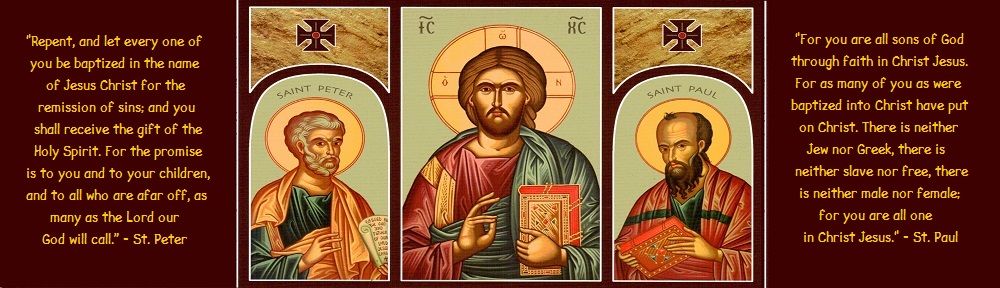
What is this wedding garment? As Paul writes to the Galatians, You are all sons of God through faith in Christ Jesus. For as many of you as were baptized into Christ have put on Christ. There is neither Jew nor Greek, there is neither slave nor free, there is neither male nor female; for you are all one in Christ Jesus. The only garment, the only attire that makes a person pleasing to God is Christ, whom we “put on” by Holy Baptism. Not Baptism, and then you’re good to go forever, whether or not you continue in faith. But Baptism, combined with faith; Baptism as the promise of God’s forgiveness for the sake of Christ, which we are to continually grasp by faith. This is the wedding garment that God Himself provides. Those who are found wearing it when He comes will enjoy eternal life at the heavenly wedding feast. These are the “chosen,” those whom God elected in eternity to be partakers of eternal life. Those who are found without it will be cast out into outer darkness forever.

So when you consider the doctrine of “election,” you see that it does not good to try to look back into eternity to speculate about whether or not you’re among the elect. Stick with the parable. If you hear God’s minister calling out to you to “come to the wedding,” to repent and believe the Gospel, then know for certain that God Himself is calling, inviting, persuading, convincing you to come, because all things are ready. He has given Christ for the sins of the world, and now gives Him to you to be your Savior. He planned this wedding feast for you in eternity and also planned exactly how and when He would send His minister to you, to call you.

Now, do you want nothing to do with repentance and the forgiveness of sins through Christ? Then you shouldn’t consider yourself among the elect—not because God didn’t want you to be saved or because God didn’t give His Son for your sins, or because God’s invitation is less than sincere, but only because you yourself are refusing His invitation.

Or, has God’s call led you to sorrow over your sins and to desire a place at His wedding feast, to look to Christ crucified, true God and true Man, for forgiveness? Then you should count yourself among those whom God has elected, called, and justified, and know that He prepared in eternity everything that you would need for your salvation, including the sending of His Son, including the Gospel call, including your justification through faith, including all the troubles and crosses you would bear in this life, including your prayers for help that He will surely hear and answer, including the continued preaching of the Word and the administration of the Sacraments by which means He intends to strengthen you in your struggle against the devil, the world, and your sinful flesh, and to keep you dressed in the wedding garment of faith until He comes.

Now may the God of peace Himself sanctify you completely; and may your whole spirit, soul, and body be preserved blameless at the coming of our Lord Jesus Christ. He who calls you is faithful, and He will do it. Amen.


Source: Sermons

Knowing how Christ fits into the Scriptures

(Sermon preached in Beaverton, OR)

Sermon for the Eighteenth Sunday after Trinity

1 Corinthians 1:4-9  +  Matthew 22:34-46

Dear saints of God, sanctified through faith in Christ Jesus our Lord: Before this weekend I had only met a few of you. But I know we have much in common, and word of your faith and your perseverance has certainly reached us in Las Cruces. I give thanks to God for this opportunity to speak to you—in person!—in His name, and you should know that the words of St. Paul to the Corinthians in today’s Epistle express my thoughts exactly:

I thank my God always concerning you for the grace of God which was given to you by Christ Jesus, that you were enriched in everything by Him in all utterance and all knowledge.

The fact is, you have been enriched in everything in Christ, in all utterance and all knowledge. Your knowledge and your utterance—your ability to speak the truth clearly— go way beyond that of the smartest atheists on the planet, way beyond famous Bible scholars, way beyond synodical heavy-weights and renowned “Lutheran” theologians here in America. Because you know this basic truth: you know how Christ fits into the Scriptures, into Law and Gospel, into redemption and justification. You know how faith alone in Christ is God’s means of making His righteousness your righteousness, so that you are now no longer under God’s condemnation, but stand righteous before God and will be raised from the dead to spend eternity with Him in His heavenly kingdom.

That faith-knowledge, given to you as a gift of grace by God’s Holy Spirit through the preaching of the Gospel, also goes way beyond the knowledge of the smartest religious people in Jesus’ day. And that brings us directly to today’s Gospel.

The Pharisees and the Sadducees were the popular schools of thought on Scriptural interpretation at the time of Jesus—always competing with one another, reacting to one another, often ridiculing one another. Without getting into too much detail here, both parties got some things right and some things wrong in their interpretation of the Scriptures, and both parties got so bogged down in their own interpretations and philosophies and traditions that they completely mishandled the main teachings of the Old Testament. Rabbinical theology had basically become a two-party system that was hopelessly broken.

One of the main beliefs of the Sadducees was that there will be no resurrection of the dead, no life after death. In the words just before today’s Gospel, Jesus had silenced the Sadducees once and for all, proving them wrong on that point from the Holy Scriptures. As He said, But concerning the resurrection of the dead, have you not read what was spoken to you by God, saying, ‘I am the God of Abraham, the God of Isaac, and the God of Jacob’? God is not the God of the dead, but of the living. It’s one of those Holy Week victories of Jesus that often gets overlooked. He demonstrated to everyone that the Sadducees were not to be trusted, because they didn’t understand the Scriptures, that the Christ Himself must die and rise again.

In today’s Gospel, we see Jesus doing exactly the same thing with the Pharisees.

The Pharisees actually agreed with Jesus on the Scriptural teaching of the resurrection. In fact, the resurrection was critical to Pharisaism. Why work so hard at keeping all the Levitical laws and tithing and all the extra laws they placed around the Scriptural laws as a hedge? So that they would be counted among the worthy in the kingdom of God at the resurrection.

But, while the Pharisees were right about the coming resurrection and the eternal life in the kingdom of God, they demolished the road to get there—faith in Christ! — and rebuilt it with their own works of outward obedience.

We see that right away in the Gospel. They turn, as always, to their tunnel-vision focus on the law. One of them tests Jesus with this question: Teacher, which is the great commandment in the law?

Love. Love is the great commandment. Love is the fulfillment of the Law. You shall love the LORD your God with all your heart, with all your soul, and with all your mind.’ This is the first and great commandment. And the second is like it: ‘You shall love your neighbor as yourself.’ It’s not some mushy, gushy emotional affection that God commands. It’s willing, joyful, heartfelt devotion and commitment, first to God, and then to your neighbor, informed and guided by the Word of God.

Everything else hinges on these two commandments. Love for God and one’s neighbor was to be at the heart of everything for mankind, the motivation behind all works, the very foundation of man’s life on earth. The rest of the laws in the Old Testament were about how people were to love God and their neighbor, whether it was the timeless moral laws that apply to all men, or whether it was the ceremonial and civil laws that applied only to the Jews.

But that’s the opposite of what the Pharisees taught and believed. Love was not their motivation for keeping the Law. They tried to keep the commandments, not out of love for God, but in order to get something from God, in order to earn something for themselves, in order to escape punishment.

Honestly, who can possibly love God and his neighbor so completely that every action, every word, every thought flows from it, all the time, without any thought to oneself, what’s good for me, what feels right to me, what I want to do? The entire history of the world, the entire personal history of every one of us cries out, “No one!” Every law that has ever been broken is evidence that a person didn’t love God enough—wasn’t devoted enough to God—to obey His commandments.

This is what the Pharisees failed to grasp, completely ignored, never understood. That all their tithing, all their extra Sabbath laws, all the attention they paid to the intricacies of Levitical ceremony and instruction, was useless for bringing them into God’s favor, useless for buying them a place in the kingdom of heaven. Because all the while they failed to keep the first two great commandments. None of their outward obedience to the Law flowed from pure love for God and their neighbor. Foolish Pharisees! The law is not your Savior. It is your judge, jury, and executioner, which is why St. Paul writes to the Romans, Therefore by the deeds of the law no flesh will be justified in His sight, for by the law is the knowledge of sin.

You have been given this knowledge from above, to know that the chief purpose of the Law is not to tell people what they have to do to be saved or to enter the kingdom of God. It’s there to show you that you fall short of love and therefore deserve the condemnation that the Law pronounces on sinners. It’s there to frighten you to run away, looking for shelter, to seek refuge in the Christ—the only Man who has ever led a perfect life of love, even as the Scriptures testified about Him, that He would be the Lord, Our Righteousness.

Jesus presses that very point with the Pharisees and shuts them up for good with His question. What do you think about the Christ? Whose Son is He? Ah, we know the answer! He is the Son of David! OK, then. How then does David in the Spirit call Him ‘Lord,’ saying: ‘The LORD said to my Lord, “Sit at My right hand, Till I make Your enemies Your footstool”?

How can David’s Son be David’s Lord? They were baffled. No idea! All these years they had read that Psalm (and other similar Scriptures) and never comprehended this key teaching about the identity and the mission of the Christ, that He would be true Man, the Son of David, but also the Lord, true God from all eternity, for the purpose of saving sinful mankind from their sins.

This is how Christ fits into the Scriptures: He would be true man, who would live a perfect life of love under the law; and true God, so that He obedience might count for all men. He would be true man, because human death is the wages of sin, and true God, so that He might receive those wages in the place of sinful mankind, so that we might receive the gift of eternal life through faith in Him, the perfect and only intercessor between God and man, Christ Jesus our Lord.

You know that. You have been enriched in everything in Him in all utterance and all knowledge, even as the testimony of Christ was confirmed in you, so that you come short in no gift, eagerly waiting for the revelation of our Lord Jesus Christ, who will also confirm you to the end, that you may be blameless in the day of our Lord Jesus Christ. God is faithful, by whom you were called into the fellowship of His Son, Jesus Christ our Lord.

You have been given to know Christ rightly, to know how He fits into the Scriptures and into your justification. Rejoice in that knowledge and hold onto it for dear life, even as you have stood for it and suffered for it already. The Church in any one place may grow or not grow, may thrive or barely hang on. But you are not waiting for the Church to grow and thrive, are you? You are, as Paul says, eagerly waiting for the revelation of our Lord Jesus Christ. It is He who will keep you, who will preserve you by His Spirit through Word and Sacrament, who will also confirm you to the end. Remain faithful in hearing His Word and in supporting its proclamation. He will see to it that His Spirit gives the knowledge of Christ to still more people through that proclamation, until His Church is built and you and all His saints stand victorious at the side of David’s Son and David’s Lord, even as His enemies are placed under His feet, including the last enemy, which is death. Amen.


Source: Sermons

Walking humbly before God and man


Right Click to Save

Sermon for the Seventeenth Sunday after Trinity

Ephesians 4:1-6  +  Luke 14:1-11

In the Epistle, you heard these words of instruction from the Apostle Paul: I, therefore, the prisoner of the Lord, beseech you to walk worthy of the calling with which you were called, with all lowliness and gentleness, with longsuffering, bearing with one another in love. It’s as if St. Paul had just finished reading our Gospel for today, where Jesus both taught and demonstrated that very same thing.

In the Gospel, Jesus was invited to a banquet on the Sabbath. It was the home of a ruler of the Pharisees, and they were watching Him closely, not in lowliness or gentleness, not with longsuffering, not in love. They were watching Him to try to trap Him.

But still, they were watching. They were listening. So He bore with them in love and taught them.

The first lesson came as a man with dropsy came before Jesus. (Dropsy, by the way, is a sickness that causes a person’s body to swell up with extra fluid.) Jesus could have just healed the man, but He wanted the watching Pharisees to watch and to consider the question: Is it lawful to heal on the Sabbath?

They had been saying “no” to that question for quite a while and condemning Jesus for doing it on other occasions—for healing sick or demon-possessed people on the Sabbath. But when the sick man is standing right in front of them in the house, they suddenly have nothing to say.

They had forgotten what humility and gentleness are. They had abandoned mercy and compassion. They had turned the good Sabbath Law into a loveless, joyless task to be checked off on their religious scorecard. They had made it into a day for them to exalt themselves over others, at least in their own minds, by their strict observance of the command to rest. They were just like their fathers in Isaiah’s day who ignored God’s will that they should help their neighbor and instead pretended to be righteous because they outwardly worshiped God with fasting.

But God rebuked them: Is it a fast that I have chosen, A day for a man to afflict his soul? Is it to bow down his head like a bulrush, And to spread out sackcloth and ashes? Would you call this a fast, And an acceptable day to the LORD? Is this not the fast that I have chosen: To loose the bonds of wickedness, To undo the heavy burdens, To let the oppressed go free, And that you break every yoke? Is it not to share your bread with the hungry, And that you bring to your house the poor who are cast out; When you see the naked, that you cover him, And not hide yourself from your own flesh?

The Pharisees were hiding themselves from their sick brother, hiding behind a Sabbath commandment so that they didn’t have to help him. Not that they could help him with his dropsy. But Jesus could.

What gentleness on the part of Jesus! What humility! God has come into their midst, and yet instead of tearing into them for their indifference toward the sick man, instead of bringing judgment down on them for putting a religious façade on their hatred for their neighbor, Jesus humbles Himself to teach them, to teach us what kindness looks like, what Law-keeping looks like. Which of you, having a donkey or an ox that has fallen into a pit, will not immediately pull him out on the Sabbath day? Of course you help your neighbor on the Sabbath, if you are able. He’s much more valuable than an animal. Of course it was lawful to heal on the Sabbath, and they should praise Him instead of condemning Him. They should believe in Him instead of rejecting Him.

But they still couldn’t admit it to Jesus, even after watching Him perform a miracle and listening to His sound, Scriptural reasoning. That’s a powerful condemnation. They saw His great love and kindness in action, combined with His divine healing power, combined with His flawless illustration of helping their suffering animals on the Sabbath, and they still couldn’t admit that He was right and that they had been wrong about the Sabbath, about themselves, and about Him. “Forget about helping my neighbor,” they thought. “The Sabbath day is about me, me and my obedience, me and my resting, me and my right to sit in judgment of Jesus.”

Let Jesus’ kindness here toward the man with dropsy and toward the Pharisees stir you to love and trust in Him. He has seen your own self-centeredness and self-importance, your lack of lowliness and gentleness. He has seen you hiding from your own flesh, making excuses for yourself about why you’re right not to help your brother in his need, why you’re right not to honor and obey your parents. He calls you to repent and to believe in Him who was lowly and gentle, kind and good, in your place, who suffered and died for you in order to grant you the forgiveness of sins.

Now, learn more of the same lesson from Jesus as He gives some much needed counsel to the guests at this banquet.

Jesus watched the guests choose the seats of greatest honor for themselves at this feast, ever self-seeking, self-serving. “Me first! I should get what I want. I’m going to take whatever I want. I deserve a place of honor. I deserve recognition, more than these people around me.”

Jesus shows them how foolish they are, how foolish it is to seek honor for yourself above your fellow guests, when only the one who invited you to the banquet has the right to bestow that honor, when only his opinion counts. He can remove you from your self-chosen place of honor in an instant and shame you before your fellow guests. Or, he can move you up. He can exalt you before your fellow guests. Which is better? To be humbled by the host or to be exalted by Him? Isn’t it better to let Him exalt you? Isn’t it only fitting and right that you should walk humbly before your God, trusting in Him to notice you, to remember you, and to have mercy on you in due time? If His opinion matters most, then what does it matter if you don’t get as much honor or as many earthly benefits as the people around you? What does it matter if you sit in last place for a long time, or even for your whole earthly life? Just assume the lowest place and be happy there. As the Psalmist prays, For a day in Your courts is better than a thousand. I would rather be a doorkeeper in the house of my God than dwell in the tents of wickedness.

Whoever exalts himself will be humbled, and he who humbles himself will be exalted. That’s the summary of Jesus’ teaching at the Pharisee’s house. And it’s what He taught with His whole life.

Who has exalted himself, but man over God? From Adam and Eve who played God in the Garden, to the idolaters who set up their own beliefs over God’s Word, to the false teachers who play God by substituting their lies for God’s truth, to the murderers all over our country and our world who play God in taking the lives of their fellow men, to the adulterers and sexually immoral who play God by taking His gifts reserved for marriage and use them as they see fit, to the coveters who play God by setting their hearts on things God has not given, to the Pharisee in us all who thinks he is more righteous than his neighbor, and even more righteous than God.

And who has humbled Himself, but the Son of God, who became Man? From His humbling of Himself to become our brother and to live as a servant, to His humble dealings with sinners, to His suffering and death for our sins, even the death of a cross, Christ Jesus has humbled Himself, out of pure love for His Father and for the human race, and now He has been exalted to the highest place and given the name that is above every name. Jesus is the One who walked humbly before God and man, and now has been exalted.

Now He calls out in the Gospel, Come to Me, all you who labor and are heavy laden, and I will give you rest. Take My yoke upon you and learn from Me, for I am gentle and lowly in heart, and you will find rest for your souls. For My yoke is easy and My burden is light.

You have heard His call to humble yourselves in repentance and to believe in Him, the lowly and gentle One, for your salvation. You have been buried with Him through Baptism into death and have risen with Him, and so you have been called to share in His exaltation, too, all in good time.

For now, as St. Paul writes as he sits in prison for his selfless preaching of the Gospel, walk worthy of the calling with which you were called, with all lowliness and gentleness, with longsuffering, bearing with one another in love.

This walking humbly before God and man is how Christians are to walk worthy of our calling, because we all share a common Lord, a common faith, and a common Baptism. Remember into whom you were baptized. Remember His lowliness and gentleness, and learn to imitate Him. Seek the lowest place for yourself, as Christ did for Himself, and know that God will not abandon you there. If we endure, we shall also reign with Him. Amen.

Source: Sermons

See how Jesus deals with death


Right Click to Save

Sermon for the Sixteenth Sunday after Trinity

Ephesians 3:13-21  +  Luke 7:11-17

Today our nation remembers the death and destruction that occurred 15 years ago today, on 9/11, 2001. We’ll mention that briefly later on.

For now, I’d like you to remember that it was 24 weeks ago today that we celebrated Christ’s victory over death on Easter Sunday. And lest we let the light of Christ’s power over death grow dim in our hearts, the Holy Spirit holds it before our eyes again in today’s Gospel. Because, as the hymn says (although we didn’t sing it today), “Who knows when death may overtake me?” Who knows when death may overtake any of us? You can never be too prepared for that day, but you can be underprepared, so watch Jesus today as He deals with death in the Gospel.

The widow of Nain had already lost her husband to death. Then she lost her only son, too, and was left bereaved and desolate—not unlike Naomi in the Old Testament, who lost her husband and her two sons to death. Remember how bitter Naomi was at first, and how hopeless, even with that faithful daughter-in-law Ruth who stood by her and took care of her. What a sad funeral procession this was as the body of the widow of Nain’s boy was being carried out of the city gate in his coffin, accompanied by a large crowd.

Then along comes Jesus, with a large crowd of His own coming from the opposite direction. When the Lord saw her, He had compassion on her. Don’t read over that too quickly. People wonder sometimes if God cares about our suffering, if He understands our sorrow or sympathizes with us at all. Well, the compassion of Jesus is the compassion of God. This is how He views those who grieve, especially who grieve over death, with deep-seated, heart-wrenching compassion.

Because death was not God’s intention or desire for mankind. God made us to live, not to die, to enjoy everlasting life in His presence, not to suffer death and eternal punishment. Death is the very thing God warned Adam and Eve about in the Garden of Eden, the very thing He told them how to avoid and gave them all the tools necessary to avoid it. It was their choice to bring it on themselves and on their children, and it is the same choice that we also make, by nature, to try to play God, to tell Him what’s right and what’s wrong, to do and to believe as we please. Death is the wages we have all earned for ourselves, for all have sinned.

But what did Jesus say? I have come that they may have life, and that they may have it more abundantly. He showed us that in everything He while He walked the earth. He shows it to us again in how He dealt with death at the gates of Nain.

He said to the widow, Do not weep. Why? Because nothing was wrong? No. But because Jesus had come, and He was about to make everything right.

He touched the coffin, halting the procession, stopping this death-march in its tracks, signaling that He was about to change the course of death.

He said, “Young man, I say to you, arise.” So he who was dead sat up and began to speak. And He presented him to his mother. There was no hocus-pocus. No grand ritual. No strain or effort on Jesus’ part. Just the almighty word of the Son of God—the same word that brought the universe into existence, that called the stars into being, the same word that once pronounced death upon guilty sinners. Now that word is a good word, a word of hope, a word of life.

It’s a word that Jesus has already spoken to you, through His appointed ambassadors. As He says in John 5, Most assuredly, I say to you, he who hears My word and believes in Him who sent Me has everlasting life, and shall not come into judgment, but has passed from death into life. Most assuredly, I say to you, the hour is coming, and now is, when the dead will hear the voice of the Son of God; and those who hear will live. For as the Father has life in Himself, so He has granted the Son to have life in Himself, and has given Him authority to execute judgment also, because He is the Son of Man. This is the voice of the Gospel, calling out to sinners to believe in the Lord Jesus, who suffered death and the punishment for sin in your place, who rose again from the dead and gives eternal life to all who believe in His name. The preaching of the Gospel is how Jesus comes to you and says, “Do not weep.” Why? Because there’s nothing wrong? No. But because He has borne your wrongs and borne your punishment and borne your death, and will make everything right between you and God when you believe in Him.

Indeed, as St. Paul writes to the Ephesians in chapter 2, But God, who is rich in mercy, because of His great love with which He loved us, even when we were dead in trespasses, made us alive together with Christ (by grace you have been saved), and raised us up together, and made us sit together in the heavenly places in Christ Jesus, that in the ages to come He might show the exceeding riches of His grace in His kindness toward us in Christ Jesus. For by grace you have been saved through faith, and that not of yourselves; it is the gift of God, not of works, lest anyone should boast.

So what harm can death do to you, if you have already passed from death into life? What sin can condemn you if God has already made you alive together with Christ? Jesus has touched the coffin of all who believe in Him and has interrupted the course of death through Holy Baptism. Death will no longer end in the grave, and it will never lead the believer in Christ to hell. Instead, in a spiritual way, Christ has already raised believers to life.

But, of course, that’s not all. The hour is coming in which all who are in the graves will hear His voice and come forth—those who have done good, to the resurrection of life, and those who have done evil, to the resurrection of condemnation. Just as Jesus stood by the coffin of the young man of Nain and told him to arise, so His voice will go out to every grave on earth and call all people to arise in the great resurrection of the body.

If that’s true—and Jesus proved again in today’s Gospel that He has the power to do exactly what He says here, then a person’s whole life has to be driven by this. How you live here on earth will have eternal consequences. Those who heard His voice calling in the Gospel during their earthly life, who repented and believed in Him and persevered in faith until death, will be raised to everlasting life. And those who failed to repent and believe will be raised to everlasting condemnation.

This was, by the way, the primary effect that 9/11 should have had on the people of our country. It should have been a wake-up call for all people to repent of their wickedness and to believe in the Son of God now, before it’s too late. Because, “who knows when death may overtake me?” And surely, by the grace of God, it has had that effect on some. But for the most part, these 15 years after that horrifying event, people continue to mock the judgment of God, and our nation as a whole continues its death-spiral with every form of depravity and wickedness imaginable, from abortion and the support for it, to unbridled sexual immorality, to evolutionary propaganda, to the love for every religion except the pure religion of Christ Jesus.

Be that as it may, the words of today’s Gospel are intended to draw you, the precious people of God, even closer to Jesus, the compassionate Lord of life and death, so that you put your trust in Him now, before death comes. This is the day of grace. This is the time of God’s favor, for you, and for your loved ones. And this is our opportunity, as a church, to celebrate and to proclaim the forgiveness of sins and the hope of everlasting life through faith alone in Christ alone. Jesus will not disappoint you. His compassion for those who grieve is just as real today as it was for the widow of Nain. And His power over death is just as real, too. Death still surrounds us in the world, but let the comfort of Jesus’ peace and love surround you even more, and let His body and blood, given to you in the Sacrament of the Altar, serve as the medicine that sustains your spiritual life until the day when Jesus calls you out of your grave to everlasting joy. Amen.


Source: Sermons

The idolatry of worry, and its remedy


Right Click to Save

Sermon for the Fifteenth Sunday after Trinity

Galatians 5:25-6:10  +  Matthew 6:24-34

It’s time for our weekly dose of honesty from the lips of Jesus, and for our annual dose of that honesty when it comes to the matter of worrying—that constant companion of us all, to one degree or another. Not just honesty, of course, but along with it, a warning, and encouragement, and comfort.

As Jesus teaches His disciples in today’s Gospel, He is not afraid to call a thing what it is. After warning us that we cannot serve two masters, both God and Mammon—the idol of earthly wealth, He links Master Mammon with our tendency to worry.

It seems like those things wouldn’t be directly related to each other—wealth and worry. We think of riches and wealth as objects of greed, not of worry. We think of riches and wealth as the rich man’s idol, not as the poor man’s problem. But Jesus instructs us in the Gospel that you don’t have to be rich to bow down to Master Mammon. Everyone, both rich and poor, is inclined to worship this false god.

We’re talking here especially about worry over getting the things we need for this life, worry as the anxious pursuit of providing for oneself. People worry, they concern themselves, they become preoccupied with getting food and clothing and the other necessities of this life, or they worry that some disaster may strike that will deprive them of the things they need to live. So everything else in their life revolves around this pursuit of providing for themselves. The worry is ongoing, because our needs are ongoing.

And, more often than not, especially in our country and in our time, greed is added to worry as people worry about getting, not just the basic necessities like food and clothing, but more and more things that used to be recognized as luxuries: a tasty variety of foods, a certain style of clothing, cable TV, smartphones, enough money to support a certain lifestyle. There is no contentment for most people with just the basic necessities of life—not unlike the people of Israel as they wandered through the wilderness and grew sick and tired of eating the same manna for food every day. And so their pursuit of providing for themselves gets bigger and bigger as they find more and more things they just “can’t live without.” We’ll call that greed + worry.

Why is that a form of idolatry? Because, at the heart of worry is the suspicion—or even the conviction—that God is not the one who provides for you, that God doesn’t care. That you are actually the one who provides for you. And that wealth is the solution. Wealth is the answer. Acquiring wealth becomes the goal of one’s life, because then, you think, if I have more money, then I’ll be able to stop worrying so much. If I have more money, then I’ll be able to sleep at night. If I have more money, then I’ll have food and clothing, and maybe even happiness. So, Master Mammon, help me! Master Mammon, save me! I’ll serve you with my whole life, if you’ll just provide for me.

That’s called idolatry. And, like all forms of idolatry, it’s foolish in addition to being deadly, because Master Mammon couldn’t care less about you. Master Mammon is like a carrot on a stick held out in front of a donkey, that he chases for mile after mile, this way and that way, wearing himself out to get that carrot. But he’ll never get it. It was a trick to get him to go where the driver wanted him to go. In the same way, wealth is the devil’s carrot, and he holds it out before your eyes as the thing you should chase, as the thing you should pursue, instead of seeking the kingdom of God and His righteousness.


But see how Jesus deals with these idolaters—these worriers who have come to Him for help. He doesn’t send them away, does He? No, He keeps them close. He points out their idolatry, and then turns their gaze to their Father and His faithfulness.

Look! The Father—the God who created the earth and everything in it—provides food for the birds. They neither sow nor reap nor gather into barns; yet your heavenly Father feeds them. Are you not of more value than they? Yes, you are. Because you’re human beings, created in the image of God. But more than that, because the Son of God became a human being like you and shed His blood for your sins so that you can live under Him in His kingdom forever. And you have been baptized in His name and adopted as a son of God. Will you really believe the devil’s lie that God doesn’t care about you, that you have to provide for you on your own? Will you really chase after his carrot of wealth and earthly riches, when you have a good Father in heaven who promises you so much more?

And consider the lilies of the field, Jesus says, how they grow: they neither toil nor spin; and yet I say to you that even Solomon in all his glory was not arrayed like one of these. Now if God so clothes the grass of the field, which today is, and tomorrow is thrown into the oven, will He not much more clothe you, O you of little faith? He will, if you’ll just trust Him. He’s already brought you to faith in His Son. He’s already clothed you with Jesus! As Paul writes to the Galatians, You are all sons of God through faith in Christ Jesus. For as many of you as were baptized into Christ have put on Christ. God will use whatever means necessary to see to it that you, His dear children, will have the necessities of life as you trust in Him and look to Him as your Helper and as your Savior.

With that promise in place, given by the Son of God Himself, you can stop anxiously pursuing the carrot on the stick. You can stop worrying about your life and seeking the things of this life. Instead, Jesus shows you a better way, the way of faith. Seek first the kingdom of God and His righteousness, and all these things shall be added to you. Devote your life, your thoughts, your energies, to the kingdom of God. His Word. His Sacraments. His grace. His instruction. Pursue wisdom. Pursue righteousness in how you treat your neighbor, in how you live in this world. Those are to be the first things you “worry” about. And all these things—these things that you need, whether it’s food and clothing or whether it’s any of the other necessities of this life—shall be added to you.

And don’t be surprised by the fact that you need this annual—this weekly!—admonition from Jesus not to worry. You’d think by now, those of us who have been in the Church for a long time, we’d have gotten over this worry thing. You’d think we’d have learned by now how good and gracious our Father is, and we have learned it. But here the devil always stands, dangling his carrot in front of our eyes. Here our sinful flesh still wants to believe the devil’s lie, that what you see is all there is, and the world around you is happy to repeat that lie day after day after day. With enemies such as these, it’s a wonder you’re even here in church, instead of out there pursuing the things of this life.

Jesus knows that you need a continual supply of admonitions, of His Word and His Sacrament, to guard you against the devil’s lies and the weakness of your own sinful flesh. Hear Him again today, and take His words with you when you leave. Do not worry about tomorrow, for tomorrow will worry about its own things. Sufficient for the day is its own trouble. And sufficient for the day is the strength and comfort that your heavenly Father will provide. Amen.

Source: Sermons

The ten, the nine, and the one


Right Click to Save

Sermon for the Fourteenth Sunday after Trinity

Galatians 5:16-24  +  Luke 17:11-19

How do you measure the health of a church? A friend asked me this week, “How is your church doing? Is it growing?” People mean well when they ask that question. But they’re usually under the false impression that growing in numbers is the mark of a church that is doing well. To them, the corollary would then also be true: a church that is not growing in numbers is doing poorly, and if it’s shrinking in numbers, it must be in crisis mode.

Let’s just dispense with all that, shall we? Let’s learn a lesson from Jesus’ encounter with the ten lepers. There are many lessons to be learned here, but today, let’s focus on the numbers: the ten, the nine, and the one.

The ten lepers were very sick. Leprosy was such a devastating disease at the time of Jesus, an infection that spread throughout the body, and from one person to the next. Spots would break out on the skin, often turning into sores or deformities or rotting pieces of flesh. Lepers were “unclean.” They were cast out of society and made to dwell in isolation, in leper colonies on the outskirts of town, making it the worst physical ailment a person could suffer, not because it was necessarily the most painful, but because it took everything away from you—family, friends, home, work, synagogue, Temple. And there was no cure for it.

But these ten lepers heard the good word about Jesus, that He was merciful and good, that He had power over sickness and disease, that God had come to earth to visit, to help His people, and that He had even come near to where they were. So they begged Him from afar, Jesus, Master, have mercy on us!

Jesus said to them, Go, show yourselves to the priests. That’s what you were supposed to do, according to the Law of Moses, if you had leprosy and then got better. You would go to the priest to have him examine you, and to certify before the community that you were indeed cleansed of your disease and welcome to rejoin society. Jesus sent them away with the assurance that, by the time they got to the priest, they would be clean.

Those ten lepers represent all Christians. Not all people. All Christians. Like the rest of mankind, all Christians are infected with that devastating disease called sin. We are, by nature, unclean before God, with a flesh that is prone toward that whole list of fleshly works that the apostle Paul mentioned in the Epistle: adultery, fornication, uncleanness, lewdness, idolatry, sorcery, hatred, contentions, jealousies, outbursts of wrath, selfish ambitions, dissensions, heresies, envy, murders, drunkenness, revelries, and the like. Just turn on the TV. That’s what you’ll see, whether it’s on the news or depicted on a show or in a movie. Just look hard enough in the mirror. You won’t fail to see the items on that list, hidden just under the surface, like a volcano that’s getting ready to erupt.

Like the rest, we Christians were dead in trespasses and sins, as Paul writes to the Ephesians in chapter 2, walking according to the course of this world, walking among the sons of disobedience, conducting ourselves in the lusts of our flesh, fulfilling the desires of the flesh and of the mind. We were “children of wrath, like the rest.”

But then, like the ten lepers, we heard the good word about Jesus, that He came to bear our sins and to take up our infirmities. We heard that He forgives sins to all who come to Him seeking mercy. And so we came. We were baptized and cleansed of our sin. Even though we still carry around the leprous sinful flesh, we are clothed in the righteousness of Christ and clean in the sight of God. All the baptized start out their life diseased before God, and then, through Holy Baptism, all the baptized are healed before God—forgiven and cleansed.

So much for the ten. All ten lepers had those things in common—their crippling disease, their hearing the good word about Jesus, their plea to Jesus for mercy, and their healing.

But now the group of ten, after they are healed, divides into two groups: the nine, and the one. The nine receive their healing from Jesus, and when they realize it, they hurry to the priest. Why? So that they can get on with their lives. So that they can get back to their homes and their families. So that they can find work and make a living and take hold again of the life that was stripped from them when they became ill. They were excited and eager to get back to the way things were. Who could blame them?

And yet, Jesus does blame them. Were there not ten cleansed? But where are the nine? Were there not any found who returned to give glory to God except this foreigner? Nine out of ten of those who were once healed by Jesus went on with their earthly lives—without Jesus.

Now, someone might argue that the nine could have given glory to God in prayer, without returning to where Jesus was, right? Jesus’ words indicate that He was looking for more than a prayer of thanks uttered to the omnipresent God while they ran to get their earthly lives back.

First of all, true faith in Christ doesn’t consider Christ to be an afterthought. For the believer, giving thanks to Him isn’t one item among many on the “to-do” list or something you do so that you can get back to the really important things like living your earthly life. No, faith in Christ keeps Christ at the center of everything. Faith in Christ makes giving thanks to God the very goal of our existence, the activity in which we are continually engaged, no matter what we’re doing in the world. But that wasn’t the case for the nine.

Secondly, faith in Christ isn’t satisfied with a prayer uttered to the omnipresent God. Yes, prayer is good. Prayer is right. God hears your prayers, whether they’re uttered in church or in your bedroom closet. But when God makes Himself present on earth, when God comes near to help, as He did when Jesus came near to the lepers, faith seeks Him where He makes Himself present. But the nine did not return.

This is what happens with many—maybe even nine out of ten?—of the baptized. They believe at first. They believe for a while. But then they get tangled up in their earthly life—friends, family, career, entertainment. They stop struggling against the sinful flesh that clings to them and let it reign over them again. They stop participating in the Eucharist—the great “Thanksgiving”—where Jesus makes Himself present again on earth in the preaching of the Word and with His body and blood in the Sacrament. The apostle’s warning to these Christians couldn’t be more stern: of which I tell you beforehand, just as I also told you in time past, that those who practice such things will not inherit the kingdom of God.

But then there is the one—the one who, when he is healed of his leprosy, rejoices in God. He rejoices in the mercy of Christ. He isn’t forced to return. He isn’t obligated to give thanks. It’s just what he is eager to do, what he now lives to do. He has been recreated as a new man, a clean man, a man who clings only to Christ, even as he goes about the rest of his earthly life. His is a life of ongoing repentance, a life of Eucharist, a life of thanksgiving, a life of purpose in which Christ is the focus; Christ is the center; Christ is the goal.

So it is with some of the baptized, and so God wants it to be for all of you who hear this Gospel. It’s why He confronts you again today with the ten lepers, with the nine, and with the one. The merciful Lord Christ has come near to you again today in Word and Sacrament, because He knows you need His forgiveness again, and His strength. He knows your flesh is strong and is tugging at you to indulge in wickedness, to pursue your own self-interests, to turn Jesus Himself into an afterthought in your life. And so He has come near to help, to forgive and to strengthen, and also to receive your thanksgiving as you gather around Him in this Eucharist where He is really present again on earth.

How do you measure the health of a church? Not by the numbers, but by the presence of the true Word of Christ, and by the faith of His members which expresses itself in thanksgiving and in love. Some of that can only be measured by God Himself, who alone sees the heart. But some of it—the presence of Christ’s members here, at Christ’s Service, the joyful expressions of thanksgiving, and the zeal to fight against the flesh and to produce the fruit of the Spirit: love, joy, peace, longsuffering, kindness, goodness, faithfulness, gentleness, self-control—that can be seen, to some degree. May God strengthen you, His baptized children, to abandon the nine and to join the one in a lifelong returning to give glory to God in the Person of His Son, Jesus Christ. Amen.

Source: Sermons

Fear the Good Samaritan. And thank God for Him.


Right Click to Save

Sermon for the Thirteenth Sunday after Trinity

Galatians 3:15-22 + Luke 10:23-37

Even people who don’t know the Bible or pay much attention to the words Jesus spoke are familiar with the term “Good Samaritan.” They think of a Good Samaritan as basically a nice guy who stops along the road to help a stranger in need. In fact, just last week there was a tragic news story, headlined, “Good Samaritan killed after helping two South Carolina teens pull SUV from ditch.”

We need to pause again this year, on this 13th Sunday after Trinity, to recalibrate our understanding of the Good Samaritan, to line it up with what Jesus was teaching, as opposed to what the world has come away with from this parable, which is basically the notion that you’re supposed to lend a helping hand to a stranger once in a while. That’s not why Jesus told this parable. He told the parable of the Good Samaritan to frighten his hearers to death.

Let’s back up for a moment. Let’s start where our Gospel starts. Then He turned to His disciples and said privately, “Blessed are the eyes which see the things you see; 24 for I tell you that many prophets and kings have desired to see what you see, and have not seen it, and to hear what you hear, and have not heard it. Why? What was it that Jesus’ disciples were seeing and hearing that the prophets and kings of the Old Testament all yearned to hear and see?

They were hearing and seeing the Seed of Abraham in action. Remember what you heard in today’s Epistle from Galatians 3—that’s a key chapter of the Bible for understanding the role God intended for the Law of Moses to play. Paul reminds us that God made a covenant with Abraham—that God would cause Abraham and His Seed to inherit the earth, to inherit eternal life. And the apostle points out that God did not make that covenant with all of Abraham’s descendants (plural), but only with THE promised Seed of Abraham (singular), which was Christ. He was the Heir of the Old Testament. Prophets and kings longed to see His day—which meant the fulfillment of the Law, the atonement for sins, and the proclamation of the day of grace—salvation for sinners by grace through faith in the Seed of Abraham. That was always God’s intention, always the only path for sinners to inherit eternal life.

But what happened between the time of Abraham and the time of Jesus? The law was added, summarized in the Ten Commandments, and summarized again in a different way with the twofold command: You shall love the LORD your God with all your heart, with all your soul, with all your strength, and with all your mind,’ and ‘your neighbor as yourself.’ Why was the law added to the covenant God made with Abraham and his Seed? Paul tells us that it was not added in order to void or to change in any way the promise of salvation by grace that God made with Abraham. It was added, Paul writes, because of transgressions, till the Seed should come to whom the promise was made. In other words, the law was added in order to shine a bright light on the transgressions—the sins—that all men commit, so that we might repent and believe in the promised Seed of Abraham for the forgiveness of sins and for the gift of eternal life that only He can give.

But human beings still have this innate, twisted tendency to think that we can earn a place in heaven by keeping the law, even though the law was never given for that purpose. That’s what the lawyer in our Gospel thought. What was his question again? Teacher, what shall I do to inherit eternal life? And since the lawyer was infatuated with the law, Jesus sent him back to the law for his answer, and he answered correctly—Love the Lord with all your heart and love your neighbor as yourself. And Jesus agreed. If you do this, you will live.

The problem is, he couldn’t do it, and neither can you. Neither can anyone. As Paul wrote, For if there had been a law given which could have given life, truly righteousness would have been by the law. If life could be won by the law, it would have been done by the law. If man was capable of earning his way to eternal life, God would have made the law the way to enter eternal life. It’s a good law, after all! Love for God! Love for your neighbor! What could be better than that? But human beings are fallen. Human beings are sinful. We can’t do it. And not only can’t we do it, but we can’t even recognize that we can’t do it.

Like the lawyer in the Gospel. He heard Jesus’ reply, Do this and you will live, and he knew how broad and overarching that command was, but still tried to wiggle his way out of the law’s sweeping command—and condemnation. But he, wanting to justify himself, said to Jesus, “And who is my neighbor?”

Maybe if I can narrow down this command of the law to include only a small set of people—my immediate family, my next-door neighbor, people of my own race. Who is my neighbor?

That’s what prompted Jesus to tell the parable of the Good Samaritan. You heard it. You know it. We’ll summarize it briefly.

There’s a man in need. He’s been robbed and beaten and left for dead on the side of the road. Two men come upon him—two men from Jerusalem, two “holy” men, two “children of Abraham,” a priest and a Levite, the guardians of the Law. They see the man lying there, right on their path, needing their help, needing their love. He’s their Jewish brother, their fellow church member. But they each go out of their way to step to the side, to avoid him, to avoid loving him.

The Samaritans, on the other hand, were treated poorly by the Jews, despised as foreigners and half-bloods. But see how this Samaritan treats the dying Jewish man as if he were his brother, his next-door neighbor, his friend. Some people might see a wounded man on the side of the road and despise him, or fear him. The Samaritan has compassion on him. He runs over to help. He takes all those loving steps to tend to his wounds, to bring him to safety, and to see to his ongoing care there at the inn until the Samaritan returns from his journey. It’s a beautiful story of love and compassion.

But it’s also a terrifying story. Because this is what God’s law requires, if you would do something to inherit eternal life. Not the once-in-a-while helping of a stranger, but the ongoing treatment of every single person around you with this level of care and compassion, even putting your own life at risk if necessary—in addition to that perfect love for the God of Abraham who is Father, Son, and Holy Spirit. Love your neighbor as yourself. Do to others what you would have them do to you. That’s the model the Good Samaritan sets for you. That’s the Law. Either keep it without fail, or be damned.

The parable of the Good Samaritan should terrify people. It should send them running for cover from the Law’s condemnation, which is aimed at everyone who has ever shown anything less than the mercy of the Good Samaritan in our Gospel. If people understood that, they would not think so highly of the Good Samaritan. Because he puts all men to shame and shows us what we must do, if we would inherit eternal life.

What a terrible lesson. But what a necessary lesson for us poor sinners to learn. Because most people live under this delusion, that you can be good enough for God to accept you into eternal life. But you can’t. That’s why you should fear the Good Samaritan.

But at the same time, if you’ve learned to fear the Law and to tremble at your sins, there is great comfort and hope for you in this Gospel. Indeed, as Paul writes to the Galatians, the Scripture has confined all people under sin, that the promise by faith in Jesus Christ might be given to those who believe.

The Lord God saw us wounded by the devil, abandoned by the Law, helpless to save ourselves because of our inborn sin. He saw us, wretched, poor, naked and blind, and He took pity. He had mercy. He sent His Son into our flesh, even though we were His enemies by birth. He became our Neighbor. He came and helped us, putting His own life in danger, even sacrificing His own life on the cross in order to buy the bandages and the oil and wine to heal our wounds, to forgive us our sins. He sent His Gospel to you in the ministry of the Word, He sent someone to baptize you, washing your sins away from God’s sight. He brought you into the inn of His holy Church, where His ministers look after you and keep applying the healing salve of Word and Sacrament, until He returns from His journey to bring you safely home.

Once the Good Samaritan has terrified you, so that you flee from the law and from thinking you have to do something good in order to inherit eternal life, flee in faith to the truly Good Samaritan, Christ Jesus, and thank God for Him who has loved you with a love you can never equal.

And yet, because He has loved you and granted you the gift of eternal life that is only His to give, as the Seed of Abraham, now you are equipped, as a son of Abraham through faith in THE Son of Abraham, to spend the rest of your life on earth imitating His love. You’ve experienced the love of Christ, the Good Samaritan, firsthand. So it’s a fitting thing for the Holy Spirit to call out to you now, Go and do likewise. Not in order to inherit eternal life. But because Christ has inherited eternal life for you and gives it away for free to all who believe in Him. Amen.

Source: Sermons

The One who wounds is also the One who heals


Right Click to Save

Sermon for the Twelfth Sunday after Trinity

2 Corinthians 3:4-11  +  Mark 7:31-37

We have before us today in the Gospel the simple, friendly account of how Jesus healed a man who was deaf and mute. Let’s begin today by simply reviewing the story.

The good word about Jesus was spreading all over Israel: this man Jesus is a Teacher sent from God. He speaks with authority. He teaches with patience. He accuses all men of sin, but at the same time He offers the grace of God to all men—the forgiveness of sins as God’s free gift through faith in Him. This Jesus has divine power over the creation—over sickness, over demons, over nature itself. This Jesus takes from no one, but gives freely to all who come to Him for help. This Jesus is merciful, kind and good. And He just might be the Christ.

Some of those who heard the good word believed the good word. But some of those who heard and believed had a friend who couldn’t hear anything, because he was deaf. So they brought to Jesus one who was deaf and had an impediment in his speech, and they begged Him to put His hand on him. Which He did, without requiring anything at all of the deaf man. He stopped what He was doing, took the man aside, one on one. And then, in His typical not-afraid-to-get-too-close-to-you manner, He put His fingers in his ears, and He spat and touched his tongue. Then, looking up to heaven, He sighed, and said to him, “Ephphatha,” that is, “Be opened.” And his ears were opened and his tongue was loosed. And the crowd was amazed and said, He has done all things well. He makes both the deaf to hear and the mute to speak.

I wonder how the world would react if Jesus performed this miracle today. I think the world would react this way. “It’s about time you healed him, Jesus! It’s Your fault—God’s fault—this poor man was deaf and mute in the first place! You should heal everyone who is suffering. You never should have made them suffer in the first place.”

Blaming God for human suffering is a very common reaction. Many people would say it’s God’s fault that the man in the Gospel was deaf and mute in the first place, and in a sense, they’re not entirely wrong. There is this from the book of Exodus, when God first called Moses to deliver the Israelites from slavery in Egypt, and Moses at first made the excuse that he couldn’t speak well enough. So the LORD said to him, “Who has made man’s mouth? Or who makes the mute, the deaf, the seeing, or the blind? Have not I, the LORD?

Yes, God is, in a way, responsible for these physical maladies that people suffer. There’s no getting around it or denying it. But God is responsible for these things like the principal of a school is responsible for a naughty student getting suspended, or like a judge is responsible for a criminal going to jail. Yes, the teacher suspended the student. Yes, the judge put the criminal in jail. But the guilty parties earned those consequences for themselves.

Still, we shouldn’t imagine that the deaf man committed some specific sin to earn his deafness. It all goes back, once again, to the terrible sickness that infects all men from birth, to Original Sin, the corruption that we inherit from our parents, and they from theirs. It goes back to our natural lostness, our deadness, the slavery to sin in which we’re born—a condition that is absolutely lethal for everyone, and yet it’s a condition that no one fully grasps on his own. Before God, no one is innocent. No one is righteous. No one is heaven-bound by nature. Instead, all are hell-bound from birth.

So why does God cause some to be deaf or mute, blind or handicapped in some other way? It’s not because He’s cruel. In fact, God commanded the Israelites not to be cruel to those who suffer in these ways: You shall not curse the deaf, nor put a stumbling block before the blind, but shall fear your God: I am the LORD. Why, then? Is it only to punish? Is it only to give us what we deserve?

Not at all. In all these things, God is more like a doctor than a judge. We’re like tumor-ridden cancer patients by nature, who either don’t know or who refuse to acknowledge how sick we are, because spiritual illness is impossible to see. But the symptoms…the symptoms are easily diagnosed by God’s Law, by His commandments as they tell us what healthy people look like in their thoughts, words and deeds, with selfless love toward God and toward our neighbor. But that’s not what we look like.

So what does God do with us? He afflicts us in ways that we can see, that we can perceive, with maladies, some with one, some with another, some with physical afflictions, others with mental or emotional afflictions, sometimes with financial challenges or hardships. All of it’s designed to get us to go running to the doctor, to the Great Physician, so that we can hear His diagnosis and receive His medicine.

As the Lord says through the prophet, Now see that I, even I, am He, And there is no God besides Me; I kill and I make alive; I wound and I heal; Nor is there any who can deliver from My hand.

But when God afflicts, when He wounds, He wounds like a doctor who prescribes a harsh chemotherapy, or like a surgeon who has to poke and prod and who takes his knife and cuts open a patient’s body and may even have to amputate some part, not to make us sick—we’re already dying! Not to cause harm, but to get in to where the tumor is growing, so that he can remove the tumor that’s killing his patient, so that He can treat the sickness at its source. Now, the surgery may be painful and the recovery, too, may be painful and life-long. But the wounding that a doctor does is for the sake of saving a life, not harming it. He wounds in order to heal. He kills in order to make alive.

So it is with our God. All the earthly wounds and troubles that mankind suffers are used by God to drive us to His Word for answers, for the diagnosis, and also for the cure—the forgiveness of sins, earned for us by Christ through His death on the cross; adoption, sonship, the promise of present help and future glory.

What did God promise in the Old Testament? In that day the deaf shall hear the words of the book, And the eyes of the blind shall see out of obscurity and out of darkness. That prophecy was a prophecy about Christ. It was a prophecy of spiritual healing—the healing of spiritual deafness and muteness and blindness. In other words, those who stubbornly refuse to listen to the Gospel will be brought to listen to it, to believe it. Those who stubbornly refuse to confess that God is good will be brought to confess Him as the One who gave His Son into death in order to save us poor sinners. Those who stubbornly refuse to see the path of life, which is faith in Christ, will be made to see it and to walk in it.

But again, those spiritual healings can’t be seen. So Jesus performed miracles that could be seen, healing deaf ears and loosing tongues that couldn’t speak. He did it to show His kindness, God’s kindness toward those who deserve His wrath. He did it to show that all who come to Jesus for help receive help. When He walked the earth visibly, that help was also visible. Now that He reigns invisibly from God’s right hand, His help is often invisible, too, but it’s just as real. He makes it, not seen, but heard—heard through the proclamation of the Gospel, through the absolution, through words connected with water and with bread and wine. Forgiveness, strength and hope.

Forgiveness, so that you can be certain that the wounds you Christians suffer now are not punishments from an angry God, but tools of the Great Physician to keep you close to your divine Doctor, to teach you to persevere and to trust in Him who was wounded for our transgressions, bruised for our iniquities. Strength to bear up under those afflictions.  And hope, that there will be an end to the sufferings, either in this life or in the life to come, when Christ returns. The One who wounds is also the One who heals. But when He comes again, it will not just be to heal our wounds, but to make us new, to turn us into flawless creatures, with neither physical nor spiritual deformities. That is the sure hope that is ours, through faith in Christ Jesus. Amen.

Source: Sermons