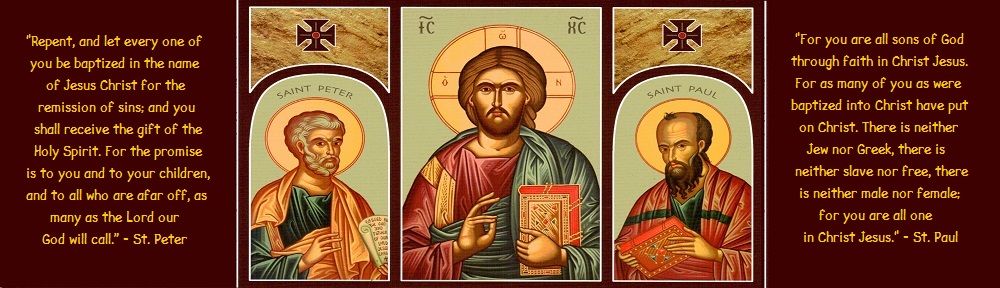
What will you do with this Child?

Sermon

Download Sermon
Service
[vimeo 897777102 w=540 h=360]
Download Service Download Bulletin

Sermon for Christmas Eve

Isaiah 9:2-7

We asked and answered a very important question in that last hymn, one of the most important questions in all of history. What Child is this who, laid to rest, on Mary’s lap is sleeping? It’s the first of only two questions that really matter at Christmas time. Since we’re being led by the prophet Isaiah during our midweek services this year, it’s fitting that we should also be guided by Isaiah in our Christmas celebration, to hear his answer to that first question: What Child is this?

The people walking in darkness have seen a great light. Those dwelling in the land of the shadow of death, a light has shone upon them. The people walking in darkness were the people of Israel. At the time of Isaiah, they had largely rejected their God and turned in their hearts either to false gods or to foreign nations. But false gods can’t save, and neither can foreign nations. Only the true God can save. And so the Lord God subjected them to oppression by foreign nations, on and off, for the next seven centuries.

But the real enemy the people needed saving from wasn’t foreign oppression or earthly trouble. It was the enemy of sin, death, and the devil. And since only the true God can save from those enemies, mankind remains trapped under the power of those great enemies as long as mankind remains an enemy of the true God. And Israel was! Even though God had called them out of darkness and revealed the light of His truth to them. They had rejected that truth. They had made themselves God’s enemies by their idolatry and unbelief. Some still believed, of course, but most didn’t. Even 700 years in the future, from Isaiah’s standpoint, Jesus looked out at the people of Israel and lamented that the people were like sheep without a shepherd, with no leaders left in the Church who were teaching them the truth—so far had the outward, visible Church of Israel deteriorated.

But God had a solution for Israel—a solution that was meant to extend far beyond the borders of Israel, to all the nations of the earth. He foretells a time of great joy and deliverance. You have multiplied the nation; you have increased their joy. They rejoice before you as with the joy of harvest, as men rejoice when they divide the spoils. And what was the cause of the deliverance, and of the joy? For to us a Child is born, to us a Son is given. Isn’t that exactly what we heard the angel proclaim to the shepherds? I bring you good news of great joy which will be for all the people. For to you is born this day, in the city of David, a Savior, who is Christ, the Lord. The entire Old Testament had been pointing to the birth of this Child, the great Deliverer, the Seed of the woman, the Seed of Abraham, Isaac, and Jacob, the Son of David, now finally born as the Son of Mary, along with Joseph, who was descended for everyone on that list. What Child is this? It’s the Child whose birth announcement God had been sending out for 4,000 years. Finally, He was born.

Now, the fact that God sent His Son into human flesh isn’t necessarily good news all by itself. But it is when you add that other phrase: To us, Isaiah said. To you, the angel said. A Child, a Son, has been born to us, to you, for our good, for our deliverance, for our salvation from sin, death, and the devil, and, eventually, from every evil.

But each deliverance at the proper time. The light that shone on the people who sat in darkness wasn’t primarily the light from the angel choir or from the star. It was the light of truth that would later be spoken by that Child. It was the light of the revelation of God to mankind as the God who loved the world and gave His only-begotten Son, so that whoever believes in Him should not perish, but have everlasting life.

Isaiah goes on to tell us more about that Child who was born. The government will be upon his shoulder. Not the earthly government of the nation of Israel, but the government over all things, not immediately when He was born, but after His death, resurrection, and ascension, as He sits even now at the right hand of God the Father.

And his name will be called Wonderful, Counselor, Mighty God, Eternal Father, Prince of Peace. How can the infinite God wrap himself up into a package so small he fits in Mary’s womb, and then in Mary’s arms, and then in a manger? How can God choose to dwell among his enemies and love them? How can the Creator humble himself to the level of his creation, and then get down on his knees and serve his creation? How can God substitute this one child for the whole human race and lay all of his wrath and all of our punishment on him? Truly He is wonderful. And the perfect Counselor, because He knows God perfectly and He knows man perfectly, the one Mediator between God and Man. He is the Mighty God, whose goings forth are from of old, from eternity, as Micah also said. He is the Eternal Father, not the same as God the Father, but eternal with the Father and, since all things were made through Him, He is still the Father of all creation, even as He has become our Brother within the creation. Prince of Peace, because He came to make peace between God and sinful man, and invites all men to repent and to come to Him, find peace with God through Him, and escape from everlasting condemnation.

That’s Isaiah’s answer to the first most important question in the world, What Child is this? God has answered that question for you. The second most important question is yours to answer: What will you do with this Child? Will you reject Him as true God and true Man, as the Savior who was born for you, to bring you to God? Or, just as bad, will you ignore Him, or fail to listen to Him? May it never be! No, God has given His Son to you, so that all men, including each of you in this room, should receive Him in faith and wonder and joy, worship Him, believe in Him, and listen to Him. Picture the Son of God as a humble child, lying in a manger, and then as a humble Man, hanging on a cross, and lying in a tomb. He is no longer a child. He’s no longer lying in a tomb. But God still offers His Son to you in His humility, so that you may know how much your God loves you, what He was willing to live through and to sacrifice for you, to give you this time to come to know Him and believe in Him during this time of grace. So haste, haste to bring Him laud! Hail, hail the Word made flesh! Joy, Joy, for Christ is born, the Babe, the Son of Mary! Amen.

Source: Sermons

Still making straight the Lord’s way

Sermon
Download Sermon
Service
[vimeo 897633559 w=540 h=360]
Download Service Download Bulletin

Sermon for Advent 4 – Rorate Coeli

Philippians 4:4-7  +  John 1:19-28

The King is coming! Jesus, the King, is coming! And He’s almost here. In just a few days, we’ll celebrate His first coming. But we always, always need to be preparing for His second coming. And so we turn to the preacher of preachers, John the Baptist, for help, because just as God used him to prepare the people of Israel for Christ’s first coming, so He uses the preachers who follow in John’s footsteps to prepare the Church for Christ’s second coming.

Last week we met John, at the end of his ministry, in prison, sending his disciples to Jesus to ask Him if He was, in fact, the One who was to come. Today we go back in time a couple of years, to when John first began to preach and to baptize, before Jesus began His own ministry being baptized by John. Who was this strange preacher, living out in the desert, wearing camel-skin clothing, eating a diet of locusts and wild honey, who came “neither eating nor drinking” at banquets or feasts, but led a solitary, ascetic life?

John tells us the most important thing about himself in today’s Gospel. Who was he? He was the preacher, the voice, who made straight the Lord’s way, and in that way, he was the model for all preachers who would come after him.

If you recall, John had been making straight the way of the Lord since before he was born. When the newly pregnant virgin Mary greeted her relative Elizabeth, the baby John leaped for joy in Elizabeth’s womb, announcing to his mother that they were even then in the presence of the Lord.

Some thirty years later, John would leave his home and go out into the wilderness to continue preparing the Lord’s way. His strange lifestyle and his bold preaching began to draw people out to him from all over Israel, until large crowds were gathering around him on a regular basis to hear him. Many were also baptized by him. That got the attention of the religious leaders in Jerusalem. They were supposed to be in charge of the Church of Israel, but they had never sent John out to preach, and certainly not to baptize. So they sent a delegation out to him, to question him.

Who are you? they asked. And he confessed, and did not deny, but confessed, “I am not the Christ.” The Apostle John is careful to note John’s testimony, emphasizing his strong confession that he was not the Christ. He was not the one Israel was supposed to be waiting for or hoping in or trusting in.

Not the Christ…Then, are you Elijah? No. Not Elijah. The prophet Malachi had prophesied that Elijah would come ahead of the Lord, and according to Jesus, John was that figurative Elijah. But he wasn’t the literal, famous, miracle-working prophet who was taken to heaven with a fiery chariot some 800 years earlier. That would have made John something supernatural and impressive. But he didn’t want or claim that kind of fame.

Are you the prophet? they asked, apparently referring to the prophet about whom Moses had prophesied: The LORD your God will raise up for you a Prophet like me from your midst, from your brethren. Him you shall hear. That was a reference to the Christ Himself, which they didn’t seem to understand. No, John said. I’m not the Prophet. In every way possible, John pointed away from himself, not seeking popularity, not seeking fame, not wanting at all to be the center of attention, except for the briefest moment, as people focus briefly on a road sign telling them which way to go, and then the sign has served its purpose and is quickly and appropriately left behind in the background.

John’s only desire was to be a sign like that. He told them, I am the voice of one crying out in the wilderness, ‘Make straight the way of the Lord,’ as the prophet Isaiah said.

There were three ways in which John did that “making straight the way.”

First, he preached repentance. He preached to the Jews, but we’re told that Roman soldiers also came to hear him. He told them what God’s holy Law demanded of them: obedience to the Ten Commandments, and he wasn’t afraid to point out that they had all gone astray, and where. He preached especially against adultery and sexual sins, against mistreating others, against stealing from others, against deceitful business practices. He exposed the people’s sin of putting their own interests first and taking advantage of one another. And he exposed the many ways they committed idolatry, not with idols of wood and stone anymore, but with idols of money, idols of family, idols of tradition, idols of pride in themselves. He warned them to repent, to recognize and to turn from their sins, before God came against them in judgment. And so John made straight the Lord’s way, so that He might come with healing and forgiveness for the penitent.

Second, John baptized the penitent. Mark and Luke both describe John’s baptism as a baptism of repentance for the forgiveness of sins. Those who confessed their sins, those who wanted God’s forgiveness and who wanted to amend their sinful lives, were invited to be baptized by John, to be baptized with water as a means by which God would wash away their sins and make them ready for Christ, who would actually take their sins on Himself and pay for them, eventually, on the cross.

Third, John pointed the people of Israel toward the Christ, who was already on the earth at that time and was just about to reveal Himself. He said, There stands among you one whom you do not know. It is he who comes after me, who has been ahead of me, whose sandal straps I am not worthy to untie. Don’t look at me, John said. I’m only here for a moment to point you to Him. He is the great One. He is the Savior. He is the Lord, true God and the Son of God. He is the One who remains forever and whose word does not pass away. He’s the One we’ve all been waiting for. Hope in Him. Trust in Him, and you will not be disappointed.

And so John has become a model for all the true Christians preachers who have come after him, so that he, through us, continues to make straight the Lord’s way in the hearts and lives of all who hear, so that, when Christ comes again, He may come in deliverance for us instead of judgment against us.

First, like John, true Christian preachers preach repentance. They point out sin—the sin that dwells in your flesh and influences your every thought, word, and deed. They preach against obvious sins, and they preach against secret sins, including self-righteousness and hypocrisy. They warn you of God’s coming wrath against sinners. They urge you to “change your mind” about sin (that’s what the Greek word “repentance” actually means), to view it, no longer as something desirable or innocent, but as something ugly, harmful, and detestable.

Second, like John, true Christian preachers preach and administer Baptism, God’s indescribable gift to mankind, where He invites penitent sinners to wash and to actually be made clean, to be forgiven for the sake of Christ, by being united with Christ in His death and in His resurrection. And now we also have that other great Sacrament, the Sacrament of the Altar, where Christ gives His body and blood with the bread and wine for the forgiveness of sins.

Finally, like John, true Christian preachers point away from themselves. They may make much of their ministry, as St. Paul also did, but they don’t make much of themselves. They don’t make much of their opinions, or their personal stories, or their degrees, or their charisma. They don’t seek the spotlight for themselves. Don’t look at me! Instead, look at Jesus Christ, the One who came, true God and true Man, who suffered for you and died for you that you might live forever with Him. They point to Jesus Christ, the One who is now to be sought, not standing among you, not whispering in your ear, but speaking to you through the Word and ministering to you through the Office of the Holy Ministry. They point to Jesus Christ, the One who is coming again soon, the One whose Advent you should be expecting and longing for, far more earnestly than any earthly success or joy or relief.

So make straight the Lord’s way! Make sure you’re not living in any form of impenitence or idolatry, but, in daily contrition and repentance, drown the Old Man and let him die. And rise again as the Christians God has made you to be, to live according to the New Man, who follows in the earthly footsteps of Jesus, determined to live for God, to suffer for God, to live as a holy person in the world. Then you will be ready to follow in the heavenly footsteps of Christ, the King, when He comes. Hope in Him! Trust in Him! Rejoice in Him! The King is coming soon! Amen.

Source: Sermons

Don’t lose hope between Advents!

Sermon

Download Sermon
Service
[vimeo 895630511 w=540 h=360]
Download Service Download Bulletin

Sermon for Advent 3 – Gaudete

1 Corinthians 4:1-5  +  Matthew 11:2-10

The King is coming! That’s what all the Old Testament prophets foretold! The King—the Christ—is coming! John the Baptist himself foretold it. In fact, as Jesus tells the crowds in today’s Gospel, John himself was prophesied in the Old Testament by the prophet Malachi. He was the promised messenger who was sent to prepare the way before the Lord. He was the most blessed among all the prophets, because he didn’t point to a Christ who was to come. He alone, among all the prophets, was able to point to the Christ who had come.

But where is John in today’s Gospel? He’s in prison. He’s in prison, waiting to be executed by King Herod. He’s in prison for faithfully carrying out his ministry, for preaching God’s Word to the King—warning him to repent for taking his brother’s wife to be his own wife, contrary to God’s Law. How can God’s prophet remain in prison, when it was foretold that the Christ would “proclaim liberty to the captives, to proclaim the acceptable year of the LORD, and the day of vengeance of our God; to comfort all who mourn, to console those who mourn in Zion, to give them beauty for ashes, the oil of joy for mourning, the garment of praise for the spirit of heaviness”? Where was all that?

What’s more, John had preached about Jesus that He will baptize you with the Holy Spirit and fire. His winnowing fan is in His hand, and He will thoroughly clean out His threshing floor, and gather His wheat into the barn; but He will burn up the chaff with unquenchable fire. Where was the winnowing fan? Where was the fire? God’s prophet sat in prison, while wicked King Herod continued to prosper. Zion (the people of Israel) still sat under Roman oppression. If Jesus was the Christ who was to come, why wasn’t he making everything right? It didn’t make sense. And, often, it still doesn’t make sense to God’s people, even to ministers of the Gospel, like John was. But Jesus’ message to John in today’s Gospel was all he needed, and it’s all we need, too. And that message is, essentially, Don’t lose hope during this time in between!

John wisely, properly, sent his disciples to Jesus to ask Him about this apparent contradiction. If He was the one who was to come, if He was the promised Christ, why wasn’t He doing many of things that were prophesied about Him? Are you the one who is to come, or should we expect another? Jesus answered and said to them, “Go and tell John what you hear and see. The blind receive their sight, and the lame walk; the lepers are cleansed, and the deaf hear; the dead are raised, and the poor have the gospel preached to them.

In order to answer John’s question, “Start,” Jesus tells John’s disciples, “with what you can see and hear.” Jesus is healing blindness, deafness, lameness, leprosy, and even death—just as the Old Testament prophecies said about the coming Christ. You can see that He’s doing these things. Furthermore, you can hear that He is preaching the gospel, preaching good news to the poor, just as Isaiah had prophesied about the coming Christ. But what good news is He preaching? And who are the poor? The answer to those questions will help us understand the rest.

While Jesus certainly preached against the rich people who were trusting in their riches or being stingy with their wealth, He never once preached to the poor people in Israel that they would become rich—not financially, at least. He never once told them that anyone was going to raise them out of earthly poverty. Think of the parable of the rich man and poor Lazarus, who remained poor and outwardly wretched right up until the day he died. Never did Jesus change the economic status of anyone. So, what good news, what gospel did He preach to the poor?

Come to Me, all you who are weary and burdened, and I will give you rest! Take heart, son, daughter, your sins are forgiven you. Your faith has saved you. God so loved the world that He gave His only-begotten Son, that whoever believes in Him should not perish but have everlasting life. God did not send His Son into the world to condemn the world, but that the world through Him might be saved. That message wasn’t directed exclusively to the financially poor. It was addressed exclusively to the spiritually poor, to the poor sinners who knew they were bankrupt before God, with nothing to offer Him that could ever make up for their sins. So Jesus stepped forward and offered them Himself as the true Lamb of God who would atone for or make up for their sins by giving His life on the cross for them.

Now, if the “good news to the poor” was to be understood in a spiritual way, then maybe so was the “liberty to the captives.” Maybe Jesus hadn’t come to jailbreak everyone who was innocently imprisoned, or to overthrow oppressive regimes. Maybe it was a spiritual freedom He was offering to spiritual captives, to those held captive by sin, death, and the devil. Yes, that’s often how Old Testament prophecies are to be taken, as depicting a spiritual salvation that the Christ would bring, as well as a spiritual winnowing fan and a spiritual fire that will rebuke and condemn the wicked with words, without wiping them off the face of the earth with the sword.

But there is also, clearly, a physical, outward salvation that’s included in those prophecies about the Christ. Jesus was, even then, literally healing some blind eyes and some deaf ears and raising some of the dead, while, at the same time, giving spiritual healing and spiritual life to many. So which things were to be understood literally and which things figuratively? In the end, it’s mainly the timing of the prophecies that was hard for anyone, especially at that time, to understand. As we’ve been saying throughout this Advent season, the prophets looked forward to the coming Christ and threw all the prophecies about Him together in a future heap, without distinguishing between a first coming and a second coming, between literal and figurative fulfillment. That was by God’s design. Certain things about the Christ were intended to be crystal clear, while other things were intended to be studied and contemplated and spiritually discerned.

So if a person, even a prophet like John, didn’t fully comprehend every aspect of every prophecy about the Christ, did that make him worthless or unreliable as a prophet? Hardly! Remember, the prophecies were never invented or thought up by the prophets. They were given to the prophets by God. God was the source of the prophecies, even as He is the source and the teacher of the interpretation. To emphasize that, Jesus reminds the people why they followed John the Baptist in the first place:

Jesus began to say to the crowds concerning John, “What did you go out into the wilderness to see? A reed shaken by the wind? No, what did you go out to see? A man dressed in soft clothing? Behold, those who wear soft clothes are in kings’ palaces. Back when John started preaching, out in the wilderness, in his camel’s hair scratchy clothing, he never pretended to be something he wasn’t. He never pretended to be scholarly or sophisticated or important. They didn’t go out to hear a so-called “scholar.” At the same time, he was never wishy-washy. His message was firm and solid and sure. They didn’t go out to hear what they wanted to hear, but to hear the truth from God. They went out to hear a prophet. And the truth that he spoke was always sure and certain. His entire message pointed people to repent and to receive the coming Christ, and, specifically, to receive Jesus as the promised Christ. There was no misunderstanding in that preaching, no leading anyone astray. And Jesus confirms that John was indeed a prophet sent by God for that purpose: No, what did you go out to see? A prophet? Yes, I tell you, and more than a prophet. For this is he of whom it is written, ‘Behold, I am sending my messenger before your face, who will prepare your way before you.’”

In other words, John was sent to prepare the way for Jesus, as true God, as the Christ, as Savior from sin, as a King who is coming again, and as the One who would teach us to understand Him rightly, who would teach us what we need to understand from the prophecies of Scripture, and who would teach us to be content with the understanding He gives.

Today’s Gospel is a beautiful encouragement to trust in Jesus as the Christ, even when you don’t understand everything He says and does. Blessed is he who does not stumble over me, Jesus says. He has done enough, hasn’t He, to demonstrate that He is who He says He is—true God, true Man, the One who came the first time to fulfill some of the prophecies about Him, including the prophecy that He would suffer and die for the sins of the world, and the One who is coming again to fulfill all the rest of the prophecies made about Him, including the prophecies that He will come with complete deliverance for those who are found trusting in Him when He comes. So don’t lose hope during this often-confusing time in between His advents. Let the Scriptures be your guide. Let the pastors whom God sends to you help to guide you, as a shepherd guides the sheep to green pastures. God hasn’t told us how everything will turn out in the immediate future. But He’s told us enough about the Christ to sustain our faith and to give us hope. And, as Paul writes to the Romans, hope will not disappoint, because the love of God has been poured out in our hearts by the Holy Spirit who was given to us. Amen.

Source: Sermons

No one can keep God from delivering His people

Sermon
Download Sermon
Service
[vimeo 894363211 w=540 h=360]
Download Service Download Bulletin

Sermon for Midweek of Advent 2

Isaiah 40:15-31

It’s as if the prophet Isaiah were standing in Babylon, in the midst of Israel’s captivity there, preaching to the Jews who were sitting in exile in that foreign land after Jerusalem and her temple had been destroyed. Many of the captives are still impenitent idolaters. Others are penitent believers, but believers who are weak, who are tempted, who are barely hanging onto faith. God knows exactly the message that they will need to hear at that time. He knows exactly what they’ll be thinking, where they’ll need correcting, where they’ll need comforting. And so He gives Isaiah the words to write.

Isaiah makes four main points in his address to the captive Israelites in the verses you heard this evening, four truths about Yahweh—the LORD—that they needed to remember and take to heart.

The first point is God’s supremacy over all the nations of the earth.

Behold, the nations are as a drop in a bucket, And are counted as the small dust on the scales; Look, He lifts up the isles as a very little thing. And Lebanon is not sufficient to burn, Nor its beasts sufficient for a burnt offering. All nations before Him are as nothing, And they are counted by Him less than nothing and worthless. To whom then will you liken God?

The nations of the world that appear so powerful to us are not powerful at all before God. The wisdom of the wise is not wise before Him. The strength of the strong is too weak for God to even notice. There is no competition between man and God, no comparison at all. So, why worry about Babylon, or Persia, or any other nation or what any man can do? As you sit there in exile, worrying about how Babylon will treat you or what will happen next, think about how foolish that worry and fear is. God has promised deliverance. Which world power can stand in His way?

Isaiah’s second point is God’s supremacy over everything that is called god in the world.

First, His supremacy over idols: Or what likeness will you compare to God? The workman molds an image, The goldsmith overspreads it with gold, And the silversmith casts silver chains. Whoever is too impoverished for such a contribution Chooses a tree that will not rot; He seeks for himself a skillful workman To prepare a carved image that will not totter. Have you not known? Have you not heard? Has it not been told you from the beginning? Have you not understood from the foundations of the earth? It is God who sits above the circle of the earth, And its inhabitants are like grasshoppers, Who stretches out the heavens like a curtain, And spreads them out like a tent to dwell in.

See how God mocks the practice of idolatry. This isn’t the last time we’ll encounter such mockery in the Book of Isaiah. The Babylonians were famous for their idol statues and idol worship. You recall the great statue that King Nebuchadnezzar had set up in Babylon, which all people were supposed to worship when the music started playing. And everyone did bow down and worship, except for faithful Jews like Shadrach, Meshach, and Abednego. The statues and idols had to be crafted and cared for by men. Meanwhile, God sits above the circle of the earth as the Creator and Sustainer of all. So why worship manmade idols? And, even more applicable in this case, why be afraid of them? The believers in Israel were being tempted to think that the idols had some kind of power, had some ability to stand against God’s plans to deliver them from captivity. I mean, the Babylonians who worshiped those idols were prospering, were successful, while God’s people sat there as captives. But their captivity was not the idols’ victory. It was God’s design, for His purposes. And when He was ready to end their captivity, no idol would be able to stop Him.

Then Isaiah asserts God’s supremacy over princes and rulers: He brings the princes to nothing; He makes the judges of the earth useless. Scarcely shall they be planted, Scarcely shall they be sown, Scarcely shall their stock take root in the earth, When He will also blow on them, And they will wither, And the whirlwind will take them away like stubble. “To whom then will you liken Me, Or to whom shall I be equal?” says the Holy One.

The princes of the earth, and that includes presidents and senators and congressmen and judges and mayors and councilmen, are nothing before God, and He brings them to nothing, no matter how powerful they may seem, no matter how unjustly they rule. They aren’t competition for God in any way. So why be afraid of them? And why trust in them? Captive Israel was afraid of the princes of the earth. They thought their future depended on the decisions or the actions of the kings around them, when, in reality, the decisions and actions of the kings depended on God’s purpose and design.

Those are the first three main points Isaiah makes in these verses: God is supreme over the nations, God is supreme over the idols, and God is supreme over the princes of this world. He then makes a fourth main point.

Lift up your eyes on high, And see who has created these things, Who brings out their host by number; He calls them all by name, By the greatness of His might And the strength of His power; Not one is missing.

It’s nighttime for the captive Israelites, and God calls upon them to look up. There are no electric lights to brighten the sky. Just light of thousands of stars. Think about where they came from—they were all created by God! And now consider this, that God still preserves them. He knows each star individually. He calls each one by name, and He makes them all appear in the sky. They don’t obey “laws of nature.” They obey Him, because God has supremacy over the entire universe. Based on that fact, on all four truths Isaiah has spoken, what conclusion should the Israelites draw?

Why do you say, O Jacob, And speak, O Israel: “My way is hidden from the LORD, And my just claim is passed over by my God”? Have you not known? Have you not heard? The everlasting God, the LORD, The Creator of the ends of the earth, Neither faints nor is weary. His understanding is unsearchable. He gives power to the weak, And to those who have no might He increases strength. Even the youths shall faint and be weary, And the young men shall utterly fall, But those who wait on the LORD Shall renew their strength; They shall mount up with wings like eagles, They shall run and not be weary, They shall walk and not faint.

These words were exactly what the people of Israel in captivity needed to hear. They’re also exactly what New Testament Israel needs to hear, what we Christians need to hear in our time. We live in trying times in general. And each one personally may be going through a difficult time—not all with the same troubles, not all to the same degree, but each one being attacked by the same enemies—the devil, the world, and our sinful flesh,—and each one tempted to think, “My way is hidden from the LORD. Things in my life aren’t fair, and God doesn’t care.” Now, things may not be fair, may not be just. But to conclude that God doesn’t know about it, or that He doesn’t care, to conclude that God won’t eventually come to your aid and give you justice—that’s just plain wrong. If the stars of the universe are each known and controlled individually by God, if He has supremacy over all rulers and all gods and all nations, then you have no reason to think that you’re an exception to all that. You have no reason to think He doesn’t see, or that He won’t provide the help He has promised.

God came to Israel’s aid in Babylon. He came to the aid of all of us in Christ’s first coming to atone for our sins. He came to our aid in bringing us to Baptism and faith. He will come to our aid soon, to put an end to this “exile” away from our heavenly home. And, until then, He will come to our aid at the present time, too, in every trial, in every struggle, to give us new strength, if we look to Him for it, if we ask Him for it. No one can keep God from delivering His people. So look to Him and ask for a renewed faith and for daily strength until He comes! And trust in the help He will undoubtedly give! Amen.

Source: Sermons

Now is the time to watch and prepare

Sermon

Download Sermon
Service
[vimeo 893148471 w=540 h=360]
Download Service Download Bulletin

Sermon for Advent 2

Romans 15:4-13  +  Luke 21:25-36

The King is coming! Believe it or not! Like it or not! The King is coming! Jesus is coming! And He will come with judgment for the world and with deliverance for His Church—deliverance from this rotting world, with its violence, with its injustice, with its rampant idolatry and its incessant worship of self, deliverance from sin and from every evil. So, in order for the King to come with deliverance for you—instead of judgment—you need to be found within His Church. You need to be prepared. You need to be living in daily contrition and repentance, watching out for anything that might weigh your heart down and keep it bound to this life, to this rotting world and to the sin that infects it like gangrene. And so, long ago, the King gave His beloved Church certain signs to keep us watchful and ready, signs that point to His imminent arrival, which will bring an end to this world as we know it.

Jesus says in today’s Gospel, And then they will see the Son of Man coming in a cloud with power and great glory. That’s what comes at the end of the signs, the Son of Man coming with power and great glory. The King, the Lord Jesus, came in His first advent, not in glory, but in humility. He came the first time to live as one of us, to live under His Father’s Law as our Substitute, to suffer and die in our place, and to offer sinners a time of grace, a time during which sinners are not immediately judged and cast away and destroyed. That time is now! Now is the time to come into the Christian Church and to remain here! But that time will run out. It could run out at any time! And it will be exactly the opposite when Jesus comes again. He’ll come in glory, not to live as one of us but to be King over all. He’ll come, not to offer sinners one last chance, but to put an end to all chances to repent and to escape judgment. When the King comes, there will be no more time to change, to be born again, to turn from sin, and to receive His free forgiveness through faith in Christ Jesus. That means that now is the time to watch and prepare!

But the longer you watch for something that doesn’t come, the harder it is to keep watching. So the King gave us signs—repeating signs, negative signs, for the most part—to keep us from getting caught up in this earthly life. There are three categories of signs given to us by Jesus. Some are given in Luke’s Gospel, others in Matthew and Mark: Signs in nature, signs in society, and signs in the Christian Church.

The signs in nature are these: There will be signs in the sun and the moon and the stars. The sea and the waves will roar. There will be famines, pestilences, and earthquakes in various places. The powers of heaven will be shaken. We see irregular things like these happening all the time in nature, in the heavens, in the weather, in the climate. Unbelievers interpret them very differently, though, don’t they? They turn to fallible human science for causes and for solutions. They use every climate event to promote an agenda that will actually bring further harm to humanity. We Christians, on the other hand, should take all the irregular, frightening events that happen in nature as signs of the King’s imminent arrival. Are those events happening more often now than they did in the past? Will they get worse and worse leading up to the end? Will there be more spectacular signs in the heavens than what we currently see? Maybe. Or maybe not. The point is, whenever you see or hear about irregular events in nature, don’t be frightened. Instead, remember that Jesus is coming soon! And make sure you’re ready!

The signs in society are these: On the earth there will be distress and anxiety among the nations. —how much has the suicide rate increased over the last several years? Men will lose heart from fear and dread of the things that are coming on the world. Doesn’t it seem like people are constantly filled with fear over…something that’s coming, fear that the next shoe will soon drop? You will hear of wars and rumors of wars. For nation will rise against nation, and kingdom against kingdom. Israel, Syria, Ukraine, Russia, Iran, China—wars and rumors of wars are a recurring theme in human history, right up to this day. They will deliver you up to tribulation and kill you, and you will be hated by all nations for My name’s sake. Christians have been hated and persecuted since the days of the apostles. Now, when Christians behave badly or teach falsely, they bring some of that trouble on themselves. But often it’s just the routine speaking and living the truth of the Gospel of Christ that gets Christians hated. There have been times of reprieve in various places. Most Christians in the United States weren’t hated for being Christians—until more recently. Now, to uphold Christian values and the Bible’s teachings and, more importantly, to confess the saving Gospel of Jesus Christ makes a person practically an enemy of the state. Lawlessness will abound, and the love of many will grow cold. This is happening throughout the world. Here in our country, how many thousands are lawlessly streaming across the border now every single day? How much lawlessness fills the streets of our cities, with drugs and crime running rampant? And the politicians often lawlessly support the lawlessness. And, because of it, many people grow jaded and cynical and, tragically, loveless themselves.

Finally, there are the signs within the Christian Church: Many will be offended, will betray one another, and will hate one another. Jesus is talking there about Christians. Many who once confessed the Christian faith will stumble, will fall away, and then betray one another and hate one another. The outward, visible Christian Church, by all standards of measurement, is a huge mess and is in a steep decline. There has been much stumbling, much falling away, and much betrayal and hatred. Then many false prophets will rise up and deceive many. Every different denomination within Christianity exists because of false prophets and false doctrine, and because many, many people have been deceived by them.

Now, when you see all that, you’re tempted to throw up your hands and say, “What’s the point of joining a Christian church at all, then?” But listen to what Jesus says. These things are not signs that He has lost control of His Church, or that the Church is pointless. He told us ahead of time that things would be this way—in the world and in the Church. And His message to us is not, “You might as well give up!” or, “Don’t bother with the Church! Just stay home!” No, His message is, When these things begin to happen, stand up straight and lift up your heads, for your redemption is drawing near! Now, yes, it’s true, most of these things have been going on here and there during the entire New Testament period. But it seems to me that they are more widespread and more frequent now than they have ever been. So, Christians, stand up straight and lift up your heads, because that’s where the Lord Jesus will come from! Let Him be your focus, and not anything here below! Notice the signs! And use them for their divinely intended purpose: to shake you out of your slumber, to cause you to watch and to prepare for the Lord’s coming!

Jesus adds a saying that has a few possible interpretations. Truly I tell you, this generation will not pass away until all this takes place. That could mean that all the signs Jesus talked about would begin to take place already during the lifetime of “that generation” of people, and on a small scale, one could say that they did. But in the Gospels, especially in Matthew’s Gospel, when Jesus uses the term “this generation,” He’s referring to the group of unbelieving Jews. And some have interpreted this saying as a prediction that the unbelieving Jews, as a distinct group, would remain on the earth until Jesus comes again. So, the existence of modern Israel, far from proving that they are still God’s chosen people, actually serves as a sign of its own, as a warning to all people not to forfeit the gift of salvation as they have, as a fulfillment of Jesus’ prophecy concerning their perpetual unbelief, proving that, though heaven and earth pass away, Jesus’ words will never pass away.

But Jesus issues a more direct warning in our Gospel: But be on your guard, lest your hearts be weighed down with carousing and drunkenness and cares of this life, and that day come upon you unexpectedly. For it will come like a snare upon all who dwell on the face of the whole earth. Jesus doesn’t want His Christians to get caught in the snare. He doesn’t want us to be caught unprepared when the King comes and to be caught up with the rest of the world in the judgment and the punishment that is coming. So He warns us: Watch out! Be on your guard! Because, what can easily happen, even to Christians? Your hearts can become weighed down, either with indulging in sinful pleasures, like carousing and drunkenness, pornography and adultery and sex outside of marriage, or with the “cares of this life,” which may not be sinful in and of themselves—tending to your job, or your education, or your family, or your house, or your clothes, or your diet, or your health, or the news, or the next election, or your car repairs, or—well, the list of cares is endless, isn’t it? There’s a lot that can weigh your heart down and turn your attention away from the Word of God, away from living in repentance, away from seeking God’s forgiveness in Christ, away from preparing for His coming.

Therefore, always watch and pray, that you may be counted worthy to escape all these things that will take place and to stand before the Son of Man.

Always watch and pray. That means that now is the time to watch and pray, to watch and prepare. Now, today. And tomorrow. And the next day. Take Jesus’ words to heart! He has sent them to you today as a gift! Repent and believe in Him for the forgiveness of sins! And every time you see or hear any of the signs we’ve talked about today, let it serve as another reminder to repent, to believe, and to look up! Amen.

Source: Sermons

Comfort in God’s coming to deliver

Sermon
Download Sermon
Service
[vimeo 892099067 w=540 h=360]
Download Service Download Bulletin

Sermon for Midweek of Advent 1

Isaiah 40:1-14

By God’s grace, we successfully walked through the whole book of Revelation in the last Church Year. This year, I’ve chosen to walk with you through the book of the prophet Isaiah. Not the whole book, but the last 27 chapters, chapters 40-66. Those 27 chapters form a tightly knit unit, a beautiful work of divinely inspired prophecy and poetry. The 27 chapters are thematically divided into three main triads or subunits of 9 chapters each, with each set of 9 chapters divided into three smaller sections or discourses. On Sunday, we’ll take a look at that general outline in Bible class. For now, what we need to understand from the beginning is that the three 9-chapter triads of Isaiah 40-66 have three main messages of deliverance: (1) Deliverance from Babylon, where Isaiah foresees the Jews sitting in captivity; (2) Deliverance from the guilt of sin; and (3)  Deliverance in the new Church made up of Jews and Gentiles. In all three instances of deliverance, there are literal prophecies mixed with spiritual prophecies, earthly prophecies mixed with heavenly prophecies, and types of Christ and of His Church throughout. We’ll do our best to unpack as much as we can during our Wednesday Vespers, not just to understand it better, but to take to heart God’s message throughout, which is both for the Old Testament Church as well as the New Testament Church: Repent and believe the Gospel!

This evening, we begin that first major section, chapters 40-48, focusing on the deliverance God promised Israel from Babylon. As we’ll see, it’s not just about that already-accomplished deliverance. There is also a message here to the Church about the coming Christ and about deliverance from the spiritual Babylon—the antichristian forces that threaten the Church till the end of the world. So let’s begin our walk through Isaiah with those words that overflow with the spirit of Advent: Comfort, comfort my people!

“Comfort, yes, comfort My people!” Says your God. “Speak comfort to Jerusalem, and cry out to her, That her warfare is ended, That her iniquity is pardoned; For she has received from the LORD’s hand double for all her sins.”

Remember, Isaiah lived about 700 years before Jesus was born. He lived and preached in the Southern kingdom, the kingdom of Judah. His main work took place soon after the Assyrians came in and destroyed the Northern Kingdom of Israel in 722 B.C. Isaiah was dead almost a hundred years by the time the Babylonian king Nebuchadnezzar destroyed Jerusalem and took the Jews captive to Babylon. In fact, Isaiah died about 75 years before the Babylonians even became a world power. And yet, his whole prophecy in this part of his book deals with the time after the Babylonians destroyed Jerusalem. It’s as if he’s been transported 170 years into the future. He is writing to a people not yet born, with the future landscape of a Jerusalem lying in ruins and the people of God having sat in captivity in Babylon for nearly 70 years.

Now he begins with this abrupt command from Jerusalem’s God: Comfort My people! God is calling out poetically and prophetically to all prophets, including the prophet Isaiah. The people of Jerusalem had suffered greatly because of their idolatry and rejection of God’s Word—the Word that Moses had given them originally and the Word that the prophets had brought to them time and time again. Most of Jerusalem had become impenitent unbelievers. But even the small number of faithful Israelites had had to suffer this exile. But now God calls out earnestly for them to be comforted!

Comforted for three reasons: First, “her warfare is ended.” Her time in captivity is about to come to an end. Take comfort in the end of your exile! Your war with men is over! And, more importantly, your war with God is over, because, second, “Her iniquity is pardoned.” The reason for the afflictions the Jews had suffered was their sin, their iniquity. But God speaks of a coming atonement for that iniquity. That would be a better translation, actually. Her iniquity is atoned for. He’s pointing them all the way forward to the future atonement that the Christ would make, not only for the sins of the Jews that earned them the punishment of exile in Babylon, but of all the sins of all men. Take comfort in the atonement that the Lord Himself will provide for you! And third, “She has received from the Lord’s hand double for all her sins.” In other words, God caused the people of Jerusalem to suffer for a time, but the deliverance He was going to bring about for them was worth twice as much as that suffering was, because, not only was He going to restore them to their homes; He was going to prepare for them a heavenly home of perfect peace and rest and safety. Take comfort in the restoration God will bring about in the new heavens and the new earth!

The voice of one crying in the wilderness: “Prepare the way of the LORD; Make straight in the desert A highway for our God. Every valley shall be exalted And every mountain and hill brought low; The crooked places shall be made straight And the rough places smooth; The glory of the LORD shall be revealed, And all flesh shall see it together; For the mouth of the LORD has spoken.”

You probably recognize these verses from the New Testament, where they’re applied directly to John the Baptist as the “voice crying out.” But they don’t only apply to John. They apply to every faithful prophet, before and after John, whom God has sent to prepare the way for His coming: His coming to deliver His people from Babylon, His coming in the Person of Christ, to deliver people from their sins, and His coming at the end of the world to deliver His Church from all their enemies. In every case, it was and is essential that God’s people prepare themselves for God’s coming with repentance.

That’s what it means to “make the way straight,” to “exalt the valleys,” to “bring the mountains low,” to “make the crooked places straight and the rough places smooth.” Wherever there is unrepented sin, it serves as an obstacle to the Lord’s coming for deliverance. So, remove it! Repent of it! Turn from it so that the Lord may come to you with salvation and not with judgment. We’ll talk more about these verses on the Fourth Sunday in Advent.

The voice said, “Cry out!” And he said, “What shall I cry?” “All flesh is grass, And all its loveliness is like the flower of the field. The grass withers, the flower fades, Because the breath of the LORD blows upon it; Surely the people are grass. The grass withers, the flower fades, But the word of our God stands forever.”

Part of the prophets’ message is this somewhat depressing reality: all flesh is grass. All people are here today, gone tomorrow. They thrive and flourish for a short time, and then the Lord brings that time to an end. That’s the result of sin for the human race. But even though we are dust and will return to dust, the Word of God stands forever. And that includes His Word of deliverance, even from death, His Word that promises comfort and a future even to those who are dying, because of the work of the coming Christ. His Word of deliverance cannot fail.

O Zion, You who bring good tidings, Get up into the high mountain; O Jerusalem, You who bring good tidings, Lift up your voice with strength, Lift it up, be not afraid; Say to the cities of Judah, “Behold your God!”

God first calls His Church in exile, His Church in general, “Jerusalem,” and He has His prophets speak good news to Jerusalem. Now He calls on Jerusalem, the Church in general, to become the herald of good news to the “cities of Judah,” to spread the word to all the individual members of the Church. “Behold, your God!” God seemed to have been absent during Jerusalem’s destruction and during their 70 year captivity. At least, He wasn’t present to save them from that destruction and exile. But now He wants His believers to know, He’s here! He’s here to help and deliver!

Behold, the Lord GOD shall come with a strong hand, And His arm shall rule for Him; Behold, His reward is with Him, And His work before Him. He will feed His flock like a shepherd; He will gather the lambs with His arm, And carry them in His bosom, And gently lead those who are with young.

The Lord God will come! Again, He’ll come to deliver His people from Babylon. He’ll come to deliver them from sin, death, and the devil. And He’ll come, at last, to deliver His people from every evil when He comes at the Last Day. This image of God coming as a Shepherd to His flock of sheep, is exactly the image that Jesus applied directly to Himself as the Good Shepherd and to His Christians as His dear sheep.

Who has measured the waters in the hollow of His hand, Measured heaven with a span And calculated the dust of the earth in a measure? Weighed the mountains in scales And the hills in a balance? Who has directed the Spirit of the LORD, Or as His counselor has taught Him? With whom did He take counsel, and who instructed Him, And taught Him in the path of justice? Who taught Him knowledge, And showed Him the way of understanding?

The answer to all these questions is, no one. No one can fathom the immensity or the complexity of the creation God put together all by Himself. No one can comprehend the power involved in God’s reshaping of the earth at the time of the flood to bring the mountains up and to create the canyons in all their splendor. No man was there to teach God how to do all these things. And in the same way, no man should dare imagine that he knows better than God how to rule this earth, how to carry out judgment on the earth, or how to bring about deliverance for people. No matter what the Lord says He will do, He knows how to fulfill it, how to bring it about, even if you don’t, even if it seems impossible to you.

So the Lord promised, through the prophet Isaiah, to come, to come for those three purposes we’ve been discussing. The first two comings have essentially been fulfilled, at least in their literal fulfillment. The third was fulfilled only partially in the physical descendants of Israel. These promises to “come” make this part of the book of Isaiah perfect for Advent, but also for Christmas, Epiphany, Lent, Easter, Pentecost, and the entire Trinity season, too. May God bless our meditations on the Book of Isaiah throughout this coming year. And may you all receive again this evening the comfort that comes from God’s promise to come and deliver His people from every evil that threatens us. Amen.

Source: Sermons

The King first came to save the world

Sermon

Download Sermon
Service
[vimeo 890882299 w=540 h=360]
Download Service Download Bulletin

Sermon for Advent 1

Romans 13:11-14  +  Matthew 21:1-9

The King is coming! That was the Advent preaching of all the Old Testament prophets, from the Garden of Eden onward. Christ, the King, Christ, the Seed of the woman, the Seed of Abraham, Isaac, and Jacob, the Son of David, is coming! But prophecies are rarely simple and straightforward. The prophecies about the coming Christ were all over the map. Some foretold His humanity, others foretold His divinity, and many foretold both at the same time. Some foretold Him coming in humility, others in glory; some pictured Him being despised and rejected, others pictured Him being loved and worshiped; some pictured Him as a King coming on a donkey, others on a cloud; some foretold that He would come to save, others that He would come to judge; sometimes He’s pictured establishing peace and prosperity on earth, sometimes bringing war and destruction.

Which is it, dear Prophets? It’s all true! But many of the prophecies mix together literal events and spiritual events, literal truth combined with spiritual truth. Many of the prophecies mix together both literal and figurative references to Israel and Judah and Jerusalem. And one of the biggest things we have to understand about the prophecies of Christ’s coming is that they throw all of this information together in a future heap, from the prophets’ perspective. Only after Christ came and suffered and died and rose again and commissioned His apostles and ascended into heaven do we finally grasp this essential truth of Old Testament prophecy: There are two distinct, separate advents of Christ, with different things being done to Him and by Him at each one, and with a long period of time separating His two advents—the time during which His Holy Christian Church is to be built throughout the world.

This morning our Gospel from Matthew 21 points us to a prophecy made through the prophet Zechariah, some 500 years before Jesus was born, a prophecy about a King riding on a donkey. It’s a prophecy that was already fulfilled literally in some ways on Palm Sunday; but other parts of the prophecy are still being and will be fulfilled in other ways figuratively or spiritually. May God grant us His Holy Spirit to teach us to understand this and all prophecies rightly.

Rejoice greatly, O daughter of Zion! Shout, O daughter of Jerusalem! Behold, your King is coming to you; He is righteous and having salvation, Lowly and riding on a donkey, A colt, the foal of a donkey. I will cut off the chariot from Ephraim And the horse from Jerusalem; The battle bow shall be cut off. He shall speak peace to the nations; His dominion shall be ‘from sea to sea, And from the River to the ends of the earth.’

If you look up those verses in Zechariah chapter 9, you’ll see that they’re sandwiched between other prophecies about judgment and salvation. But verses 9 and 10 are specifically about the coming Christ, and we have the Holy Spirit’s own interpretation of those verses as applying directly to Jesus’ triumphal entry into Jerusalem on Palm Sunday.

All this happened in order that what was spoken through the prophet might be fulfilled: “Tell the daughter of Zion, ‘See, your King comes to you, meek and riding on a donkey, and on a colt the foal of a donkey.’”

God refers to His Old Testament people as “daughter of Zion” and “daughter of Jerusalem.” It’s a tender way for God the Father to refer to His people, as His beloved daughter, as the Bride who is being prepared for His Son, for Christ, the Bridegroom. 500 years before Jesus was born, God spoke through the prophet Zechariah, announcing the coming of His Son, Jerusalem’s King, to Jerusalem, “meek and riding on a donkey.” This prophecy doesn’t include anything about judgment, nor does it include anything about the King’s glory. On the contrary, He’s called “meek.” Nothing is mentioned about war or destruction. A donkey wasn’t an animal fit for war; it was a farming animal, a sign of the King’s humility in this advent.

And that’s exactly how Christ came to Jerusalem at His first advent: meek, lowly, and humble, “righteous and having salvation,” as Zechariah added. Later that week, the Christ would meekly allow Himself to be betrayed, and arrested, and beaten, and judged, and condemned, and tortured, and crucified, with no hint of refusal or of retribution. Zechariah doesn’t mention that in chapter 9, but he does mention it in chapter 11. That’s where we hear about the handsome price of 30 pieces of silver for which the Christ would be sold by one of His disciples. And in chapter 12, where we hear of the Christ’s crucifixion and death.

Why did He come the first time in such humility, to endure shame and suffering and death? Because that was the price of salvation for Jerusalem—and for the world! As Jesus says in John chapter 3, God did not send His Son into the world to condemn the world, but that the world through Him might be saved. Mankind’s biggest problem isn’t the injustice in the world, and the violence that men do to one another. Mankind’s biggest problem isn’t the climate. Mankind’s biggest problem isn’t sickness or even death. Our biggest problem is that our sins had alienated us from the God who gives life. And because of that, there was no hope of anything better, even in the future—no hope of fixing the world, no hope of fixing ourselves, no hope of life beyond death. So the Christ had to come, the first time, to take our sins upon Himself and suffer for them and die for them. He had to come, the first time, to call sinners to repentance and faith, to send out His apostles into the world to preach the Gospel, to use this time in between His first and second comings to gather a Church from all the nations, to bring His salvation to the ends of the earth.

That’s what Zechariah was talking about in the rest of his prophecy in chapter 9: I will cut off the chariot from Ephraim And the horse from Jerusalem; The battle bow shall be cut off. He shall speak peace to the nations; His dominion shall be ‘from sea to sea, And from the River to the ends of the earth. That prophecy, the next verse after the prophecy about Jesus’ Palm Sunday ride into Jerusalem on a donkey, was never fulfilled in a literal way. Never has war been cut off from Jerusalem and from the land of Israel. It has always been a place of fighting and contention. Never has Christ spoken peace to the nations literally. He never even went, in person, to the nations of the world. Never has Christ had earthly, visible, literal dominion over the whole earth. So what is Zechariah talking about?

He’s talking, first and foremost, about the atonement that Christ would make through His death. He’s talking about the proclamation of the Gospel of peace which Christ sent out into all the world, to be preached to all the nations. He’s talking about the dominion, the reign of Christ over the whole earth, that He would carry out, not visibly, but invisibly, as He sits as the right hand of God the Father. Even now, the King continues to bring that message of peace and reconciliation with God to all nations through the preaching of the Gospel, through the work of His Spirit, through the ministry of His Church.

But, as so often is the case with those Old Testament prophecies, there is another fulfillment of it coming further down the line at Christ’s second coming at the end of the age. Then the chariot will be cut off from Ephraim and the horse from Jerusalem, and the battle bow will be cut off—no longer talking about the literal land of Israel, but about the Church of Christ throughout the world. Then He’ll bring perfect peace to His whole Church, and He will reign over all things in a new heaven and a new earth.

Next Sunday, we’ll focus on Christ’s second coming in glory, and on the signs leading up to that advent. That’s the advent we’re waiting for, preparing ourselves for. But for today, rejoice in the first advent of Christ the King. To those in Israel who had been eagerly waiting for the King to come to Jerusalem, it was a day of fulfillment, a day to wave palm branches and sing, Hosanna! Blessed is He who comes in the name of the Lord! —a quote from Psalm 118, tying Jesus’ arrival together with other prophecies of the coming Christ.

As for us, we live in the age in between advents. The King has already come, and yet He is still coming again. Atonement has already been made for the sins of the world. The Gospel of peace is going out right at this very moment, calling sinners to repentance while there’s still time. The King hasn’t yet come to judge. He hasn’t yet come to destroy. He hasn’t yet come to end our time of grace. Right now, in this moment, there is still time, for anyone and everyone, to be saved. The King first came to save the world, and that is still His desire, that all men should come to repentance, that all should come to Christ’s beloved Christian Church during this time between His advents, and that those who come to His Church should remain in His Church, with a steadfast faith, with purity and works of love, with a readiness to suffer for His name, and always with an eye toward His second coming. The King first came to save the world. The King is coming again to save the Church from the world. So celebrate His first advent, and prepare for His second, so that you may always be found within His Holy Christian Church, prepared to worship the King when He comes. Amen.

Source: Sermons

Jesus is coming! Come to the Lord Jesus! Come, Lord Jesus!

Sermon

Download Sermon
Service
[vimeo 889761538 w=540 h=360]
Download Service Download Bulletin

Sermon for Midweek of Trinity 27

Revelation 22:7-21

In these final verses of the Book of Revelation, the Holy Spirit ties it all together for us—the encouragement to Christians to lead holy lives in this world and to persevere through the dark days of the end of this world, the assurance of Jesus’ coming, the invitation for sinners to come to the Lord Jesus and to remain with Him until He comes, and the encouragement to patiently but eagerly wait for the coming of the Lord.

“Behold, I am coming quickly!, Jesus says. You wonder how the Christians at the end of the first century interpreted that promise. They probably took it to mean that Jesus would come back within the next few months or years. They probably didn’t expect that Jesus’ coming would be delayed another 2,000 years. But that’s okay. The promise made them ready in the same way that it makes us ready. It gave them what they needed to know about the times ahead, even as it gives us what we need to know. It forced them as it forces us to trust in God’s timing and in God’s providence and in His interpretation of what “quickly” ought to mean. If we leave the present and the future up to God to govern, then this promise still holds all the comfort God intends for His people, because even if He delays His coming a little while longer, He cannot break His promise to come quickly, as He defines quickly for our good.

Blessed is he who keeps the words of the prophecy of this book. It’s good that we’ve taken the time to walk through Revelation. It has always been God’s will for His Church to study and to learn from this book, and He promises a blessing for those who hear it and take it to heart.

Now I, John, saw and heard these things. And when I heard and saw, I fell down to worship before the feet of the angel who showed me these things. Then he said to me, “See that you do not do that. (or better, Be careful! No!) For I am your fellow servant, and of your brothers the prophets, and of those who keep the words of this book. Worship God.” To us, it’s somewhat confusing as we read John’s words, because it’s hard to tell if it’s the angel talking or if it’s Jesus talking. (If you have a red-letter edition of the Bible—red to indicate which words are spoken by Jesus—they don’t all agree on which words should be in red!) But even when it’s Jesus talking to John, it’s really the angel conveying the words of Jesus. To John, that was clear; it was an angel standing before him, not the Lord Himself. And yet he tells us that, after hearing and seeing such great things from this angel, he thought it was appropriate to bow down to the angel in veneration. But the angel warned him not to, to worship God alone and to recognize the angels as fellow servants of the apostles, of the prophets, and of all the members of God’s holy Church.

And he said to me, “Do not seal the words of the prophecy of this book, for the time is at hand.” Publish the words of this book, so that all may know about the things that are coming, so that the world may be warned and the Church may be prepared.

He who is unjust, let him be unjust still; he who is filthy, let him be filthy still; he who is righteous, let him be righteous still; he who is holy, let him be holy still. He seems to be talking about the status of people after all the prophecies of Revelation have been fulfilled, their status after the Last Day. After the Last Day, people will be confirmed, either in their unbelief or in their faith, either in their unrighteousness and filthiness or in their righteousness and holiness forever. It’s hard to imagine now, but in eternity you won’t have to worry about falling back into temptation and sin. The wicked who are cast into hell will be wicked forever, and the righteous who are welcomed into heaven will be righteous forever.

And behold, I am coming quickly, and My reward is with Me, to give to every one according to his work. There’s Jesus speaking again. Another promise to come quickly, with the added promise to reward the righteous when He comes. Obviously those whose works are evil will be rewarded with evil. But to those who are righteous by faith in Christ, their righteous works will also be recognized by the Lord, and that should spur us on to carry out all His commandments, including His commandment to endure suffering without losing hope, to bear the blessed cross joyfully, in service to Him who will reward us when He comes.

I am the Alpha and the Omega, the Beginning and the End, the First and the Last. Here’s another “I am” statement from Jesus. It was the apostle John who recorded all of them in the Gospels. So, too, he records this “I am” statement. I am the Alpha and the Omega—the first and last letters of the Greek alphabet. No matter how out of control this world appears, Jesus was there before the world was, and He’ll be standing at the end, too, while all His enemies are forced beneath His feet.

Blessed are those who do His commandments, that they may have the right to the tree of life, and may enter through the gates into the city. Not that anyone earns a right to eternal life by keeping God’s commandments. But, those who are justified by faith in Christ Jesus will take seriously the blessing Jesus pronounces on them for keeping His commandments, and that blessing will propel them toward obedience. If it doesn’t, if so-called believers aren’t seeking to obey Jesus’ commandments, then they show that their faith is a sham, while the faithful will seek to do His commandments and will be welcomed into the City of God with open arms, through open gates.

But outside are dogs and sorcerers and sexually immoral and murderers and idolaters, and whoever loves and practices a lie. That describes everyone else, everyone who has not repented and believed in the Lord Jesus. John mentions a few specific and obvious sins that keep people out of Christ’s kingdom: sorcery, sexual immorality, murder, idolatry, and living according to lies and not according to the truth. Look around you in the world! Aren’t these very things overtaking the societies of the world? Those who fail to repent will be banished forever from the presence of God and of His people.

“I, Jesus, have sent My angel to testify to you these things in the churches. I am the Root and the Offspring of David, the Bright and Morning Star.” Another “I am” statement from Jesus and a reference to a prophecy about the Christ in Isaiah 11. It’s a reference to His royalty which is both human and divine, inherited both from King David in time, and from God the Father from eternity.

And the Spirit and the bride say, “Come!” And let him who hears say, “Come!” And let him who thirsts come. Whoever desires, let him take the water of life freely. I’ll admit, I used to understand this verse differently. The Spirit and the Bride say, “Come!” And I always thought the Spirit and the Bride were talking to Jesus, asking Him to come, and to come soon. But they aren’t talking to Jesus here. The Spirit and the Bride, that is, the true Christian Church, are calling out to sinners, to anyone and everyone who hears, “Come! Come to the Church of Jesus Christ! Come to the heavenly banquet that He is preparing for you!” And let him who hears say, “Come!” That is, let the one who has come to the feast, who has believed in Christ, go on to invite other sinners to “come.” Just as Jesus invited “all you who labor and are heavy laden” to “come to Me,” so He now invites everyone who thirsts and everyone who wants the water of life to come and receive it freely from Him, in His Christian Church on earth, while there’s still time.

For I testify to everyone who hears the words of the prophecy of this book: If anyone adds to these things, God will add to him the plagues that are written in this book; and if anyone takes away from the words of the book of this prophecy, God shall take away his part from the Book of Life, from the holy city, and from the things which are written in this book. A stern warning from the Lord Christ, isn’t it? It applies directly to the book of Revelation, and it’s a sobering condemnation of the Millennialism that is taught so commonly among Evangelicals, where they add teachings about a rapture, and a coming of Christ to this earth prior to His coming at the Last Day, and an earthly reign of Christ before the Last Day. But it’s a warning to all of us to treat God’s Word as something sacred, to listen to it, to believe all of it, and to interpret all Scripture in context, or else forfeit our place in the City of God. That’s how serious He is that we keep His doctrine pure!

He who testifies to these things says, “Surely I am coming quickly.” Amen. Even so, come, Lord Jesus! The grace of our Lord Jesus Christ be with all the saints. Amen.

What a fitting way to end the Church Year! What a fitting way to end the Bible! God saw to it that this Book of Revelation was not only written and published but that it was written as the last, or at least one of the last books of the Bible and was placed at the end of the Bible, so that the whole thing ends on this note. The same Jesus whose coming was prophesied in the first book of the Bible, whose first and second coming were prophesied throughout the Old Testament, whose first coming to make atonement for sin was described in the Gospels, whose teachings were explained and spread in the Epistles, now leaves His beloved Church, His Bride-to-be here on earth, with a final word to get us through the rest of this time leading up to the great wedding day: “Surely I am coming quickly!” And the Church, the Bride, calls back to our heavenly Bridegroom, “Amen! Even so, come, Lord Jesus!” And then the apostle chosen by Jesus to record this message utters one final message: The grace of our Lord Jesus Christ be with all the saints. Amen. And Amen.

Source: Sermons

Fueling your faith for the long wait

Sermon

Download Sermon
Service
[vimeo 888490962 w=540 h=360]
Download Service Download Bulletin

Sermon for Trinity 27

1 Thessalonians 5:1-11  +  Matthew 25:1-13

We’re waiting for the Last Day, as Jesus told us to do—waiting for Him to come back, although He hasn’t told us when it will be. Last week in the Gospel, Jesus pictured the Last Day for us as a day of judgment, when the Lord will highlight the good works done by His people, for His people, and the lack of good works done by unbelievers for His people. But the verses of today’s Gospel actually come before those verses, and with good reason: today’s Gospel doesn’t highlight our works at all. It highlights our faith, which is where the works come from in the first place. It highlights our faith, and the necessity of preserving it, fueling it, all the way up until the Bridegroom’s arrival, even if our wait for the Bridegroom is long.

Then the kingdom of heaven—that is, the Christian Church—will be like ten virgins, who took their lamps and went out to meet the bridegroom. The Church will be like a group of virgins—girls who are keeping themselves pure for their future husbands, just as the Church keeps herself pure for her Bridegroom, the Lord Jesus, by avoiding all forms of idolatry and willful sin. The virgins’ task is to sit out near the road and wait for the bridegroom to come by, and then to join him with the light of their lamps for the final leg of his procession to the wedding hall. It’s not a practice we’re familiar with in our culture, but it was obviously common enough at Jesus’ time for this parable to make perfect sense to the hearers. They say, in that culture, the bridegroom would pick up his bride along the way and that the two would go together to the wedding, accompanied by these virgins with their lamps. But Jesus’ parable doesn’t include the bride, and maybe that’s because of how confusing it would be to consider the Church, which is the Bride of Christ, separately from the individuals who make up the Church, represented by the ten virgins. In effect, the ten virgins in our Gospel make up the Church and are all supposed to go in with the Bridegroom, into the wedding hall, into eternal life. But not all end up going in with Him.

All ten virgins are invited. The Gospel invitation has reached them. “Repent and believe in Jesus Christ, the Son of God, crucified and risen from the dead and coming again!” Now, we know that many who hear the Gospel invitation turn it down. They spend their lives refusing to repent of their sins, refusing to look to Christ for forgiveness. We aren’t talking about them here. We’re talking about sinners who hear the Gospel and believe it, who make a beginning within the Christian Church. They have been baptized. They walk in communion with the Holy Christian Church. And they’ve all been given a task. Watch! Watch for the coming of the Bridegroom! Be ready to greet Him when He comes! Let that be the overarching goal of your life, to watch and be ready, because He will surely come, and He’ll come at a time, at an hour, that no ones knows.

Also, we’re not talking about those who might be called “nominal Christians,” the people you meet on the street who may say, (if you ask), “I’m a Christian,” but who never darken the doorway of a Christian church. No, these are the ones who actually go out to meet the Bridegroom and wait for His coming—at least for a while. They believe in Him. They believe He’s coming again. And they’re all eager to meet Him and to go in with Him. In other words, Jesus is talking about people like us in this room.

What’s the difference between the five wise and the five foolish, then? The five wise virgins think to themselves, “You know, He told us He’s coming tonight, but He didn’t tell us at what time. In fact, He told us He might be delayed. It might be late. Wouldn’t it be a good idea to bring along enough oil to last late into the night, in case He doesn’t come early, at 7 or 8? Wouldn’t it be smart to make preparations, not only for an early arrival, but also for a midnight arrival? That way, we’ll be ready, no matter when He comes.”

The five foolish virgins didn’t think, didn’t listen when the Bridegroom informed them that He might come late in the evening. They went out to wait for Him, figuring He would come soon—soon by human reckoning, soon enough that they wouldn’t need extra oil for their lamps, at least.

But what does it mean to bring along extra oil for their lamps? And what is that burning flame that they must all have in order to accompany the Bridegroom into the wedding hall? The burning flame is faith. Faith in Christ crucified and risen again, faith in Christ as the Savior from sin, faith in Christ as the sure refuge against wrath and condemnation, faith in Christ for the free-of-charge forgiveness of sins. It’s more than a knowledge of Christ. It’s a genuine reliance on Him, true confidence in Him and in Him alone, that for His sake alone, God will show mercy to you, who deserve only His wrath and punishment. Today’s Gospel gets at the heart of the matter, the source of the good works, and the actual thing by which we are justified before God and so permitted to enter His kingdom: faith.

But as Jesus warns in our Gospel and in the rest of Scripture, faith is not and has never been self-sustaining. The Holy Spirit kindles it in our hearts through the Word of God and brings us to trust in Jesus for entrance into His eternal kingdom. Faith comes by hearing! But if it’s then left alone, it will die out, like any flame will eventually die out if it’s not given the fuel it needs to keep burning.

That fuel, the oil for the lamps, the spiritual milk that sustains and feeds our precious faith is the Word of God—the Word as it’s read, as it’s preached, and taught, and spoken in connection with water and bread and wine, according to Christ’s command; the Word as it’s then meditated upon and pondered.

The wise virgins are the Christians who make wise use of the Means of Grace now, while it’s available to them, as much as it’s available to them. They use the ministry of the Word regularly, and as they do, their faith sends down roots that grow deeper and deeper. Their knowledge of God, and of His workings in the world, and of His plan of salvation grows richer and richer. Their understanding of their enemies—the devil, the world, and their own sinful flesh—grows keener and keener. And their ability to stand in the face of hardship, trial, persecution, and opposition grows stronger and stronger. You will need all those things in order to endure the last times of this world before the Bridegroom comes. And they only come from the ministry of the Word. How much strength and knowledge and understanding and faith will you need to make it another year? Another ten years? How about 20 or 30 or 80—to make it all the way to the end, holding onto Christ by faith? The answer is, as much as possible. As much as the Lord provides. Even if you think you have a pretty strong faith now, it’s wise to make as much use of the ministry of the Word as possible, while you still can.

Just as it’s unwise not to. The foolish virgins are the Christians who think they stand firm. Who may be very excited, at first, to hear the Gospel, to have been baptized, to learn the Catechism, to receive the Lord’s Supper. They see the filthiness of the world and they’re ready for Jesus to come back. But then He doesn’t. And they keep waiting. And He doesn’t come. And so, instead of continuing steadfastly in the use of the Means of Grace, they come to church less often, and when they do come, they listen half-heartedly, or not at all.

And so plays out the tragedy. So many around the world don’t have ready access to the pure preaching of the Gospel or the right administration of the Sacraments. But many who do, take it for granted and don’t use it—even though they’ve been warned! They foolishly assume that what they already have in their lamps will be sufficient to keep their lamps burning when the Bridegroom finally comes.

But that’s not how it turns out in Jesus’ parable. The cry came at midnight, Look! The bridegroom is coming! Go out to meet him! And only the five wise virgins, who had brought along extra oil, had enough left to keep their lamps burning. Only those Christians who will have used the opportunities the Lord will have provided to fortify their faith along the way will be able to meet Him and to enter eternal life with Him. The five foolish virgins found that their supply of oil was running out. It was insufficient. And it was too late to do anything about it. Those Christians may try running to those who sell oil, to the ministers of the Word who might yet preach the Gospel to them. But when Christ finally does comes down from heaven, He tells us ahead of time, that, at that time, there will be no more time, no more chances, no keeping the dying flame of faith alive, and thus no entrance into eternal life, only the bleak reality of the Lord’s answer, Truly I tell you, I do not know you, followed by an eternity spent in outer darkness—the same fate as all those who never believed in the first place.

Half of the ten virgins don’t make it all the way to the wedding hall. Is it possible that half of those begin as devout Christians won’t end up in the eternal kingdom of God? It’s a sobering prospect, at least. But the fact that you’re here listening to the Word of God, if you are listening, means that it isn’t too late. Jesus sends out this warning, and sends His Holy Spirit to bring it home for us. And by the very act of listening to it, pondering it, considering it, you are adding a little more oil to your reserves, so that you can last a little while longer as you wait for Christ to come.

Take advantage of these opportunities to add extra oil—as many opportunities as you’re given, because you don’t know how soon or how late Christ is coming, and you may need every bit of strength from His Means of Grace that’s He’s provided you with in order to make it to the end. Never take what you have for granted, because there are Christians all around the world who would give every last penny to be where you are, to have the access that you have to the ministry of the Word. Learn the Bible. Learn the Catechism. Learn the Christian Confessions contained in our Book of Concord. Learn it a little better in the coming Church year than you did in this past year. As Paul wrote in today’s Epistle, Since we belong to the day, let us be sober, putting on the breastplate of faith and love, and for a helmet, the hope of salvation. For God has not appointed us to wrath, but to obtain salvation through our Lord Jesus Christ, who died for us, in order that, whether we are awake or asleep, we should live together with him. Amen.

Source: Sermons

Give thanks for the eternal goodness and mercy of God!

Sermon

Download Sermon
Service
[vimeo 887522974 w=540 h=360]
Download Service Download Bulletin

Sermon for Thanksgiving

Revelation 22:1-6

Oh, give thanks to the Lord, for He is good. For His mercy endures forever. We chant that Psalm verse every Sunday at the close of the Eucharist, the great Thanksgiving that is the Lord’s Supper. We give thanks to God multiple times in the Sunday service. And in our regular Wednesday service. And, hopefully, you’re giving thanks to God in your hearts and in your homes every day, before every meal and throughout the day, because God is the Source and Giver of every meal, every breath, every heartbeat, every thing.

So the national holiday of Thanksgiving really shouldn’t be anything out of the ordinary for the Christian, except for the opportunity it gives to some people to take a break from work or school and gather with family or with loved ones. But we’re glad to take another opportunity to gather as Christians and to turn our hearts heavenward, toward our merciful and generous God, to say together: Oh, give thanks to the Lord, for He is good. For His mercy endures forever.

Only Christians can give thanks to God, because only Christians truly know His goodness—the goodness of the God who has not only given life and breath to all creatures, but who so loved the world that He gave His only-begotten Son. Only Christians, the people of God, know how to reach God with our thanks and praise in a way that He will acknowledge, in a way that He will accept. Because, as Jesus said, No one comes to the Father except through Me.

And so let us give thanks to God for all His goodness and mercy to us here in this life, first and foremost, in giving His Son into death for our sins, in finding us with His Gospel, teaching us the truth about all things in His Word, and bringing us to Baptism and faith, bringing us into His family and into His covenant of the forgiveness of sins for Jesus’ sake.

Then let us give thanks to God—Father, Son, and Holy Spirit—for His goodness and mercy in temporal blessings: family, food, clothing, shelter, human society, relative peace and freedom, for our church family (near and far), for a place to worship, for Word and Sacrament, and for opportunities to serve our neighbor and our fellow Christian; for all God’s promises and for the dependability of them; for God’s mercy and goodness in His works of providence and preservation.

All these things we’ve been given here in this life. But this evening we want to focus a little bit on the goodness and mercy that will follow us into the next life, in the New Jerusalem, where we will live after the Last Day and the final judgment have come.

And he showed me a pure river of water of life, clear as crystal, proceeding from the throne of God and of the Lamb.

John is still describing that city of God, the New Jerusalem that will come down out of heaven from God, the city that, as we saw last week, is described as being larger than the state of Texas. In it, he sees a river. That sends us back to Psalm 46: There is a river whose streams shall make glad the city of God, the holy place of the tabernacle of the Most High. God is in the midst of her, she shall not be moved; God shall help her, just at the break of dawn. There was never a literal river flowing inside Jerusalem. This was always a picture of the Holy Spirit, who proceeds from the Father and the Son, bringing life to the people of God from the Father and from the Son. On earth, the Spirit worked through Word and Sacrament, bringing God’s life to sinners, as Jesus promised the woman at the well. Whoever drinks of the water that I shall give him will never thirst. But the water that I shall give him will become in him a fountain of water springing up into everlasting life. But in the new city of God, the Holy Spirit will bring life directly to the inhabitants of the city. It’s pure and clear water, a picture of perfect cleansing, perfect truth, perfect sustenance, perfect providence, perfect joy, perfect life. It’s not a pond or a pool, which could dry up or not be enough, but a river continually flowing from the Father and from the Son, from the throne of God and of the Lamb.

In the middle of its street, and on either side of the river, was the tree of life, which bore twelve fruits, each tree yielding its fruit every month.

The tree of life. We haven’t heard of it in the whole Bible since back in the beginning, in the Garden of Eden. There stood the tree of life, in the middle of the garden, waiting for its fruit to preserve the life of mankind on the earth forever. But the purpose of the tree of life was never realized on earth. God barred Adam and Eve and their children from the tree of life and guarded the entrance to it after they fell into sin, because, from that time on, all men were destined to die.

But all of that will be reversed in the new City of God. The trees stand both in the middle of the street and on each side of the river, life-giving trees surrounding a life-giving river. It bears twelve fruits, with each tree bearing its fruit every month, that is, twelve times a year. Twelve, again, being the number of the Church. There is plenty of life for everyone here. God will sustain the life of His people continually, forever. And all the wounds we took in this life, whether physical, or mental, or spiritual, will be healed there. The leaves of the tree were for the healing of the nations.

And there shall be no more curse.

No more curse. A curse was pronounced on the earth after the fall into sin. Death and decay were part of it. No longer walking with God visibly and openly, as Adam and Eve did before the fall, was another part of it. Then there were all the curses of the Law of Moses, spoken against Israel under the Old Testament. When they entered the promised land of Canaan, both blessings and curses were pronounced. Blessings dependent on their obedience to the covenant, and curses in the event of their disobedience. In the new Promised Land, the new Garden of Eden, it will be much different. There will be no more curse. No death or decay, no punishment, no disobedience, no separation from God. The throne of God and of the Lamb shall be in it, and His servants shall serve Him.

They shall see His face.

God said to Moses on Mt. Sinai, “You cannot see My face; for no man shall see Me, and live.” That will all change in the new city of God. Everyone there will be able to see God’s face—not that we can even imagine what that will be like. We will get to know God in a way we can’t know Him here on earth. And His name shall be on their foreheads, God will proudly claim the citizens of that city as His own, and they will gladly carry around the name of their God.

There shall be no night there: They need no lamp nor light of the sun, for the Lord God gives them light.

Now, night itself isn’t evil, and darkness itself isn’t bad. It was part of God’s good creation. But night, after sin entered the world, is when people stumble because of the darkness, when people get lost because they can’t see. Night is when sinners like to use the cover of darkness to indulge in sin. Night is the time of danger, when the innocent are the most vulnerable. But not in the new City of God. There will be no night nor lack of light. No more time of danger, no more time of ignorance and being unable to see. Because God will be the light of the city, driving out all danger, all evil, all sin, and all ignorance, shining with a light that does no harm, but that only heals.

And they shall reign forever and ever, as kings and queens of the new creation.

Then he said to me, “These words are faithful and true.” And the Lord God of the holy prophets sent His angel to show His servants the things which must shortly take place.

That’s why we can give thanks for it, even though we haven’t yet entered the new city in the new creation, because these words are faithful and true. All the good things promised here are guaranteed by the word of the God who cannot lie and who never deceives. All of this is really waiting for you in the city of God just on the other side of Christ’s coming.

And so let us give thanks to God for all His goodness and mercy here, and for the goodness and mercy that He has promised in the new creation to all who remain faithful unto death, the goodness and the mercy that will accompany us forever and ever and ever. Oh, give thanks to the Lord, for He is good, for His mercy endures forever. Amen.

Source: Sermons