Powerful preaching, forceful faith


Right Click to Save

Sermon for the Festival of the Reformation

Revelation 14:6-7  +  Matthew 11:12-15

The story of the Reformation is the story of a priest who became a great preacher, a man who witnessed the corruption of the Church and was called by God to speak up about it, to call the people of his day to repentance, to point them to Jesus, to proclaim the Gospel of the kingdom of God. He was loved by many and hated by many and persecuted for his bold preaching. And as a result of his preaching, many people turned from the error of their ways to Jesus, and, by grace alone, through faith alone in Christ alone, they were given a place in the kingdom of God.

Of course I’m talking about the man whose name was John, the Baptist, of whom Jesus once said, Among those born of women there is not a greater prophet than John the Baptist. He was the last prophet of the Old Testament. And as such, he didn’t merely reform the Church of God. He prepared it for its transition from the Church of the Old Testament to the Church of the New. His duty was to point to Christ, and to the kingdom of heaven over which Christ rules.

What is the kingdom of heaven? It is the reign of Christ as King in the hearts of men. Not the kind of ruling that forces men to follow Him or to obey His commandments. But the kind of ruling that brings with it the forgiveness of sins, that frees a person from slavery to sin, from the power of the devil to accuse and condemn, and even from death. It’s the kind of ruling that makes a person a born-again child of God and an heir of His heavenly kingdom.

Where is it, this kingdom of heaven? It isn’t up in heaven. Instead, it has come down from heaven. It’s wherever the Gospel is preached, where the Sacraments are administered. There is the kingdom of heaven! There the Spirit of Christ calls, gathers, enlightens and sanctifies the whole Christian Church on earth and keeps it with Jesus Christ in the one true faith.

And what is the Gospel? It’s what John the Baptist first began to preach. God has come to the aid of sinners. God has stepped into our earthly history. He has given His Son to be born as a man, to redeem us from sin, death and the devil, not with gold or silver, but with His holy precious blood and by His innocent suffering and death. He did it, not because we deserve it or have worked for it. But by His grace alone, through faith alone in Christ alone.

From the days of John the Baptist until now, Jesus said, the kingdom of heaven suffers violence, and the violent take it by force. I think that passage would be better translated, “The kingdom of heaven advances forcefully, and forceful men lay hold of it.” In the parallel passage from St. Luke’s Gospel, it puts it a little differently. “The Gospel of the kingdom of God is being preached, and everyone is pressing into it forcefully.”

How was the kingdom of heaven advancing forcefully? The Gospel of Christ was proclaimed in the face of much opposition. It was proclaimed precisely where men did not want it to be proclaimed, and yet it could be silenced or stopped. Herod couldn’t stop the kingdom of heaven from being proclaimed by putting John the Baptist in prison. The Pharisees couldn’t stop Jesus from proclaiming it, until He Himself was ready to bring everything to its completion on the cross. Even then, the crucifixion of Christ couldn’t stop the Gospel from being proclaimed. The apostles and the ministers of the Church went out and preached, even though they were targeted and killed, one by one. And the Christians who heard and believed their Gospel spread it to their own families and fellow citizens even as they fled from persecution to one city after another.

And how were forceful men laying hold of the kingdom of heaven? Who were these “forceful men”? They were tax collectors, prostitutes, fishermen, a Roman centurion, a Canaanite woman, a village of Samaritans. They were little children, of whom Jesus said, “The kingdom of heaven belongs to such as these.” All of these were laying hold of the kingdom of heaven, pressing into it forcefully. Not by being wise or good or obedient. They were all sinners deserving damnation. But in the face of great sinfulness, in the face of great opposition by the world, in the face of all the devil’s temptations and accusations, by the power of the Gospel they all dared to trust in Jesus as their Savior, as the Christ, the Son of the living God. That’s no small feat. That’s the power of the Gospel, which is the power of salvation for everyone who believes.

That Gospel of Jesus Christ as the crucified and risen Savior of sinner was powerfully preached in the world for many hundreds of years after Christ’s ascension, and the kingdom of heaven continued to advance forcefully around the world as the Gospel was preached.

The kingdom of heaven always advances forcefully, and forceful men always lay hold of it. But that doesn’t mean the Gospel is always preached as clearly and as abundantly as before. There came a time when the Gospel was preached less and less, as the Roman pope became less and less Christ-centered and more and more self-centered, less and less word-of-God oriented and more and more man-oriented. It became difficult for people to hear the Gospel through all the chattering of the pope’s men about other things, as they preached less and less about Christ and more and more about indulgences, works of penance and satisfaction, paying for one’s own sins, praying to the saints, worshiping the Virgin Mary, the sacrifice of the Mass, and on and on.

We celebrate the Reformation, because God raised up men like John the Baptist, men like Martin Luther and Martin Chemnitz and countless others who, in the face of great opposition, pointed poor sinners away from all those other things and back to Jesus, back to His Word, back to His works, His merits, His grace, and His promise of salvation by faith alone. Luther was, indeed, like that angel of whom we heard in today’s Epistle, having the everlasting gospel to preach to those who dwell on the earth to every nation, tribe, tongue, and people—saying with a loud voice, “Fear God and give glory to Him, for the hour of His judgment has come; and worship Him who made heaven and earth, the sea and springs of water.”

Since the days of the Lutheran Reformation, the Gospel has been clearly preached again in the world. But again, that doesn’t mean it’s always preached as abundantly as before. The Scriptures do not depict for us a kingdom of heaven that spreads visibly over the face of the earth, gradually taking over the planet and enveloping the world in good behavior and charitable acts, nor do they depict a large Christian Church that fills the world with pure teaching and with orthodoxy. On the contrary, pure preaching is depicted in these last days as rare, and with regard to faith, it is not depicted as a common thing, but instead Jesus asks, When the Son of Man comes, will He really find faith on the earth?

No, the powerful preaching of the Gospel and the forceful faith that results will not be widespread as this old earth winds down. But the kingdom of heaven must remain on this earth until Christ comes again. The Word of God remains forever, as the Scriptures declare and as the Lutheran Reformers also proclaimed. There must be a Church on earth that preaches the Gospel and that hears and believes the Gospel.

As those who have been given the treasure of the Gospel and who have been given entrance into the kingdom of heaven, let us give thanks to God for His grace in giving us this gift. And let us see to that, by God’s grace, we do not take this treasure for granted, but stand upon it as Luther once stood, powerfully proclaim it, and steadfastly believe it. Amen.

Source: Sermons

Caesar has his God-given place


Right Click to Save

Sermon for the Twenty-Third Sunday after Trinity

Philippians 3:17-21  +  Matthew 22:15-22

It’s not often that we have the opportunity to consider together the texts appointed for the 23rd Sunday after Trinity. This Sunday is usually displaced by our celebration of the Reformation. But this year, it just so happens, by God’s providence, that Trinity 23 falls the week before the Reformation, and that’s cause for thanksgiving, because, I don’t know if you’ve noticed at all, but there are some elections coming up, and things are looking rather bleak for the future of our nation, and, really, for all the nations of earth—no matter who is elected in November.

St. Paul reminded us in today’s Epistle: Our citizenship is in heaven. I can’t emphasize enough how important it is for you to hold onto this truth during these chaotic political times. Our citizenship is in heaven, safe from the risings and fallings of earthly nations, secure from the hands of corrupt earthly rulers, and from the hands of godless citizens (and voters). The assembly of the baptized, the Church of Jesus Christ, does not tie its hopes to any nation on earth, nor does it put its trust in any political candidate or secular ruler. None of them—no human being, for that matter—can be trusted. Instead, the Christian’s trust is placed solely and completely in Christ Jesus, our only Savior, and our hope and expectation is set fully, not on the establishment of an earthly kingdom, not on the prosperity or the “greatness” of our nation, but on Christ’s coming at the end of this age and on the resurrection of the dead. As we approach our national and local elections over the next few weeks, you will do well to remember this verse from Philippians 3. Our citizenship is in heaven.

So what about our citizenship here below, in this nation in which God, according to His eternal purposes, has caused us to be born? Are we to deny it? Are we to embrace it? Are we to despise Caesar or worship Caesar? Or are we to view him in some other way? All of these things are addressed very concisely by Jesus in today’s Gospel.

Not that the Pharisees were looking for instruction from Jesus on this important topic. For their part, they were just looking for another way to get Him killed. They devised the perfect trap question for Him. Teacher, we know that You are true, and teach the way of God in truth; nor do You care about anyone, for You do not regard the person of men. Tell us, therefore, what do You think? Is it lawful to pay taxes to Caesar, or not?

Understand the political landscape at that time. Israel still existed as a nation, but it had fallen under the umbrella control of the Roman empire, whose emperors were still using the title of “Caesar” at that time, after Julius Caesar, whose military and political exploits greatly expanded the power of Rome. Rome had divided the land of the Jews into four territories and placed four tetrarchs or governors over them who were to serve Rome by keeping the Jews in their territories under control. As a result, the Jews were living under the general belief that to be pro-Caesar was to be anti-God and anti-Israel, and to be pro-God and pro-Israel was to be anti-Caesar.

So the Pharisees put this yes/no question to Jesus about paying taxes to Caesar, and they made sure the Herodians were there as witnesses (Herod was one of those four tetrarchs who served Rome). If Jesus answered, No, it isn’t lawful to pay taxes to Caesar, then Herod’s men would have cut Him down for inciting rebellion against Rome. If He said, Yes, it’s lawful to pay taxes to Caesar, then the fanatical Jews, who hated Rome and were constantly trying to start another revolt, would have cut Him down themselves. Either way, the Pharisees would have won.

But Christ is wiser than all His enemies. He doesn’t give them a yes or no answer to their question. Instead, He defeats their trap by reframing the argument. Why do you test Me, you hypocrites? Show Me the tax money.” So they brought Him a denarius. And He said to them, “Whose image and inscription is this?” They said to Him, “Caesar’s.” And He said to them, “Render therefore to Caesar the things that are Caesar’s, and to God the things that are God’s.

The fact that Caesar had conquered God’s people, the nation of Israel, did not mean that God’s people should rebel against Caesar. It wasn’t “God vs. Caesar.” Caesar—who represents all secular rulers—has his place in the world, and his place is not inherently opposed to God or God’s people, nor is his place above God or side by side with God, but under God, as a servant of God, with a specific scope of authority given to Him by God, even though Caesar and his entire government were not believers in the true God or citizens of the kingdom of heaven. And the Christian, as a permanent citizen of heaven, who has also been made a temporary citizen under Caesar, is to be neither anti-God nor anti-Caesar. But we are taught to recognize the place of each, and to fulfill our responsibilities toward them both.

What is the place God has given to Caesar—to the secular rulers and civil authorities? The apostle Paul summarizes it well in Romans 13: Let every soul be subject to the governing authorities. For there is no authority except from God, and the authorities that exist are appointed by God. Therefore whoever resists the authority resists the ordinance of God, and those who resist will bring judgment on themselves. For rulers are not a terror to good works, but to evil. Do you want to be unafraid of the authority? Do what is good, and you will have praise from the same. For he is God’s minister to you for good. But if you do evil, be afraid; for he does not bear the sword in vain; for he is God’s minister, an avenger to execute wrath on him who practices evil. Therefore you must be subject, not only because of wrath but also for conscience’ sake. For because of this you also pay taxes, for they are God’s ministers attending continually to this very thing. Render therefore to all their due: taxes to whom taxes are due, customs to whom customs, fear to whom fear, honor to whom honor.

God has appointed all the governing authorities, including the pagan emperors of Rome. They had no love for the true God or for His people Israel. But what did God accomplish through Caesar Augustus, His minister? He’s the one who issued that decree that a census should be taken of the entire Roman world. That got Mary and Joseph down to Bethlehem, just in time for a very special birthday. What did God accomplish through His minister, the Roman governor Pontius Pilate? He was not a just ruler; He gave an innocent Man over to be crucified. But the crucifixion of that Man means forgiveness of sins, life, and salvation for all who believe. What did God accomplish through His ministers, the Roman rulers, both before and after the time of Christ? The Pax Romana, the Roman peace, allowed the Gospel to spread far and wide from Judea to all the ends of the earth. And, what did God accomplish through His ministers, the wicked Roman rulers who persecuted His Christians and put them to death? The persecution of the Church did not put an end to the Church, but caused it to flourish. As a Church father once wrote, “the blood of the martyrs is the seed of the Church.”

The fact is, God always accomplishes His good purposes through secular rulers, whether they intend to serve Him or not—His good purposes, either to protect the life and property of His people for a time and to maintain law and order in society, so that the Gospel can be preached freely; or to punish the wicked nation with injustice, with bad laws, with chaos and destruction. Because even when nations are disintegrating, even during times of chaos and persecution of the Church, even when Christians are martyred, even then the gates of Hades will not prevail against Christ’s Church. We are more than conquerors through Him who loved us.

What things are Caesar’s, so that we should render it unto him? Taxes and revenues are due to him—even if they seem excessive. Obedience to his laws—even if they are unjust. Willing submission to his authority—even if he is abusing his authority. Even honor—whether or not he is honorable.

What things are God’s, so that we should render it unto Him? All things are God’s: our bodies and souls, our hearts and our devotion, our time and our possessions, honor and worship, glory and dominion. Obedience to His commands, including His command to render unto Caesar the things that He has given to Caesar.

And God has surely given many things to Caesar. But not His Word. Not our souls. Not our conscience. Over those things, Caesar has no authority. So if Caesar commands us to disobey God’s commandments, then we must obey God rather than men. If Caesar commands us to stop preaching the Word of God or any part of it, or to stop gathering around Word and Sacrament, then we must disobey Caesar—and suffer the earthly consequences for it, without grumbling and certainly without rebelling. Because, while Caesar has power over our bodies and our possessions, he has no power whatsoever over our souls, over our faith, or over our eternal inheritance that is reserved for us in heaven. And through our suffering here on earth, God’s name will still be honored among us, and we can trust God Himself to deal severely with unjust rulers in His own time.

All of this has been said about the rulers who have been placed over us, or who will be placed over us. What does it mean when it comes to electing or choosing our own rulers in a democratic society? I’ve already written something about that recently. Submitting to godless tyrants is one thing. Choosing men or women who give every indication that they will be godless tyrants who won’t protect the innocent or punish the evildoer but will do just the opposite—that’s another thing entirely. Have nothing to do with such choices, with such elections. Leave it in God’s hands, and don’t be afraid. Instead, as the Psalm says, Be still, and know that I am God; I will be exalted among the nations, I will be exalted in the earth! The LORD of hosts is with us; the God of Jacob is our refuge.

So render unto Caesar the things that are Caesar’s and to God the things that are God’s. But above all, for the remainder of this passing election cycle, for the remainder of our country’s existence, for the remainder of your short life here on earth, remember that Jesus Christ, of the seed of David, was raised from the dead and now sits at God’s right hand, reigning over every nation of the earth for the good of those who love Him. And also remember St. Paul’s words to the Philippians: Our citizenship is in heaven, from which we also eagerly wait for the Savior, the Lord Jesus Christ, who will transform our lowly body that it may be conformed to His glorious body, according to the working by which He is able even to subdue all things to Himself. Amen.


Source: Sermons

The pattern of forgiveness must not fail


Right Click to Save

Sermon for the Twenty-Second Sunday after Trinity

Philippians 1:3-11  +  Matthew 18:23-35

Today’s Gospel is not difficult—at least, not difficult to understand. It’s very simple. It’s about forgiveness. The world has many things to teach about forgiveness. It’s like that quote that’s floating around out there: “To forgive is to set a prisoner free and discover that the prisoner was you.”

That sounds nice, doesn’t it? It was actually written by a rather famous Christian author. But it’s completely wrong! It’s a bunch of psychobabble. People tell you you’re supposed to forgive people for the good it will do…you! How self-serving is that? They tell you that you’re just supposed to go around forgiving everyone who has harmed you, so that you can feel better about yourself. Christian friends, that is not the pattern of forgiveness set for in the Holy Scriptures.

Matthew 18 has a lot to say about forgiveness. Jesus begins by pointing out how terrible it is to sin against another person, especially “one of these little ones.” Better to have a millstone tied around your neck and be drowned in the depths of the sea than to cause one of them to sin. Better to chop off your hand or foot or pluck out your eye than to allow yourself to be led into sin.

But, then Jesus describes how eager God is to have sinners back in His kingdom. He goes searching for the lost sheep and rejoices to bring it home. He wants to forgive sinners and doesn’t want any of them to perish.

But wanting to forgive and forgiving are not the same thing. God wants to forgive everyone. He is merciful toward everyone. But He has set a pattern for how He goes about forgiving. He preaches His Law. He shows the sinner his fault. He preaches His Gospel, pointing the sinner to Christ Jesus, who suffered for all sins on the cross, calling sinners to believe in Christ for forgiveness. Where there is repentance and faith in Christ, God forgives sins for the sake of Christ. But where there is no repentance or faith, God does not forgive sins, for as much as He wants to, for as much as His merciful heart desires that all men should come to repentance and be forgiven.

That is the pattern of forgiveness set by God Himself. And Jesus goes on in Matthew 18 to show His disciples how we, too, are to imitate this pattern with one another—with our brothers, our fellow Christians, when they sin against us. Show your brother his fault. If he repents, forgive him. If he won’t repent, keep trying to get him to repent by confronting him with one or two others. If he still won’t repent, keep trying to get him to repent by taking the matter to the Church. And if he won’t listen to the Church, then “let him be to you like a heathen and a tax collector.”

Fine. The pattern is set. But then, in the words right before our Gospel, Peter suggests that there may be a loophole in the pattern. Lord, how often shall my brother sin against me, and I forgive him? Up to seven times? In other words, what if this whole pattern plays out seven times. Seven times my brother sins against me, hurts me, causes me pain. Seven times I confront my brother with his sin. Seven times he repents. And seven times I forgive him. Isn’t that already going above and beyond? Haven’t I done more than enough in forgiving him seven times? After that, should I (may I please?) tell him he’s reached his quota of forgiveness and then be done with him?

Jesus’ answer? I do not say to you, up to seven times, but up to seventy times seven. In other words, you shall never refuse to forgive your brother, if he repents! Far be it from you to withhold forgiveness from the penitent! And then He tells the parable that drives this pattern home.

The king wants to settle accounts with his servants. He brings in the one who owes him 10,000 talents—an astronomical figure, let’s call it the equivalent of $150 million. The king demands payment, and severe punishment if payment can’t be made. That’s the Law, telling the sinner he has sinned against God and must suffer eternal death, because he can never repay his debt.

The servant begs for patience on the king’s part and promises to pay it all back. That’s repentance and faith. The sinner acknowledges the enormous debt he owes. He knows he deserves to be thrown in prison forever, because he can’t pay his debt. But Jesus has died, the Righteous for the unrighteous, to bring us to God. He offers His righteousness and His own blood as the payment for our sins, and says to us, “Here, use this! Use this to settle accounts with My Father, the King! He will accept this payment, because it’s the reason why I was sent in the first place, to give My life as the payment for sins, so that all you debtors might have something to pay back your debts with. Not with your own money, not with your own works, but with My works and with My blood.”

The King has compassion and forgives the entire debt. The sinner no longer has to suffer anything in punishment for his sins. The sinner no longer has to come up with his own with his own atonement, because the Father accepts the atonement made by Christ and applies it to the sinner’s account. You no longer owe anything. You’re free to go, free to live as children of God. There it is: the pattern of forgiveness.

But the pattern breaks down when the forgiven servant leaves the presence of the king. It starts out the same; the servant finds a fellow servant—his brother in Christ—who owes him a hundred denarii—let’s say $5,000, which is nothing compared to the $150 million that the first servant owed the king. But the servant doesn’t just demand repayment. He laid hands on his fellow servant and took him by the throat. Already you see a great difference between the behavior of this servant and the behavior of the king. The servant is not just angry. He’s enraged. He’s not desiring the repentance of his fellow servant, but wants to see him burn.

Now, the fellow servant begs for patience and time to repay, just as the first servant begged the king. The man’s brother is sorry for having sinned against him. He admits his fault. He asks for a chance to make it up to him.

But the first servant refuses and throws his fellow servant in prison. No mercy. No compassion. No desire to forgive. And no forgiveness given.

What happens to that unmerciful, unforgiving servant? The king is informed of the servant’s behavior and is appalled by it. ‘You wicked servant! I forgave you all that debt because you begged me. Should you not also have had compassion on your fellow servant, just as I had pity on you?’ And his master was angry, and delivered him to the torturers until he should pay all that was due to him. “So My heavenly Father also will do to you if each of you, from his heart, does not forgive his brother his trespasses.”

You can’t reject the pattern of forgiveness toward your fellow Christian and at the same time keep enjoying the pattern of forgiveness for yourself. Your brother’s sins against you may be serious. They may hurt. (Or sometimes, they may not be very serious at all and yet you’re still inclined to take offense and stay angry and to refuse forgiveness!) In any case, Jesus puts it in perspective for you. Your sins against God cannot be counted, cannot be measured. They are far more serious than anything any man could do to you. Take the most heinous crime a human being can commit against another human being, and then realize, your crimes, your trespasses against God, in His judgment, are many thousands of times worse than that, to use Jesus’ analogy. Your only hope of salvation is in the mercy of God and in the pattern of forgiveness He Himself has established and embraced.

That pattern never fails, because God never changes. It must not fail for you, either. So if your brother has sinned against you and you realize that you have had no desire for your brother to repent, no desire to forgive him for the wrong he’s done to you, if you realize that you have been withholding forgiveness from your brother who is penitent, then turn from your impenitence, from your hardness of heart, before it’s too late, and take refuge in the blood of Christ, which was shed just as must for your sins as for your brother’s sins. Take Jesus’ warning seriously. Take the pattern of forgiveness seriously. Because already in Holy Baptism your debts were cleared. And here in the Gospel, here in the Sacrament, full and free forgiveness of all your debts is offered to you again today. Go forward with it in peace, and take care to put it into practice with one another. Amen.

Source: Sermons

The formation of the faith that serves as a shield


Right Click to Save

Sermon for the Twenty-First Sunday after Trinity

Ephesians 6:10-17  +  John 4:46-54

As St. Paul warned us in the Epistle, we have so many enemies in this world, so many people who would see us fall and cause us to perish eternally. Not people, actually. Not flesh and blood. But principalities, powers, the rulers of the darkness of this age, spiritual hosts of wickedness in the heavenly places—they are our chief enemies, the devil and his powerful spirit army, who work night and day to drag us into hell.

But God has provided us with armor, so that we can go into daily battle with those enemies and conquer them again and again. The “full armor of God,” Paul calls it, the whole set of armor, made up of all the individual pieces a soldier needs to succeed.

One of those powerful pieces of armor is the shield. The shield was a vital piece of armor for the Roman soldier, because it only took one good archer on the enemy’s side to take down any number of soldiers with their arrows, shot from a long distance away. Likewise, the devil shoots his arrows of temptation, doubt, and false doctrine. And the shield that defends a Christian from the devil’s fiery darts is faith.

But not just any faith will do. Having faith in the wrong thing is like having a shield made of paper. No, the faith that the apostle Paul calls a shield and a vital piece of the full armor that God provides, the faith that protects you from the devil’s flaming arrows is a very specific thing that requires a very specific formation.

We see Jesus forming that kind of faith in the Gospel. And through the Gospel, He’ll form the same kind of faith in you.

There was a royal official, a nobleman, who had a sick son. Very sick, with a high fever caused by an illness that was about to kill him. What a terrifying thing it is to have a sick child, and to see him getting worse and worse, without any signs of recovery! It made his father desperate. It made him recognize how helpless he was, how hopeless, how needy. And that turned out to be a good thing, a great blessing from God, because it caused him to look up, away from himself and his own works and his own noble position, to seek help from somewhere else, to listen for any word of the existence of a Healer, of a Helper.

And then he heard just such a word. Jesus of Nazareth was back in Galilee. The word was, He had turned water into wine here in Cana not too long ago, and then He had been preaching and healing all these sick people down in Judea. The word was that Jesus could heal the sick, and this nobleman heard the word and believed it. He had a kind of faith already.

So he left Capernaum and went over to Cana, where Jesus was, and implored Him to come down and heal his son.

But Jesus chose not to go. Not because He didn’t want to help the nobleman, but because the man and his whole house needed a lot more than a healing miracle. They needed faith—the kind of faith that would last, that would shield them from enemies that were so much deadlier than sickness.

He said to the man, “Unless you people see signs and wonders, you will by no means believe.” It’s a rebuke toward all the people who weren’t listening to what Jesus was saying or to what the Old Testament Scriptures were saying about Him. They were all holding back judgment about Him, not ready to believe in Him as the Christ until they saw enough miracles, until they saw enough divine glory in Him to put their trust in Him.

But faith that relies on sight is not faith—certainly not the kind of faith that can shield a person from the devil and save a person from death. Besides, what was it that the man and his family and the rest of Israel needed to believe? Not just that Jesus could perform a healing miracle, under certain conditions, like Jesus being in the same room with the sick person. They needed to believe in Jesus as the Creator of the universe, as the God of free grace and favor, as the holy Son of God who had taken on human flesh so that He might deliver sinners from sin, death, and the power of the devil. None of that was visible. None of that could be seen then, nor can it be seen now. But it all had to be believed, if their faith was to do them any lasting good.

Well, the nobleman, the desperate father, is not exactly encouraged by Jesus’ words. It seems like he wasn’t even listening. He wants to see the sign. He wants to see the wonder. He’s not interested in anything at the moment except the healing of his son. Sir, come down before my child dies!

Jesus won’t go with him. That would be too much sight, too much seeing, like giving an alcoholic a drink in order to cure him of his addiction. No, Jesus gives the father something far better than sight. He gives him a word, a promise. Go your way; your son lives. Before, all the man had was a general confidence in Jesus as a good man who could do miraculous things. That’s a good start, but it doesn’t give you anything specific to believe. But when God gives you a word, when God makes a promise, now faith has something to hold onto, something to cling to.

So the man believed the word that Jesus spoke to him. He saw nothing. He experienced nothing. But see how the Holy Spirit worked through that word of Jesus to cause the man to believe what Jesus said, without having to see anything at all. Now, suddenly, he doesn’t need Jesus to come down to his house with him. Now, suddenly, he is content to go his way, believing that his son would be healed.

When he found out on his way home that his son had, in fact, gotten better at the very moment when Jesus said, “Your son lives,” it says that he himself believed, and his whole household. Now what did he believe? And what did his household believe? That his son was alive? No, that wasn’t something that had to be believed. It could be seen. What did they believe? They now believed in Jesus as the Savior sent from God. They now believed the word of Jesus, who not only said, “Your son lives,” but also, He who believes in the Son has everlasting life.

It’s good to have faith in Jesus as the One who can heal the sick, as the One who can keep you safe from thieves and robbers, as the One who can keep you and your loved ones safe from reckless drivers and natural disasters. But that kind of faith isn’t enough yet, because, while God has told you in His Word that He is always merciful, kind and good and cares for you as a loving Father, He has not told you that He will take away all sickness, danger and death from you while you live on this earth. Faith without a promise from God won’t shield you when the devil hurls accusations against you, when God’s commandments condemn you for your sins. A word-less faith won’t help you when God, in His wisdom, allows sickness to remain, or permits some tragedy to strike.

But when God makes a promise, now faith has something to rely on. Because faith that relies on the Word of God, the Word of Christ, is faith that cannot be shaken.

So listen carefully to the Word of God when it is preached. Scour the Holy Scriptures for those precious promises of God whenever you’re doing battle against the devil, the world, and your sinful flesh. He attaches the promise of the forgiveness of sins to a pastor’s absolution, to Holy Baptism, and to the bread and wine that are His body and blood. He promises to uphold His Holy Church and to make it victorious over the very gates of hell. He promises grace and every blessing to His saints, strength to bear up under the cross, providence for your body and your soul, fatherly guidance for your life and even resurrection from the dead. Armed with faith in these promises—faith that is formed by the Holy Spirit Himself—you have the kind of faith that will serve as a mighty shield against all the devil’s flaming arrows. Amen.


Source: Sermons

Pastoral counsel on the 2016 elections

My Christian friends: I would offer you this pastoral counsel with regard to the elections next month. I’ll focus on the presidential race, but the same advice applies across the board. My purpose is not to tell you specifically for whom to vote. It is to emphasize how far your freedom, as Christians, extends, and also to warn you how far it does not extend.

You may have heard Christians urging other Christians to do “the right thing” in the upcoming election, and you may be struggling to determine just what “the right thing” is. As you are surely aware, it isn’t as simple as whether a person has a “D” or an “R” behind his or her name.

At the most basic level, the right thing for you Christians to do, in our democratic republic, is to choose rulers, at every level, who appear to be willing and able to perform the primary God-given role of government, namely, to protect the life and property of law-abiding citizens against bodily harm at the hand of evildoers (cf. Rom. 13:1-7). There may be important differences among candidates beyond that. They may be Christians or non-Christians. Some may be better qualified or offer better solutions than others. But at the end of the day, any of them who fulfill this basic requirement can be considered a “right choice,” and the Christian who votes for them, entrusting all things to God’s gracious care, does right.

The wrong thing to do would be to choose a ruler who does not fulfill this basic requirement. It’s one thing to submit to unjust secular authorities and tyrants whom God, in His wisdom and providence, has placed over us. Christians have always been called upon to submit to such rulers, as long as we are not commanded by them to disobey a command of God in the process. But it’s another thing for Christians to knowingly choose rulers who have indicated their intent to defy their God-given responsibilities as rulers. That would be the wrong thing to do.

Many policies can be considered wise or unwise, moral or immoral, just or unjust. Many policies have the *potential* of helping or harming the citizens of a nation. But few are so essentially wicked and so universally harmful as the support for the murder of children in the womb called “abortion.” A candidate’s support for this pure act of evil demonstrates a fundamentally deformed character and a perverted sense of justice that necessarily affects all other decisions that a person makes. Regardless of their other positions and policies, Hillary Clinton, Gary Johnson and Jill Stein (as well as all Democrats who embrace their own party’s platform) are ardent advocates for abortion, and therefore, fundamentally unqualified to carry out the most basic of the divinely instituted purposes of government. Those who support abortion cannot begin to fulfill their God-given task of protecting the innocent. Those who oppose it have at least the potential of fulfilling their God-given task. It is the wrong thing to do to choose pro-abortion candidates to rule over a nation. Indeed, if all of the candidates have indicated that they *refuse* to carry out their God-given task of protecting their most innocent subjects, then it would be the right thing to do to choose “none of the above.”

But such is not the case in the upcoming presidential election. For those who believe that Donald Trump is sincere in his rather recent switch from being “very pro-choice” to now opposing abortion, voting for him may be considered a right thing to do, in spite of his personal and public sins. I personally don’t believe him, based on his history and his record. I personally think his election would be harmful to the nation in other ways as well. But I cannot tell you in the name of Christ that you should not vote for him. If you are convinced that Trump is sincere, that he is indeed willing and able to fulfill his God-given tasks of protecting the person and property of the innocent against the evildoers, then voting for him would qualify as a right choice.

There are other right choices that can be made. Darrell Castle has made overturning abortion a primary plank in his party’s platform. Evan McMullin appears to espouse policies that would protect children from slaughter. Neither of these two appears to be overtly *refusing* to carry out his other basic God-given responsibilities, and both of them will be on the ballot in New Mexico. (I do not know enough about other candidates on the ballot to say anything about them.) Choosing either Castle or McMullin would, therefore, be another right thing to do. Their chances of winning the national election may be slim to none. But a right choice does not become a wrong choice simply because it is not approved by the majority. Whether or not your choice is supported by enough of your fellow citizens to get those people into office is not your concern.

We have nothing to fear from the wicked rulers who will inevitably be chosen by wicked people, either now or in the future. As St. Augustine once wrote, “Christ will reign forever among His saints. This God has promised. This God has declared. And if that were too little, God has also sworn it.” Christ will always reign for the good of His Church, which is His body (cf. Eph. 1). He will exercise His kingship through all the kings of the earth, whether they serve Him willingly or unwillingly. If that means that we Christians must suffer for the sake of Christ, then let us rejoice. If it means that we will bear a cross on this earth as we follow Christ, then we are blessed.

May God grant us all to live in peace with one another, in daily contrition and repentance. May the reality of the death, resurrection, ascension, and reign of Christ Jesus at God’s right hand bring us comfort and peace. May the many perils of this life drive us to hear the preaching of the Word in His Church and to receive the life-sustaining Sacraments. And may we be granted wisdom and sound judgment to make righteous choices as citizens of heaven who have been made temporary citizens of the passing kingdoms here below.

Source: Sermons

He who calls you is faithful


Right Click to Save

Sermon for the Twentieth Sunday after Trinity

Ephesians 5:15-21  +  Matthew 22:1-14

The Lord Christ compares eternal life to a wedding feast, prepared by God, the King. Would you like to come? I’ve been sent to invite you again today, to call you to this wedding feast. Wherever you find yourself among the various groups of people mentioned in today’s parable, know for certain that where God wants you to be is in His wedding hall, seated at the table, and wearing, by faith, the wedding garment of Christ when He comes at the Last Day to see the guests. If you’re hearing this invitation, this call, then you can be certain of what God wants for you and of what God has done for you so that you can attend His eternal feast.

But understand this: Many are called, but few are chosen. There are many ways for the called to miss out on the wedding feast, and many will miss out. But there’s only one way for the called to be found also among the chosen, among the elect, and out of all those who were called, few will find it. Jesus describes all of that for us in today’s parable of the wedding feast.

The doctrine of “election”—the teaching of Scripture that, before the foundation of the earth was laid, God foreknew, predestined and chose or “elected” the individuals who would be eternally saved—often troubles people. It’s hard to understand, and it’s easy for people to stray into false teaching as they try to delve too deeply into God’s eternal counsel and will. Jesus gives us the perfect way to understand the doctrine in today’s parable, and if you stick with this parable, you’ll never go astray.

God, the King, wanted His wedding hall, His heavenly kingdom, to be filled with guests. That alone is remarkable, because no one is worthy to stand before God. Sin has corrupted our race beyond repair and separated us from God.

But the wedding itself is God’s way of making things right. He wedded His eternal Son to human flesh, uniting God and Man in one single Person—a perfect Person, a sinless Man. Today’s parable doesn’t go into everything that Christ did for us in humbling Himself, obeying His Father’s will, giving His life on the cross for the world’s sins and rising again. It simply sets forth Christ, the God-Man, as the reason why there is this wedding feast to which guests are invited. God Himself has prepared this wedding, so that sinful men might be reconciled to Him through His Son, to enjoy eternal life with Him in Paradise.

So He sent out messengers to invite many guests to this wedding. He sent prophets. He sent apostles. He still sends ministers of the Word to proclaim, “All things are ready. Come to the wedding!” Christ has come! God and Man are one. He is the propitiation, not only for our sins, but for the sins of the world.

But to “come to the wedding” means you can’t stay where you are. To come to the wedding means to repent of your sins, to believe in Christ Jesus alone for the forgiveness of sins, and to amend your sinful life. And that is something that most of those who hear the Gospel-call are not willing to do. “They were not willing to come.”

You see, people are happy to worship a god of their own making. They’re happy to mold god into their own image and believe in him. But tell them that they’re not OK as they are, that they’re sinful and corrupt, that they can’t do whatever feels right, that the only way to be reconciled with God is through repentance and faith in Christ as Christ reveals Himself in the Holy Scriptures, and they are not willing to come.

Now, the King does not give them only one opportunity. When the first messengers returned empty-handed, the King again sent out other messengers to call the guests. But they made light of it and went their ways, one to his own farm, another to his business. And the rest seized his servants, treated them spitefully, and killed them. Some people simply don’t have time for God, don’t care about His Gospel. Others persecute and kill the messengers, like the Pharisees during Holy Week, like the Jews who persecuted the Old Testament prophets and New Testament apostles, like the Roman emperors who threw the Christians to the lions, like the Roman papacy that mocked and persecuted preachers of the Gospel at the time of the Reformation, like Islamic terrorists and ISIS operatives who behead, burn alive, and crucify Christians, like the abortion lobby and the LGBT lobby who try to silence Christians by threats and by intimidation.

But when the king heard about it, he was furious. And he sent out his armies, destroyed those murderers, and burned up their city. This will be the certain end of those who despise the Gospel. But notice, it’s not because the King never wanted them to come to His wedding, to receive forgiveness. He wanted them to come. He invited them to come. But they resisted His Holy Spirit, who was calling them through the Word. They chose to remain in darkness and in death. Their destruction was their own fault.

Even then, the King doesn’t give up on the wedding feast. He sends out still more servants to call still more people, from the highways and byways, everyone whom they find, preaching the Gospel “to every creature,” as Jesus commanded His apostles, “both bad and good,” as the parable says. What comforting words of grace! Because no one is excluded from this invitation. No one is too bad, so that God doesn’t want him at the feast. And no one is so good that he is doing just fine where he is; everyone needs to be saved by faith alone in Christ.

So whoever hears this invitation should know that God truly wants him at the feast and is extending a valid invitation to it through His ministers, whom He has sent out. When you hear God’s ministers calling you to repentance, calling you to faith in Christ, pronouncing absolution, the forgiveness of your sins, you have Jesus’ word that their message comes from the King Himself.

Even then, of course, no one could accept the invitation on his own. Even that is the work of God’s Holy Spirit, who always and only works through the preaching of the Word, to call, gather, enlighten, and sanctify; and who seals His invitation with the Sacraments, so that each one who is baptized, each one who receives the body and blood of Christ, should be certain that God the Holy Spirit is sincere in the grace He offers in Christ Jesus.

Many of those who are called are not willing to come to the wedding feast. Many are made willing to come by the working of the Holy Spirit through the Means of Grace. But the parable also tells of some who have the appearance of one who has come to the wedding, who look like Christians on the outside, who call themselves Christians and go to church. But even so, they are not dressed in the wedding garment. And so, when the King comes at the end, He will easily identify these people as the hypocrites they are and will say to them, Friend, how did you come in here without a wedding garment?’ ‘Bind him hand and foot, take him away, and cast him into outer darkness; there will be weeping and gnashing of teeth.

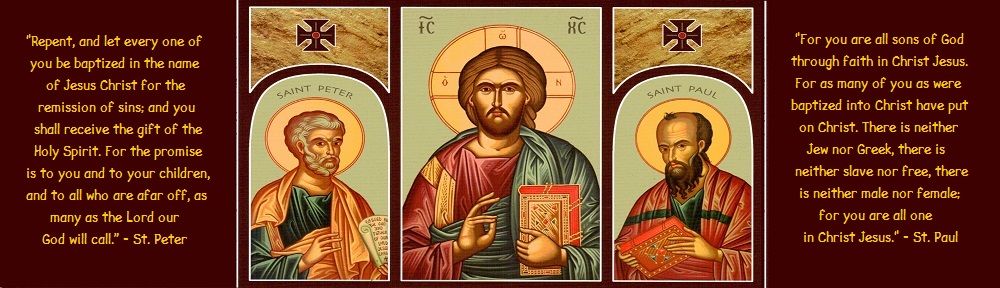
What is this wedding garment? As Paul writes to the Galatians, You are all sons of God through faith in Christ Jesus. For as many of you as were baptized into Christ have put on Christ. There is neither Jew nor Greek, there is neither slave nor free, there is neither male nor female; for you are all one in Christ Jesus. The only garment, the only attire that makes a person pleasing to God is Christ, whom we “put on” by Holy Baptism. Not Baptism, and then you’re good to go forever, whether or not you continue in faith. But Baptism, combined with faith; Baptism as the promise of God’s forgiveness for the sake of Christ, which we are to continually grasp by faith. This is the wedding garment that God Himself provides. Those who are found wearing it when He comes will enjoy eternal life at the heavenly wedding feast. These are the “chosen,” those whom God elected in eternity to be partakers of eternal life. Those who are found without it will be cast out into outer darkness forever.

So when you consider the doctrine of “election,” you see that it does not good to try to look back into eternity to speculate about whether or not you’re among the elect. Stick with the parable. If you hear God’s minister calling out to you to “come to the wedding,” to repent and believe the Gospel, then know for certain that God Himself is calling, inviting, persuading, convincing you to come, because all things are ready. He has given Christ for the sins of the world, and now gives Him to you to be your Savior. He planned this wedding feast for you in eternity and also planned exactly how and when He would send His minister to you, to call you.

Now, do you want nothing to do with repentance and the forgiveness of sins through Christ? Then you shouldn’t consider yourself among the elect—not because God didn’t want you to be saved or because God didn’t give His Son for your sins, or because God’s invitation is less than sincere, but only because you yourself are refusing His invitation.

Or, has God’s call led you to sorrow over your sins and to desire a place at His wedding feast, to look to Christ crucified, true God and true Man, for forgiveness? Then you should count yourself among those whom God has elected, called, and justified, and know that He prepared in eternity everything that you would need for your salvation, including the sending of His Son, including the Gospel call, including your justification through faith, including all the troubles and crosses you would bear in this life, including your prayers for help that He will surely hear and answer, including the continued preaching of the Word and the administration of the Sacraments by which means He intends to strengthen you in your struggle against the devil, the world, and your sinful flesh, and to keep you dressed in the wedding garment of faith until He comes.

Now may the God of peace Himself sanctify you completely; and may your whole spirit, soul, and body be preserved blameless at the coming of our Lord Jesus Christ. He who calls you is faithful, and He will do it. Amen.


Source: Sermons

Knowing how Christ fits into the Scriptures

(Sermon preached in Beaverton, OR)

Sermon for the Eighteenth Sunday after Trinity

1 Corinthians 1:4-9  +  Matthew 22:34-46

Dear saints of God, sanctified through faith in Christ Jesus our Lord: Before this weekend I had only met a few of you. But I know we have much in common, and word of your faith and your perseverance has certainly reached us in Las Cruces. I give thanks to God for this opportunity to speak to you—in person!—in His name, and you should know that the words of St. Paul to the Corinthians in today’s Epistle express my thoughts exactly:

I thank my God always concerning you for the grace of God which was given to you by Christ Jesus, that you were enriched in everything by Him in all utterance and all knowledge.

The fact is, you have been enriched in everything in Christ, in all utterance and all knowledge. Your knowledge and your utterance—your ability to speak the truth clearly— go way beyond that of the smartest atheists on the planet, way beyond famous Bible scholars, way beyond synodical heavy-weights and renowned “Lutheran” theologians here in America. Because you know this basic truth: you know how Christ fits into the Scriptures, into Law and Gospel, into redemption and justification. You know how faith alone in Christ is God’s means of making His righteousness your righteousness, so that you are now no longer under God’s condemnation, but stand righteous before God and will be raised from the dead to spend eternity with Him in His heavenly kingdom.

That faith-knowledge, given to you as a gift of grace by God’s Holy Spirit through the preaching of the Gospel, also goes way beyond the knowledge of the smartest religious people in Jesus’ day. And that brings us directly to today’s Gospel.

The Pharisees and the Sadducees were the popular schools of thought on Scriptural interpretation at the time of Jesus—always competing with one another, reacting to one another, often ridiculing one another. Without getting into too much detail here, both parties got some things right and some things wrong in their interpretation of the Scriptures, and both parties got so bogged down in their own interpretations and philosophies and traditions that they completely mishandled the main teachings of the Old Testament. Rabbinical theology had basically become a two-party system that was hopelessly broken.

One of the main beliefs of the Sadducees was that there will be no resurrection of the dead, no life after death. In the words just before today’s Gospel, Jesus had silenced the Sadducees once and for all, proving them wrong on that point from the Holy Scriptures. As He said, But concerning the resurrection of the dead, have you not read what was spoken to you by God, saying, ‘I am the God of Abraham, the God of Isaac, and the God of Jacob’? God is not the God of the dead, but of the living. It’s one of those Holy Week victories of Jesus that often gets overlooked. He demonstrated to everyone that the Sadducees were not to be trusted, because they didn’t understand the Scriptures, that the Christ Himself must die and rise again.

In today’s Gospel, we see Jesus doing exactly the same thing with the Pharisees.

The Pharisees actually agreed with Jesus on the Scriptural teaching of the resurrection. In fact, the resurrection was critical to Pharisaism. Why work so hard at keeping all the Levitical laws and tithing and all the extra laws they placed around the Scriptural laws as a hedge? So that they would be counted among the worthy in the kingdom of God at the resurrection.

But, while the Pharisees were right about the coming resurrection and the eternal life in the kingdom of God, they demolished the road to get there—faith in Christ! — and rebuilt it with their own works of outward obedience.

We see that right away in the Gospel. They turn, as always, to their tunnel-vision focus on the law. One of them tests Jesus with this question: Teacher, which is the great commandment in the law?

Love. Love is the great commandment. Love is the fulfillment of the Law. You shall love the LORD your God with all your heart, with all your soul, and with all your mind.’ This is the first and great commandment. And the second is like it: ‘You shall love your neighbor as yourself.’ It’s not some mushy, gushy emotional affection that God commands. It’s willing, joyful, heartfelt devotion and commitment, first to God, and then to your neighbor, informed and guided by the Word of God.

Everything else hinges on these two commandments. Love for God and one’s neighbor was to be at the heart of everything for mankind, the motivation behind all works, the very foundation of man’s life on earth. The rest of the laws in the Old Testament were about how people were to love God and their neighbor, whether it was the timeless moral laws that apply to all men, or whether it was the ceremonial and civil laws that applied only to the Jews.

But that’s the opposite of what the Pharisees taught and believed. Love was not their motivation for keeping the Law. They tried to keep the commandments, not out of love for God, but in order to get something from God, in order to earn something for themselves, in order to escape punishment.

Honestly, who can possibly love God and his neighbor so completely that every action, every word, every thought flows from it, all the time, without any thought to oneself, what’s good for me, what feels right to me, what I want to do? The entire history of the world, the entire personal history of every one of us cries out, “No one!” Every law that has ever been broken is evidence that a person didn’t love God enough—wasn’t devoted enough to God—to obey His commandments.

This is what the Pharisees failed to grasp, completely ignored, never understood. That all their tithing, all their extra Sabbath laws, all the attention they paid to the intricacies of Levitical ceremony and instruction, was useless for bringing them into God’s favor, useless for buying them a place in the kingdom of heaven. Because all the while they failed to keep the first two great commandments. None of their outward obedience to the Law flowed from pure love for God and their neighbor. Foolish Pharisees! The law is not your Savior. It is your judge, jury, and executioner, which is why St. Paul writes to the Romans, Therefore by the deeds of the law no flesh will be justified in His sight, for by the law is the knowledge of sin.

You have been given this knowledge from above, to know that the chief purpose of the Law is not to tell people what they have to do to be saved or to enter the kingdom of God. It’s there to show you that you fall short of love and therefore deserve the condemnation that the Law pronounces on sinners. It’s there to frighten you to run away, looking for shelter, to seek refuge in the Christ—the only Man who has ever led a perfect life of love, even as the Scriptures testified about Him, that He would be the Lord, Our Righteousness.

Jesus presses that very point with the Pharisees and shuts them up for good with His question. What do you think about the Christ? Whose Son is He? Ah, we know the answer! He is the Son of David! OK, then. How then does David in the Spirit call Him ‘Lord,’ saying: ‘The LORD said to my Lord, “Sit at My right hand, Till I make Your enemies Your footstool”?

How can David’s Son be David’s Lord? They were baffled. No idea! All these years they had read that Psalm (and other similar Scriptures) and never comprehended this key teaching about the identity and the mission of the Christ, that He would be true Man, the Son of David, but also the Lord, true God from all eternity, for the purpose of saving sinful mankind from their sins.

This is how Christ fits into the Scriptures: He would be true man, who would live a perfect life of love under the law; and true God, so that He obedience might count for all men. He would be true man, because human death is the wages of sin, and true God, so that He might receive those wages in the place of sinful mankind, so that we might receive the gift of eternal life through faith in Him, the perfect and only intercessor between God and man, Christ Jesus our Lord.

You know that. You have been enriched in everything in Him in all utterance and all knowledge, even as the testimony of Christ was confirmed in you, so that you come short in no gift, eagerly waiting for the revelation of our Lord Jesus Christ, who will also confirm you to the end, that you may be blameless in the day of our Lord Jesus Christ. God is faithful, by whom you were called into the fellowship of His Son, Jesus Christ our Lord.

You have been given to know Christ rightly, to know how He fits into the Scriptures and into your justification. Rejoice in that knowledge and hold onto it for dear life, even as you have stood for it and suffered for it already. The Church in any one place may grow or not grow, may thrive or barely hang on. But you are not waiting for the Church to grow and thrive, are you? You are, as Paul says, eagerly waiting for the revelation of our Lord Jesus Christ. It is He who will keep you, who will preserve you by His Spirit through Word and Sacrament, who will also confirm you to the end. Remain faithful in hearing His Word and in supporting its proclamation. He will see to it that His Spirit gives the knowledge of Christ to still more people through that proclamation, until His Church is built and you and all His saints stand victorious at the side of David’s Son and David’s Lord, even as His enemies are placed under His feet, including the last enemy, which is death. Amen.


Source: Sermons

Walking humbly before God and man


Right Click to Save

Sermon for the Seventeenth Sunday after Trinity

Ephesians 4:1-6  +  Luke 14:1-11

In the Epistle, you heard these words of instruction from the Apostle Paul: I, therefore, the prisoner of the Lord, beseech you to walk worthy of the calling with which you were called, with all lowliness and gentleness, with longsuffering, bearing with one another in love. It’s as if St. Paul had just finished reading our Gospel for today, where Jesus both taught and demonstrated that very same thing.

In the Gospel, Jesus was invited to a banquet on the Sabbath. It was the home of a ruler of the Pharisees, and they were watching Him closely, not in lowliness or gentleness, not with longsuffering, not in love. They were watching Him to try to trap Him.

But still, they were watching. They were listening. So He bore with them in love and taught them.

The first lesson came as a man with dropsy came before Jesus. (Dropsy, by the way, is a sickness that causes a person’s body to swell up with extra fluid.) Jesus could have just healed the man, but He wanted the watching Pharisees to watch and to consider the question: Is it lawful to heal on the Sabbath?

They had been saying “no” to that question for quite a while and condemning Jesus for doing it on other occasions—for healing sick or demon-possessed people on the Sabbath. But when the sick man is standing right in front of them in the house, they suddenly have nothing to say.

They had forgotten what humility and gentleness are. They had abandoned mercy and compassion. They had turned the good Sabbath Law into a loveless, joyless task to be checked off on their religious scorecard. They had made it into a day for them to exalt themselves over others, at least in their own minds, by their strict observance of the command to rest. They were just like their fathers in Isaiah’s day who ignored God’s will that they should help their neighbor and instead pretended to be righteous because they outwardly worshiped God with fasting.

But God rebuked them: Is it a fast that I have chosen, A day for a man to afflict his soul? Is it to bow down his head like a bulrush, And to spread out sackcloth and ashes? Would you call this a fast, And an acceptable day to the LORD? Is this not the fast that I have chosen: To loose the bonds of wickedness, To undo the heavy burdens, To let the oppressed go free, And that you break every yoke? Is it not to share your bread with the hungry, And that you bring to your house the poor who are cast out; When you see the naked, that you cover him, And not hide yourself from your own flesh?

The Pharisees were hiding themselves from their sick brother, hiding behind a Sabbath commandment so that they didn’t have to help him. Not that they could help him with his dropsy. But Jesus could.

What gentleness on the part of Jesus! What humility! God has come into their midst, and yet instead of tearing into them for their indifference toward the sick man, instead of bringing judgment down on them for putting a religious façade on their hatred for their neighbor, Jesus humbles Himself to teach them, to teach us what kindness looks like, what Law-keeping looks like. Which of you, having a donkey or an ox that has fallen into a pit, will not immediately pull him out on the Sabbath day? Of course you help your neighbor on the Sabbath, if you are able. He’s much more valuable than an animal. Of course it was lawful to heal on the Sabbath, and they should praise Him instead of condemning Him. They should believe in Him instead of rejecting Him.

But they still couldn’t admit it to Jesus, even after watching Him perform a miracle and listening to His sound, Scriptural reasoning. That’s a powerful condemnation. They saw His great love and kindness in action, combined with His divine healing power, combined with His flawless illustration of helping their suffering animals on the Sabbath, and they still couldn’t admit that He was right and that they had been wrong about the Sabbath, about themselves, and about Him. “Forget about helping my neighbor,” they thought. “The Sabbath day is about me, me and my obedience, me and my resting, me and my right to sit in judgment of Jesus.”

Let Jesus’ kindness here toward the man with dropsy and toward the Pharisees stir you to love and trust in Him. He has seen your own self-centeredness and self-importance, your lack of lowliness and gentleness. He has seen you hiding from your own flesh, making excuses for yourself about why you’re right not to help your brother in his need, why you’re right not to honor and obey your parents. He calls you to repent and to believe in Him who was lowly and gentle, kind and good, in your place, who suffered and died for you in order to grant you the forgiveness of sins.

Now, learn more of the same lesson from Jesus as He gives some much needed counsel to the guests at this banquet.

Jesus watched the guests choose the seats of greatest honor for themselves at this feast, ever self-seeking, self-serving. “Me first! I should get what I want. I’m going to take whatever I want. I deserve a place of honor. I deserve recognition, more than these people around me.”

Jesus shows them how foolish they are, how foolish it is to seek honor for yourself above your fellow guests, when only the one who invited you to the banquet has the right to bestow that honor, when only his opinion counts. He can remove you from your self-chosen place of honor in an instant and shame you before your fellow guests. Or, he can move you up. He can exalt you before your fellow guests. Which is better? To be humbled by the host or to be exalted by Him? Isn’t it better to let Him exalt you? Isn’t it only fitting and right that you should walk humbly before your God, trusting in Him to notice you, to remember you, and to have mercy on you in due time? If His opinion matters most, then what does it matter if you don’t get as much honor or as many earthly benefits as the people around you? What does it matter if you sit in last place for a long time, or even for your whole earthly life? Just assume the lowest place and be happy there. As the Psalmist prays, For a day in Your courts is better than a thousand. I would rather be a doorkeeper in the house of my God than dwell in the tents of wickedness.

Whoever exalts himself will be humbled, and he who humbles himself will be exalted. That’s the summary of Jesus’ teaching at the Pharisee’s house. And it’s what He taught with His whole life.

Who has exalted himself, but man over God? From Adam and Eve who played God in the Garden, to the idolaters who set up their own beliefs over God’s Word, to the false teachers who play God by substituting their lies for God’s truth, to the murderers all over our country and our world who play God in taking the lives of their fellow men, to the adulterers and sexually immoral who play God by taking His gifts reserved for marriage and use them as they see fit, to the coveters who play God by setting their hearts on things God has not given, to the Pharisee in us all who thinks he is more righteous than his neighbor, and even more righteous than God.

And who has humbled Himself, but the Son of God, who became Man? From His humbling of Himself to become our brother and to live as a servant, to His humble dealings with sinners, to His suffering and death for our sins, even the death of a cross, Christ Jesus has humbled Himself, out of pure love for His Father and for the human race, and now He has been exalted to the highest place and given the name that is above every name. Jesus is the One who walked humbly before God and man, and now has been exalted.

Now He calls out in the Gospel, Come to Me, all you who labor and are heavy laden, and I will give you rest. Take My yoke upon you and learn from Me, for I am gentle and lowly in heart, and you will find rest for your souls. For My yoke is easy and My burden is light.

You have heard His call to humble yourselves in repentance and to believe in Him, the lowly and gentle One, for your salvation. You have been buried with Him through Baptism into death and have risen with Him, and so you have been called to share in His exaltation, too, all in good time.

For now, as St. Paul writes as he sits in prison for his selfless preaching of the Gospel, walk worthy of the calling with which you were called, with all lowliness and gentleness, with longsuffering, bearing with one another in love.

This walking humbly before God and man is how Christians are to walk worthy of our calling, because we all share a common Lord, a common faith, and a common Baptism. Remember into whom you were baptized. Remember His lowliness and gentleness, and learn to imitate Him. Seek the lowest place for yourself, as Christ did for Himself, and know that God will not abandon you there. If we endure, we shall also reign with Him. Amen.

Source: Sermons

See how Jesus deals with death


Right Click to Save

Sermon for the Sixteenth Sunday after Trinity

Ephesians 3:13-21  +  Luke 7:11-17

Today our nation remembers the death and destruction that occurred 15 years ago today, on 9/11, 2001. We’ll mention that briefly later on.

For now, I’d like you to remember that it was 24 weeks ago today that we celebrated Christ’s victory over death on Easter Sunday. And lest we let the light of Christ’s power over death grow dim in our hearts, the Holy Spirit holds it before our eyes again in today’s Gospel. Because, as the hymn says (although we didn’t sing it today), “Who knows when death may overtake me?” Who knows when death may overtake any of us? You can never be too prepared for that day, but you can be underprepared, so watch Jesus today as He deals with death in the Gospel.

The widow of Nain had already lost her husband to death. Then she lost her only son, too, and was left bereaved and desolate—not unlike Naomi in the Old Testament, who lost her husband and her two sons to death. Remember how bitter Naomi was at first, and how hopeless, even with that faithful daughter-in-law Ruth who stood by her and took care of her. What a sad funeral procession this was as the body of the widow of Nain’s boy was being carried out of the city gate in his coffin, accompanied by a large crowd.

Then along comes Jesus, with a large crowd of His own coming from the opposite direction. When the Lord saw her, He had compassion on her. Don’t read over that too quickly. People wonder sometimes if God cares about our suffering, if He understands our sorrow or sympathizes with us at all. Well, the compassion of Jesus is the compassion of God. This is how He views those who grieve, especially who grieve over death, with deep-seated, heart-wrenching compassion.

Because death was not God’s intention or desire for mankind. God made us to live, not to die, to enjoy everlasting life in His presence, not to suffer death and eternal punishment. Death is the very thing God warned Adam and Eve about in the Garden of Eden, the very thing He told them how to avoid and gave them all the tools necessary to avoid it. It was their choice to bring it on themselves and on their children, and it is the same choice that we also make, by nature, to try to play God, to tell Him what’s right and what’s wrong, to do and to believe as we please. Death is the wages we have all earned for ourselves, for all have sinned.

But what did Jesus say? I have come that they may have life, and that they may have it more abundantly. He showed us that in everything He while He walked the earth. He shows it to us again in how He dealt with death at the gates of Nain.

He said to the widow, Do not weep. Why? Because nothing was wrong? No. But because Jesus had come, and He was about to make everything right.

He touched the coffin, halting the procession, stopping this death-march in its tracks, signaling that He was about to change the course of death.

He said, “Young man, I say to you, arise.” So he who was dead sat up and began to speak. And He presented him to his mother. There was no hocus-pocus. No grand ritual. No strain or effort on Jesus’ part. Just the almighty word of the Son of God—the same word that brought the universe into existence, that called the stars into being, the same word that once pronounced death upon guilty sinners. Now that word is a good word, a word of hope, a word of life.

It’s a word that Jesus has already spoken to you, through His appointed ambassadors. As He says in John 5, Most assuredly, I say to you, he who hears My word and believes in Him who sent Me has everlasting life, and shall not come into judgment, but has passed from death into life. Most assuredly, I say to you, the hour is coming, and now is, when the dead will hear the voice of the Son of God; and those who hear will live. For as the Father has life in Himself, so He has granted the Son to have life in Himself, and has given Him authority to execute judgment also, because He is the Son of Man. This is the voice of the Gospel, calling out to sinners to believe in the Lord Jesus, who suffered death and the punishment for sin in your place, who rose again from the dead and gives eternal life to all who believe in His name. The preaching of the Gospel is how Jesus comes to you and says, “Do not weep.” Why? Because there’s nothing wrong? No. But because He has borne your wrongs and borne your punishment and borne your death, and will make everything right between you and God when you believe in Him.

Indeed, as St. Paul writes to the Ephesians in chapter 2, But God, who is rich in mercy, because of His great love with which He loved us, even when we were dead in trespasses, made us alive together with Christ (by grace you have been saved), and raised us up together, and made us sit together in the heavenly places in Christ Jesus, that in the ages to come He might show the exceeding riches of His grace in His kindness toward us in Christ Jesus. For by grace you have been saved through faith, and that not of yourselves; it is the gift of God, not of works, lest anyone should boast.

So what harm can death do to you, if you have already passed from death into life? What sin can condemn you if God has already made you alive together with Christ? Jesus has touched the coffin of all who believe in Him and has interrupted the course of death through Holy Baptism. Death will no longer end in the grave, and it will never lead the believer in Christ to hell. Instead, in a spiritual way, Christ has already raised believers to life.

But, of course, that’s not all. The hour is coming in which all who are in the graves will hear His voice and come forth—those who have done good, to the resurrection of life, and those who have done evil, to the resurrection of condemnation. Just as Jesus stood by the coffin of the young man of Nain and told him to arise, so His voice will go out to every grave on earth and call all people to arise in the great resurrection of the body.

If that’s true—and Jesus proved again in today’s Gospel that He has the power to do exactly what He says here, then a person’s whole life has to be driven by this. How you live here on earth will have eternal consequences. Those who heard His voice calling in the Gospel during their earthly life, who repented and believed in Him and persevered in faith until death, will be raised to everlasting life. And those who failed to repent and believe will be raised to everlasting condemnation.

This was, by the way, the primary effect that 9/11 should have had on the people of our country. It should have been a wake-up call for all people to repent of their wickedness and to believe in the Son of God now, before it’s too late. Because, “who knows when death may overtake me?” And surely, by the grace of God, it has had that effect on some. But for the most part, these 15 years after that horrifying event, people continue to mock the judgment of God, and our nation as a whole continues its death-spiral with every form of depravity and wickedness imaginable, from abortion and the support for it, to unbridled sexual immorality, to evolutionary propaganda, to the love for every religion except the pure religion of Christ Jesus.

Be that as it may, the words of today’s Gospel are intended to draw you, the precious people of God, even closer to Jesus, the compassionate Lord of life and death, so that you put your trust in Him now, before death comes. This is the day of grace. This is the time of God’s favor, for you, and for your loved ones. And this is our opportunity, as a church, to celebrate and to proclaim the forgiveness of sins and the hope of everlasting life through faith alone in Christ alone. Jesus will not disappoint you. His compassion for those who grieve is just as real today as it was for the widow of Nain. And His power over death is just as real, too. Death still surrounds us in the world, but let the comfort of Jesus’ peace and love surround you even more, and let His body and blood, given to you in the Sacrament of the Altar, serve as the medicine that sustains your spiritual life until the day when Jesus calls you out of your grave to everlasting joy. Amen.


Source: Sermons

The idolatry of worry, and its remedy


Right Click to Save

Sermon for the Fifteenth Sunday after Trinity

Galatians 5:25-6:10  +  Matthew 6:24-34

It’s time for our weekly dose of honesty from the lips of Jesus, and for our annual dose of that honesty when it comes to the matter of worrying—that constant companion of us all, to one degree or another. Not just honesty, of course, but along with it, a warning, and encouragement, and comfort.

As Jesus teaches His disciples in today’s Gospel, He is not afraid to call a thing what it is. After warning us that we cannot serve two masters, both God and Mammon—the idol of earthly wealth, He links Master Mammon with our tendency to worry.

It seems like those things wouldn’t be directly related to each other—wealth and worry. We think of riches and wealth as objects of greed, not of worry. We think of riches and wealth as the rich man’s idol, not as the poor man’s problem. But Jesus instructs us in the Gospel that you don’t have to be rich to bow down to Master Mammon. Everyone, both rich and poor, is inclined to worship this false god.

We’re talking here especially about worry over getting the things we need for this life, worry as the anxious pursuit of providing for oneself. People worry, they concern themselves, they become preoccupied with getting food and clothing and the other necessities of this life, or they worry that some disaster may strike that will deprive them of the things they need to live. So everything else in their life revolves around this pursuit of providing for themselves. The worry is ongoing, because our needs are ongoing.

And, more often than not, especially in our country and in our time, greed is added to worry as people worry about getting, not just the basic necessities like food and clothing, but more and more things that used to be recognized as luxuries: a tasty variety of foods, a certain style of clothing, cable TV, smartphones, enough money to support a certain lifestyle. There is no contentment for most people with just the basic necessities of life—not unlike the people of Israel as they wandered through the wilderness and grew sick and tired of eating the same manna for food every day. And so their pursuit of providing for themselves gets bigger and bigger as they find more and more things they just “can’t live without.” We’ll call that greed + worry.

Why is that a form of idolatry? Because, at the heart of worry is the suspicion—or even the conviction—that God is not the one who provides for you, that God doesn’t care. That you are actually the one who provides for you. And that wealth is the solution. Wealth is the answer. Acquiring wealth becomes the goal of one’s life, because then, you think, if I have more money, then I’ll be able to stop worrying so much. If I have more money, then I’ll be able to sleep at night. If I have more money, then I’ll have food and clothing, and maybe even happiness. So, Master Mammon, help me! Master Mammon, save me! I’ll serve you with my whole life, if you’ll just provide for me.

That’s called idolatry. And, like all forms of idolatry, it’s foolish in addition to being deadly, because Master Mammon couldn’t care less about you. Master Mammon is like a carrot on a stick held out in front of a donkey, that he chases for mile after mile, this way and that way, wearing himself out to get that carrot. But he’ll never get it. It was a trick to get him to go where the driver wanted him to go. In the same way, wealth is the devil’s carrot, and he holds it out before your eyes as the thing you should chase, as the thing you should pursue, instead of seeking the kingdom of God and His righteousness.


But see how Jesus deals with these idolaters—these worriers who have come to Him for help. He doesn’t send them away, does He? No, He keeps them close. He points out their idolatry, and then turns their gaze to their Father and His faithfulness.

Look! The Father—the God who created the earth and everything in it—provides food for the birds. They neither sow nor reap nor gather into barns; yet your heavenly Father feeds them. Are you not of more value than they? Yes, you are. Because you’re human beings, created in the image of God. But more than that, because the Son of God became a human being like you and shed His blood for your sins so that you can live under Him in His kingdom forever. And you have been baptized in His name and adopted as a son of God. Will you really believe the devil’s lie that God doesn’t care about you, that you have to provide for you on your own? Will you really chase after his carrot of wealth and earthly riches, when you have a good Father in heaven who promises you so much more?

And consider the lilies of the field, Jesus says, how they grow: they neither toil nor spin; and yet I say to you that even Solomon in all his glory was not arrayed like one of these. Now if God so clothes the grass of the field, which today is, and tomorrow is thrown into the oven, will He not much more clothe you, O you of little faith? He will, if you’ll just trust Him. He’s already brought you to faith in His Son. He’s already clothed you with Jesus! As Paul writes to the Galatians, You are all sons of God through faith in Christ Jesus. For as many of you as were baptized into Christ have put on Christ. God will use whatever means necessary to see to it that you, His dear children, will have the necessities of life as you trust in Him and look to Him as your Helper and as your Savior.

With that promise in place, given by the Son of God Himself, you can stop anxiously pursuing the carrot on the stick. You can stop worrying about your life and seeking the things of this life. Instead, Jesus shows you a better way, the way of faith. Seek first the kingdom of God and His righteousness, and all these things shall be added to you. Devote your life, your thoughts, your energies, to the kingdom of God. His Word. His Sacraments. His grace. His instruction. Pursue wisdom. Pursue righteousness in how you treat your neighbor, in how you live in this world. Those are to be the first things you “worry” about. And all these things—these things that you need, whether it’s food and clothing or whether it’s any of the other necessities of this life—shall be added to you.

And don’t be surprised by the fact that you need this annual—this weekly!—admonition from Jesus not to worry. You’d think by now, those of us who have been in the Church for a long time, we’d have gotten over this worry thing. You’d think we’d have learned by now how good and gracious our Father is, and we have learned it. But here the devil always stands, dangling his carrot in front of our eyes. Here our sinful flesh still wants to believe the devil’s lie, that what you see is all there is, and the world around you is happy to repeat that lie day after day after day. With enemies such as these, it’s a wonder you’re even here in church, instead of out there pursuing the things of this life.

Jesus knows that you need a continual supply of admonitions, of His Word and His Sacrament, to guard you against the devil’s lies and the weakness of your own sinful flesh. Hear Him again today, and take His words with you when you leave. Do not worry about tomorrow, for tomorrow will worry about its own things. Sufficient for the day is its own trouble. And sufficient for the day is the strength and comfort that your heavenly Father will provide. Amen.

Source: Sermons